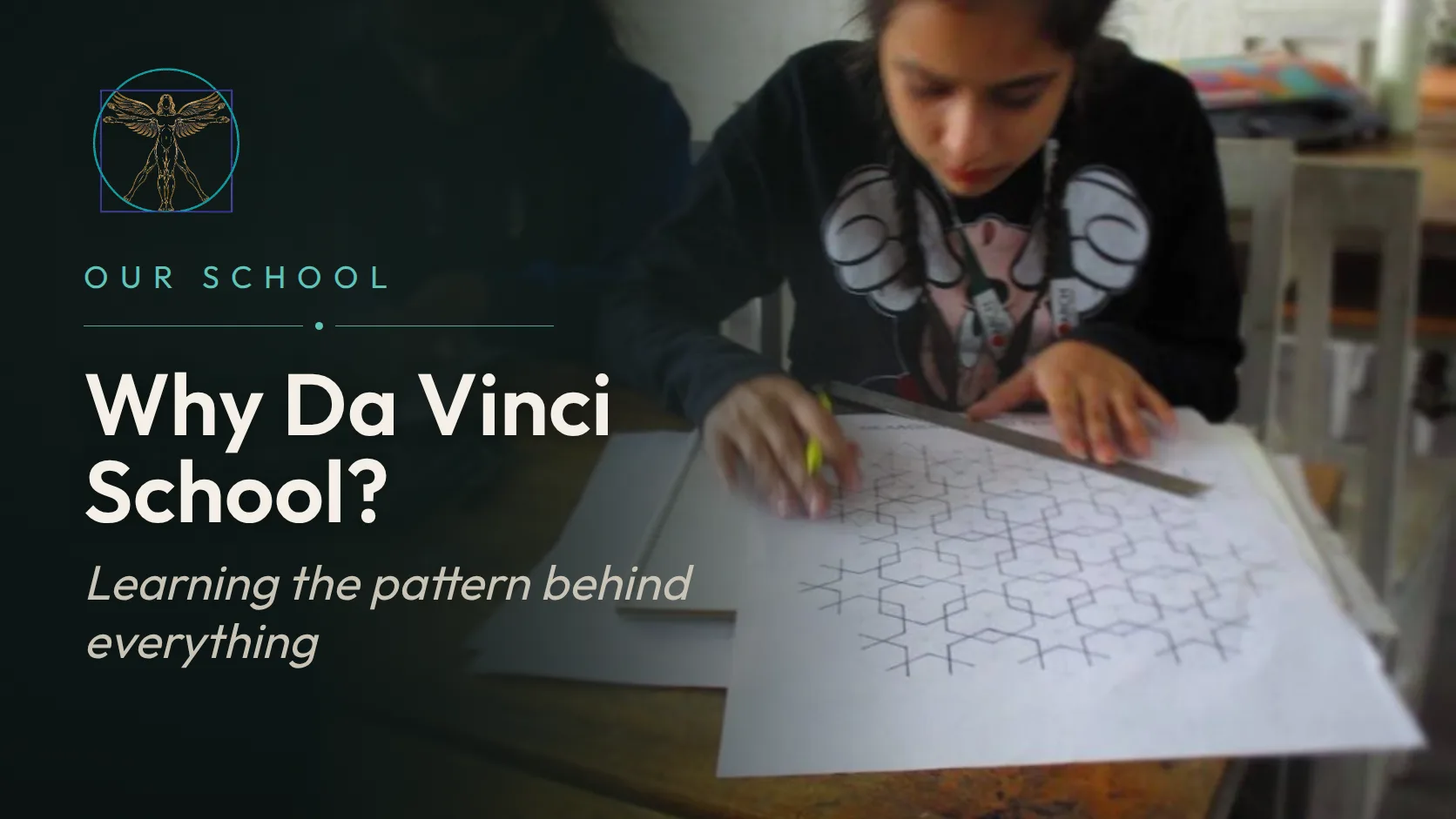
You learned geometry in maths class. You heard about the golden ratio in art class. In music, you learned that notes have intervals. In biology, that molecules have shapes. In physics, that planets move in orbits.
But did anyone ever show you that these are the same story?
That's why the Da Vinci School exists.
What made Leonardo a genius?
Leonardo da Vinci was a painter, an engineer, an anatomist, an architect and an inventor. We call him a genius. But his secret wasn't that he knew more facts than everyone else.
He saw how things connect. He studied the proportions of the human body, the flow of water and the growth of plants with the same eye. He illustrated a whole book on the golden ratio (Luca Pacioli's Divine Proportion, 1509). In his notebooks he wrote: "Let no one who is not a mathematician read my principles."
For Leonardo, art and science were never separate. They were two ways of looking at one world, and geometry was the language they shared.
That's the spirit of our school. We don't throw away scientific rigour. We look for the patterns underneath, and how they connect.
One pattern, everywhere
Once you start looking, the same few shapes turn up in the most unexpected places:
- Music: an octave is the ratio 2:1, a perfect fifth 3:2. Harmony is geometry you can hear.
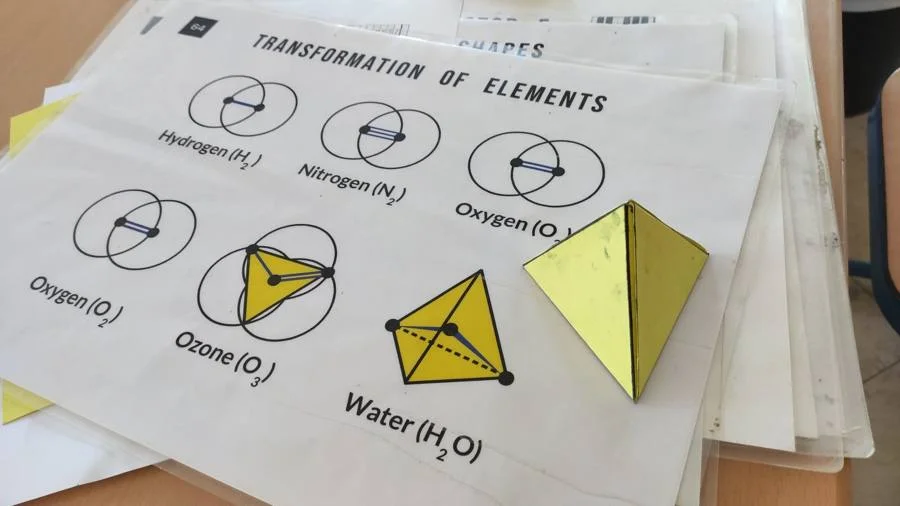
- Molecules: a water molecule is bent at about 104.5°, and methane forms a perfect tetrahedron. In our cells, molecules pass on signals by fitting together like a key in a lock.
- Art and architecture: the golden ratio, symmetry and proportion, from Greek temples to Indian palaces.
- The planets: Johannes Kepler once tried to explain the spacing of the planets with the five Platonic solids nested inside each other. The model didn't fit the data in the end, but the search for that harmony led him to his laws of planetary motion.
At school these are separate subjects, taught in separate rooms. The Greeks taught them together: arithmetic, geometry, music and astronomy were one path of learning. We've forgotten to connect them.
Why by hand?
This is the heart of how we teach: compass construction.
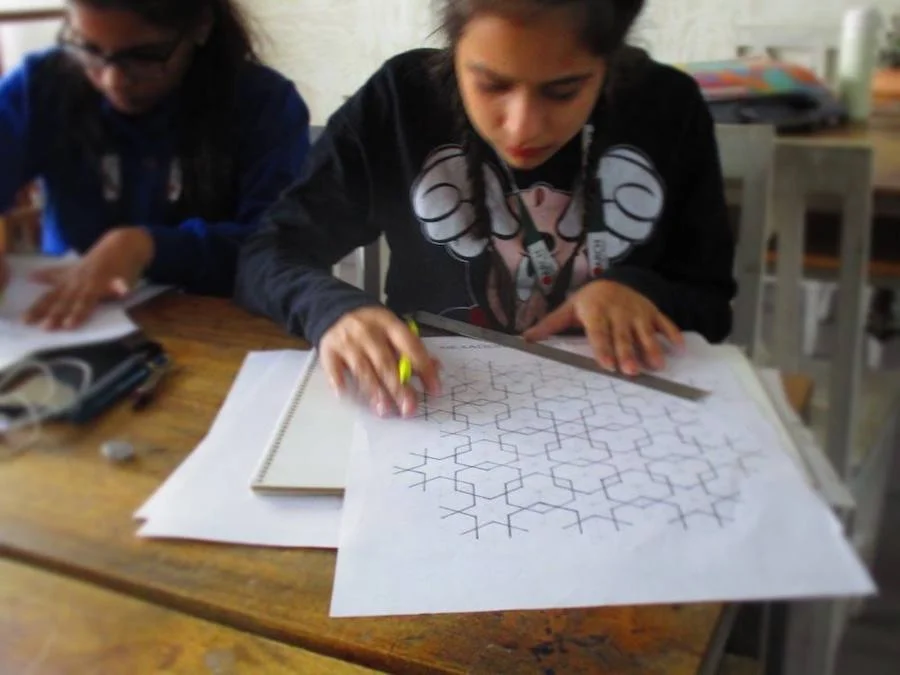
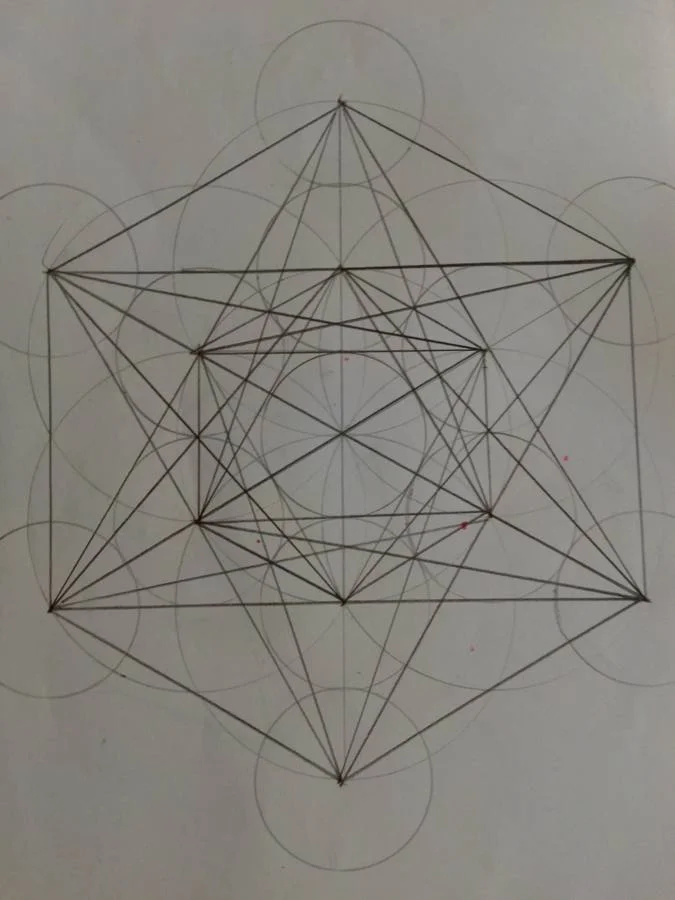
You can watch a hundred videos about the Flower of Life. You can read about it. But something only clicks when you draw it yourself: one point, one circle, then the next circle grows from the one before. You feel why it holds together.
It's like riding a bicycle. You can't understand how it works by thinking about it. You understand it when you ride.
Science backs this up. Psychologists at the University of Waterloo found that drawing something helps you remember it far better than writing it down, because it joins meaning, image and movement into one memory. The effect was even stronger in older adults.
And in a time when AI can give us any answer in seconds, this matters more than ever. AI gives you answers. Drawing teaches you to embody them. What you build with your own hands, you keep.
Even children get it
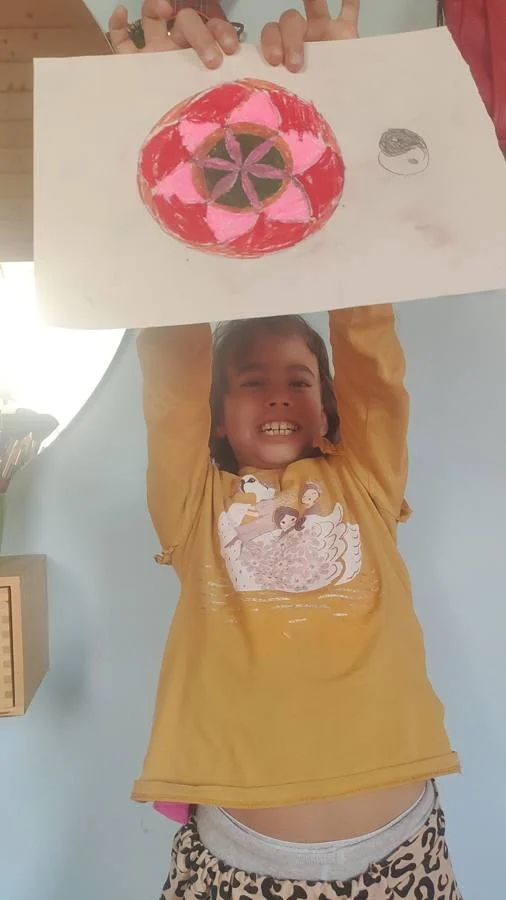
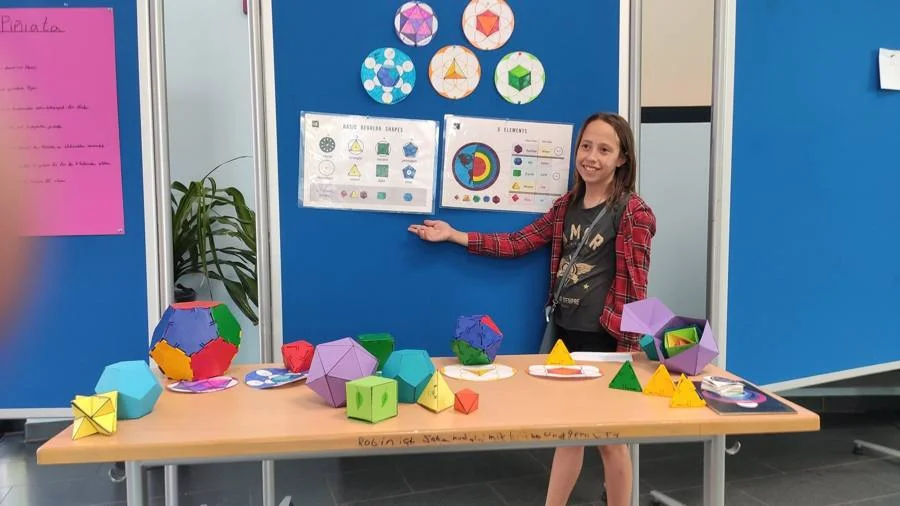
Some of our happiest students are children. Give a child a compass and maths becomes something they can hold. Circles turn into flowers, triangles into stars, and paper into 3D solids they can build like Lego.
Parents often end up just as fascinated as their kids.
Who is it for?
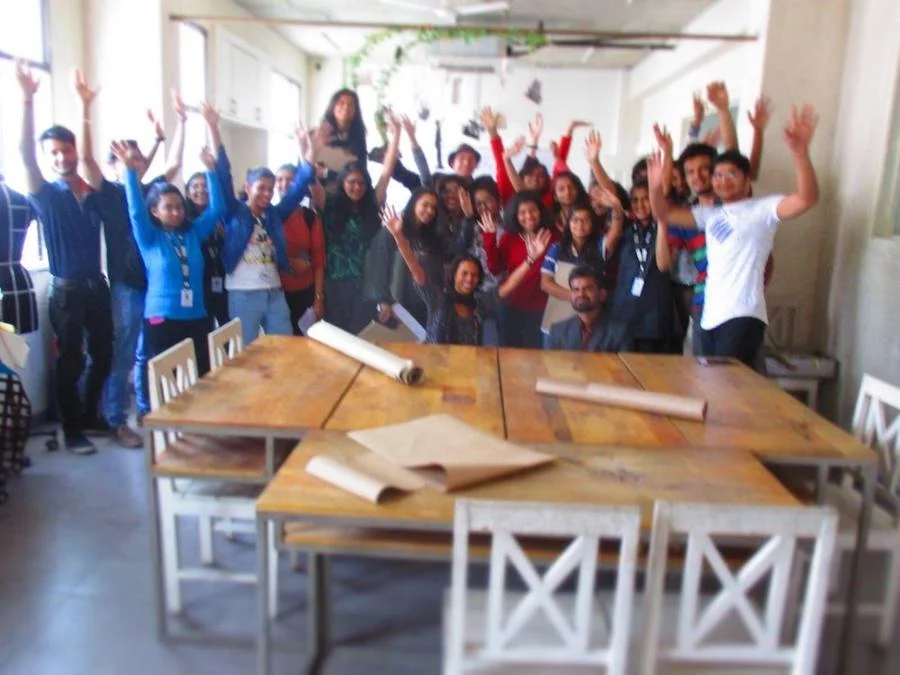
Our students come from everywhere, and that's the point:
- Creatives and designers who want to understand proportion and harmony from the inside.
- Yoga teachers, healers and practitioners who want to see the pattern behind their practice.
- Teachers, educators and parents looking for a way of learning that is visual, tangible and joyful.
- People in science, tech and business who know that good work runs on pattern recognition and whole-systems thinking.
You don't need to be "good at maths". If you can hold a pencil, you can start.
More than shapes
We keep it grounded and curious. But we won't pretend it stops at pretty drawings.
When you understand the geometric processes behind reality, you start to see the world more clearly: how parts belong to a whole, how balance and harmony come about. That changes how you look at your work, your relationships, even your purpose. Life is bigger than "get a job, make money".
Our curriculum draws on knowledge that has been around for thousands of years, in temples, in art, in music and in early science. It also draws on the new geometric theory developed by our sister project, In2Infinity, which is the bold, research side of what we teach.
Here, we make it simple. One point. One circle. One step at a time.
What you can learn here
- Hello Geometry: the gentle way in. Seven worlds from nature to the cosmos, self-paced. The first world is free.
- The Blueprint: from the point to Metatron's Cube, drawn live with Dr. Be over four Sundays.
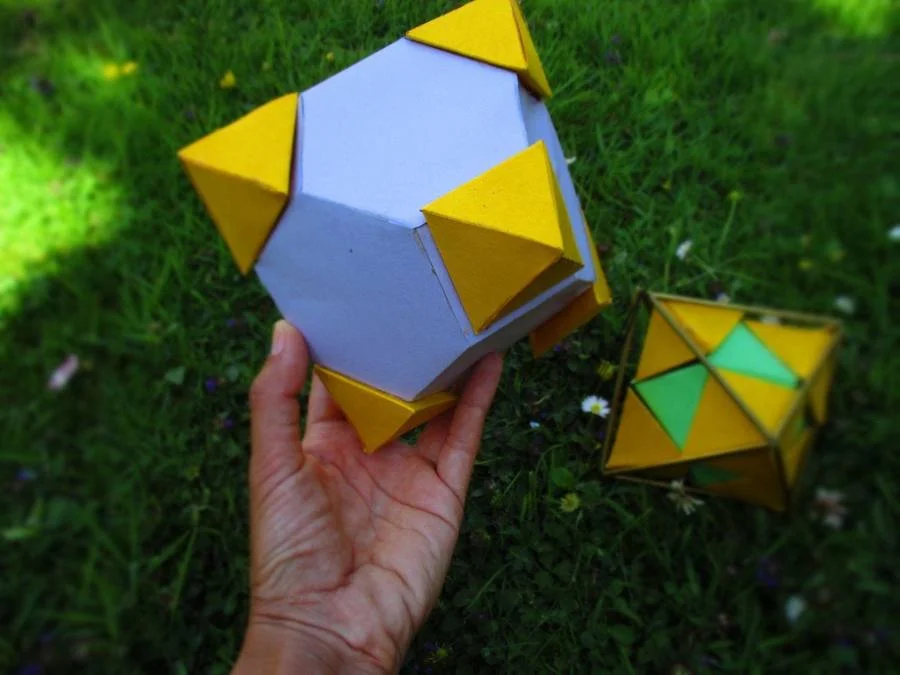
- Platonic Solids: the five shapes in 2D and folded in 3D, over four Sundays.
- Teacher Training: pass it on in your own way.
Start with a free taster. Bring a compass, a pencil and your curiosity. See the next date →
Come curious. Come as you are. All perspectives welcome.