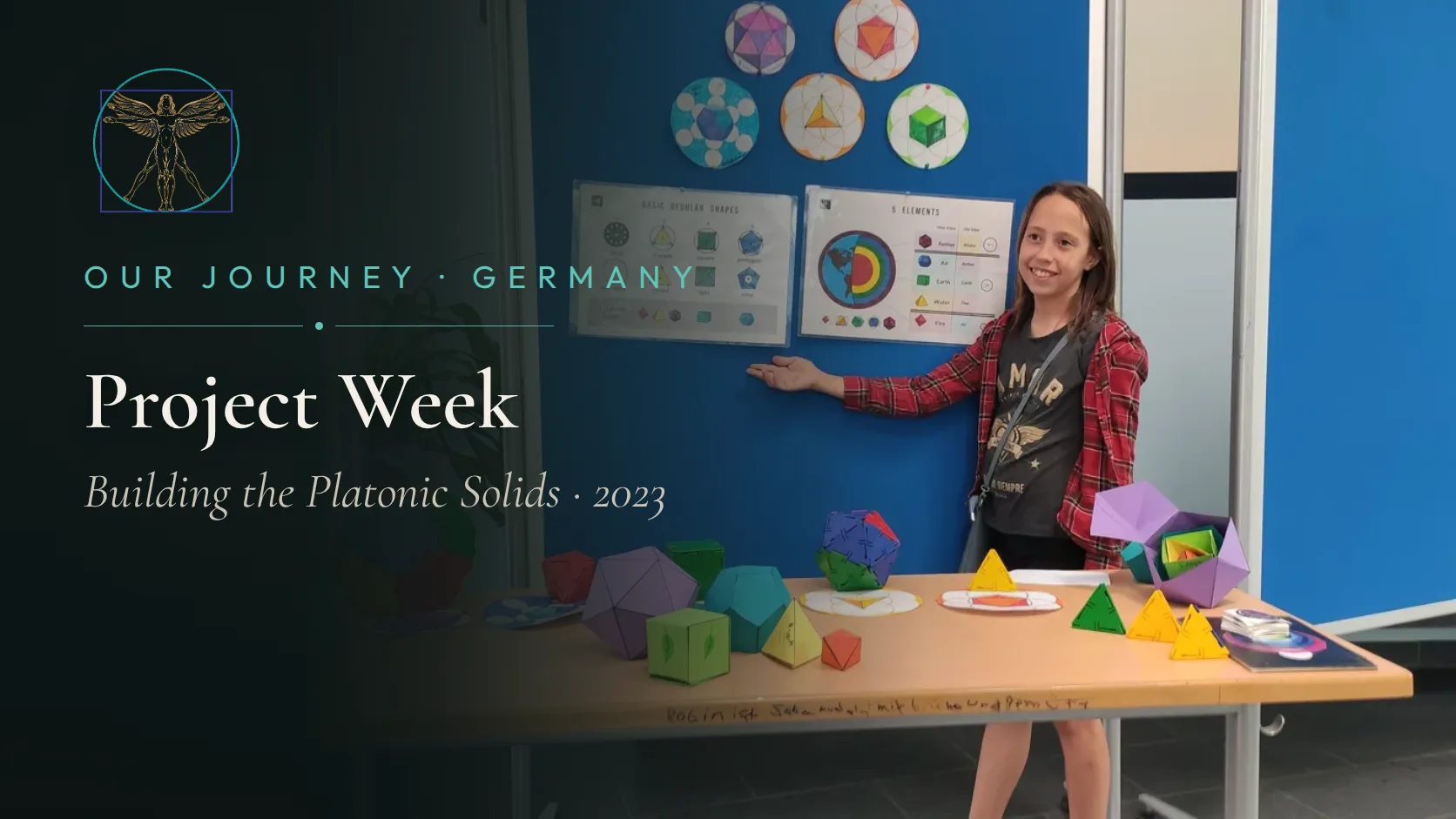
It all began with a single circle. In the summer of 2023, the Obermayr Europa-Schule in Germany opened its doors to us for its project week, and we brought sacred geometry into the classroom as something extra, beyond the usual timetable. From the very first circle, the children were hooked.
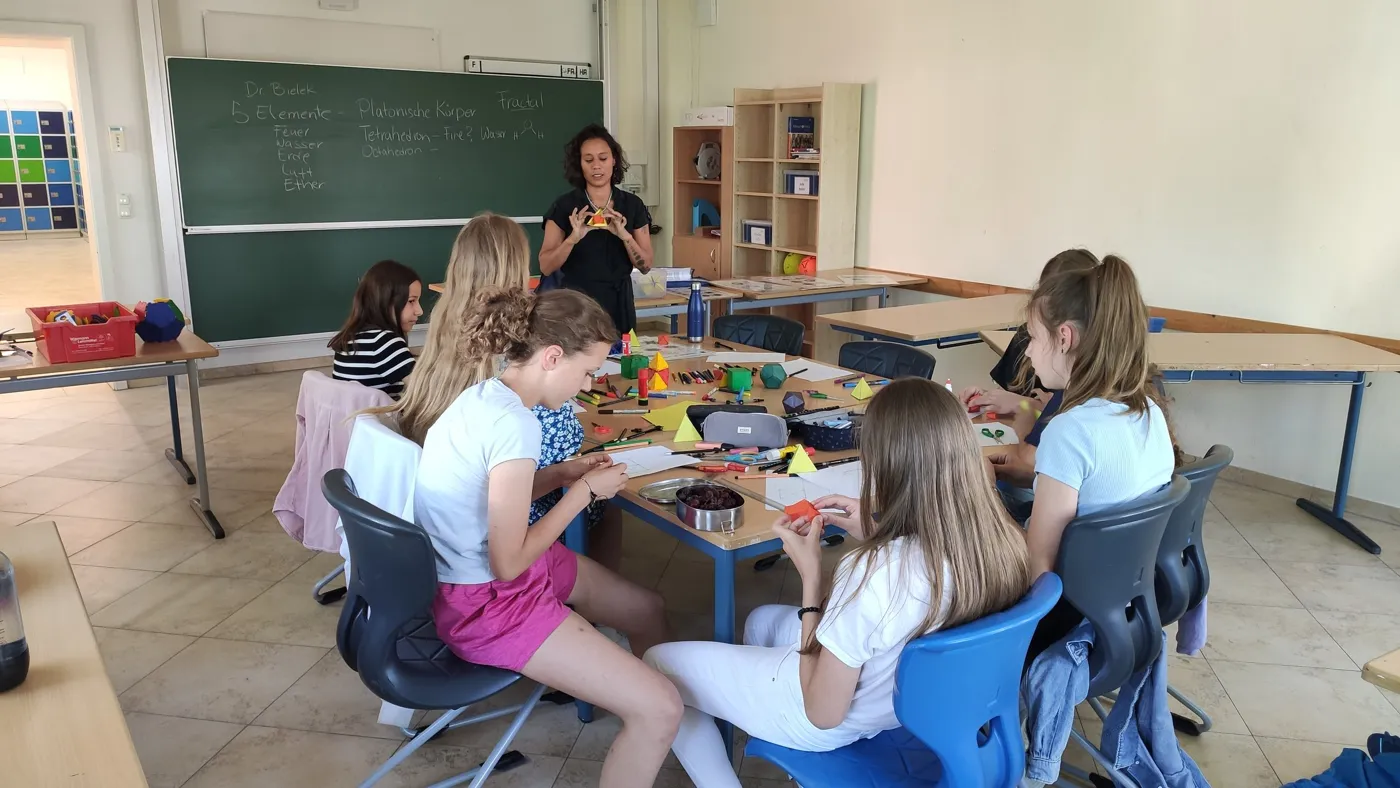
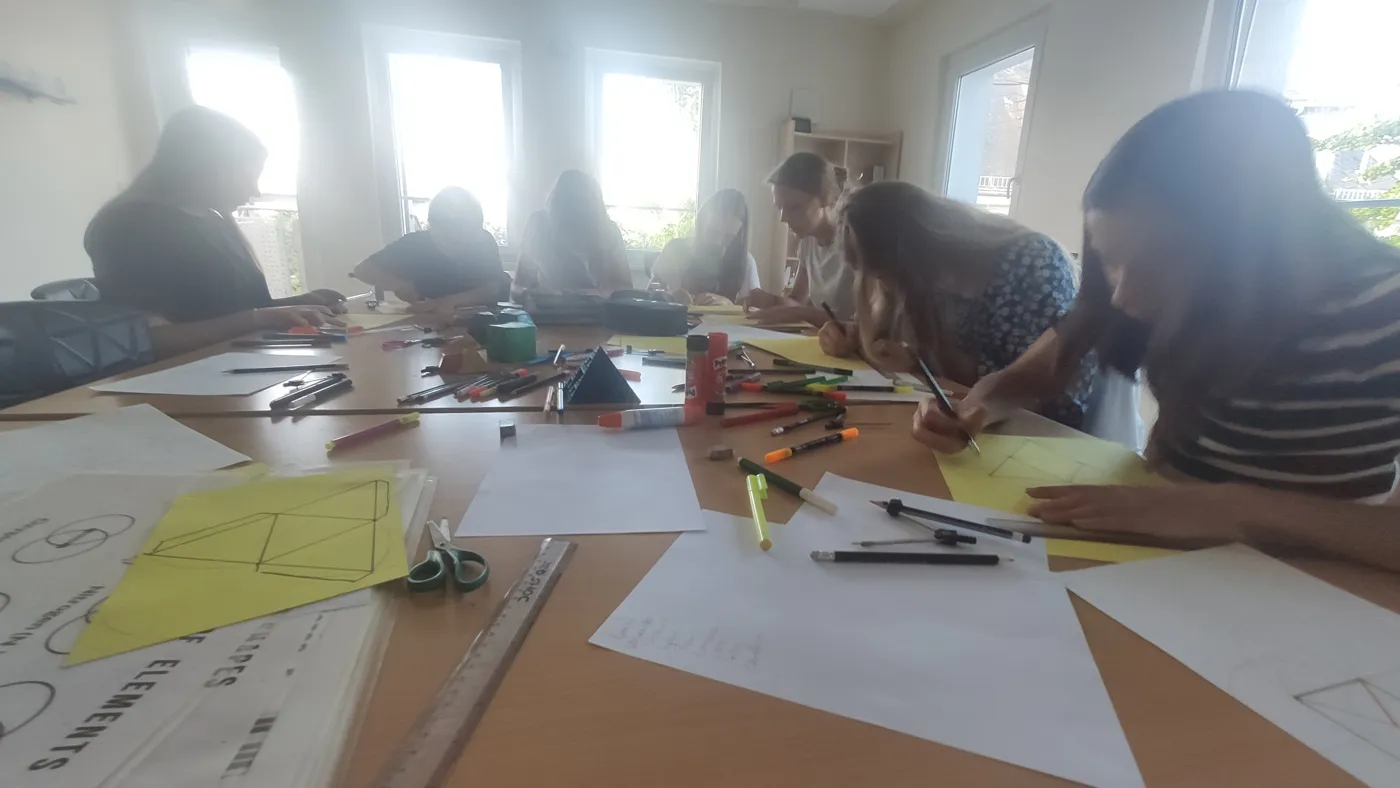
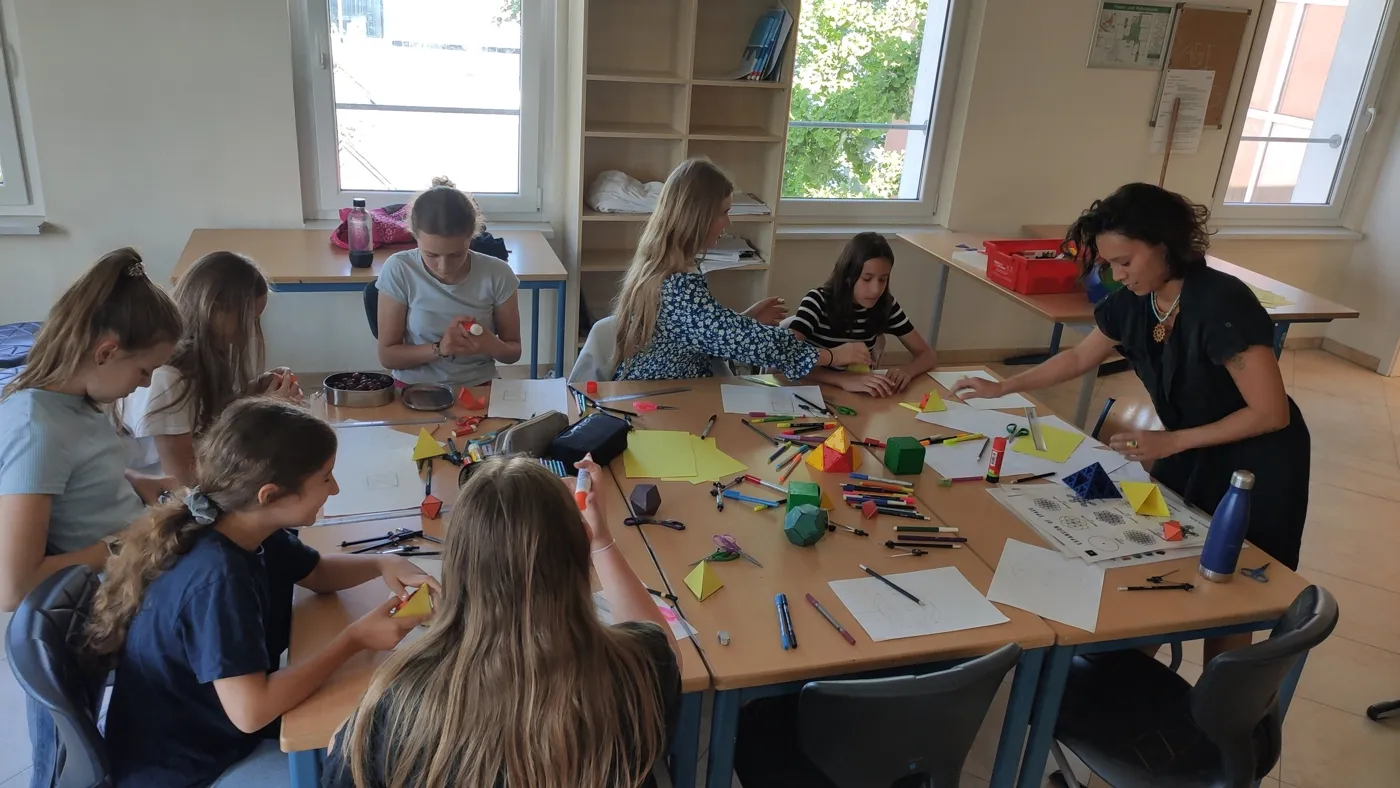
A journey from the planets to the fourth dimension
We started big. The children drew the solar system flat on paper, in 2D, and then discovered how things work in 3D. From there, Dr. Be took them on a journey through the dimensions of space, from 0D to 4D: the point, the line, the plane, the solid, and what might lie beyond. The questions came thick and fast. Space, time, the planets: their curiosity seemed to have no end.
Five perfect shapes from paper
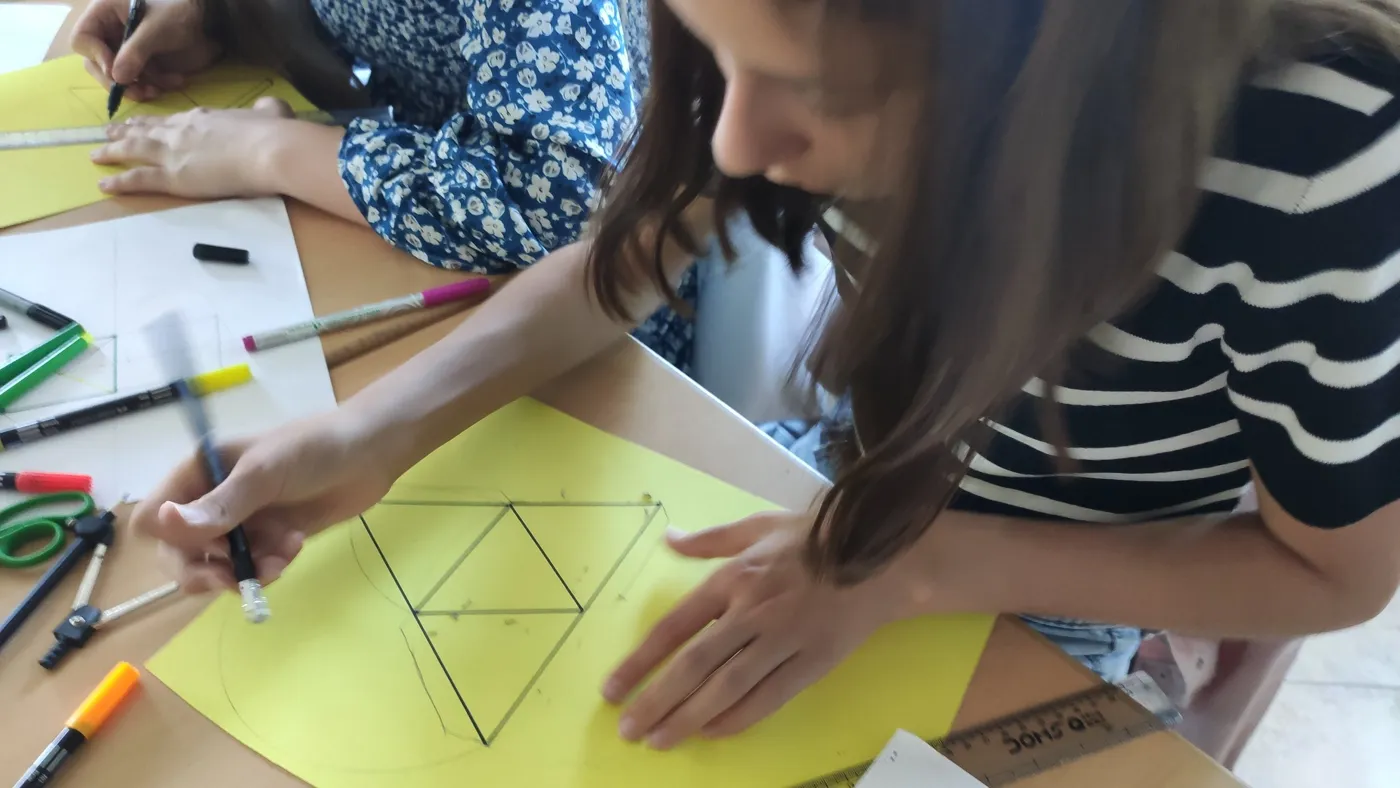
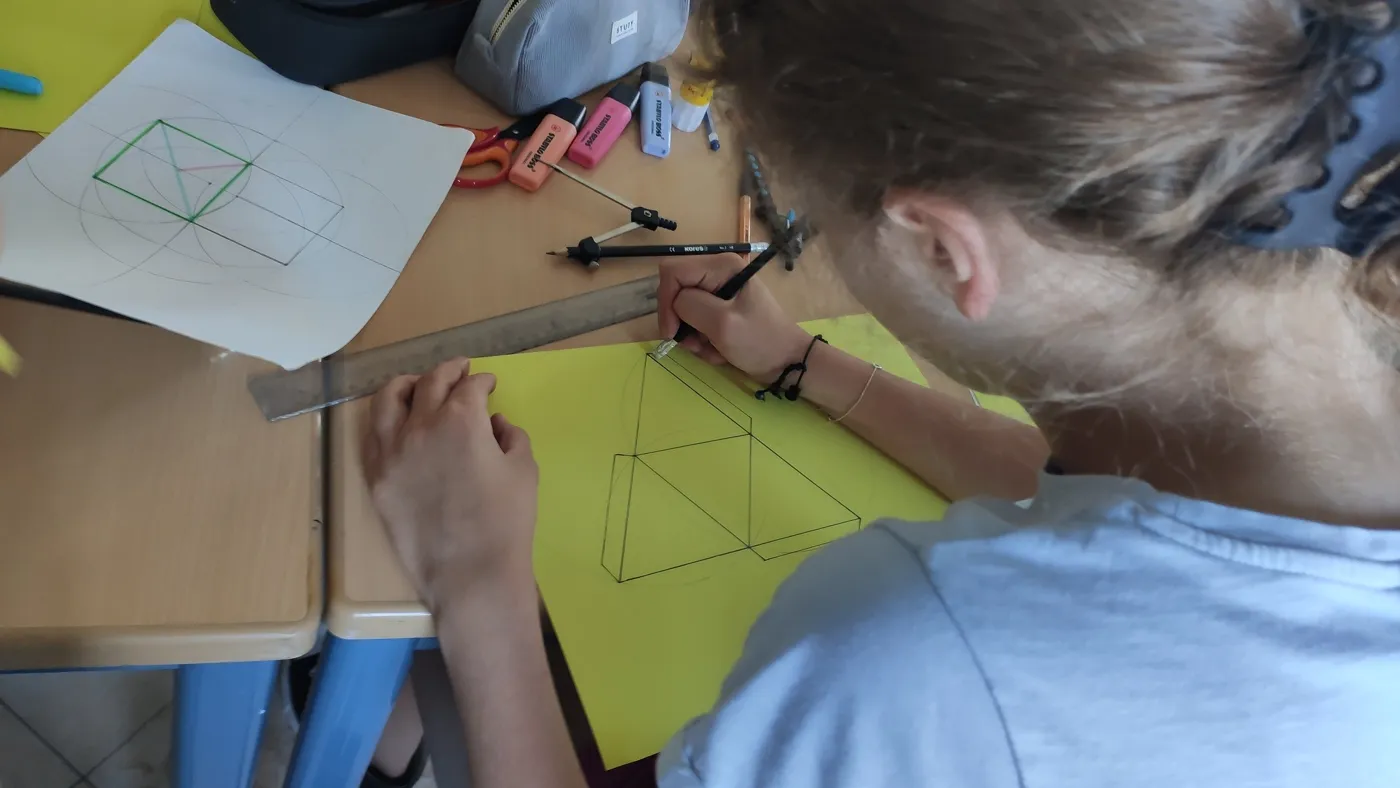
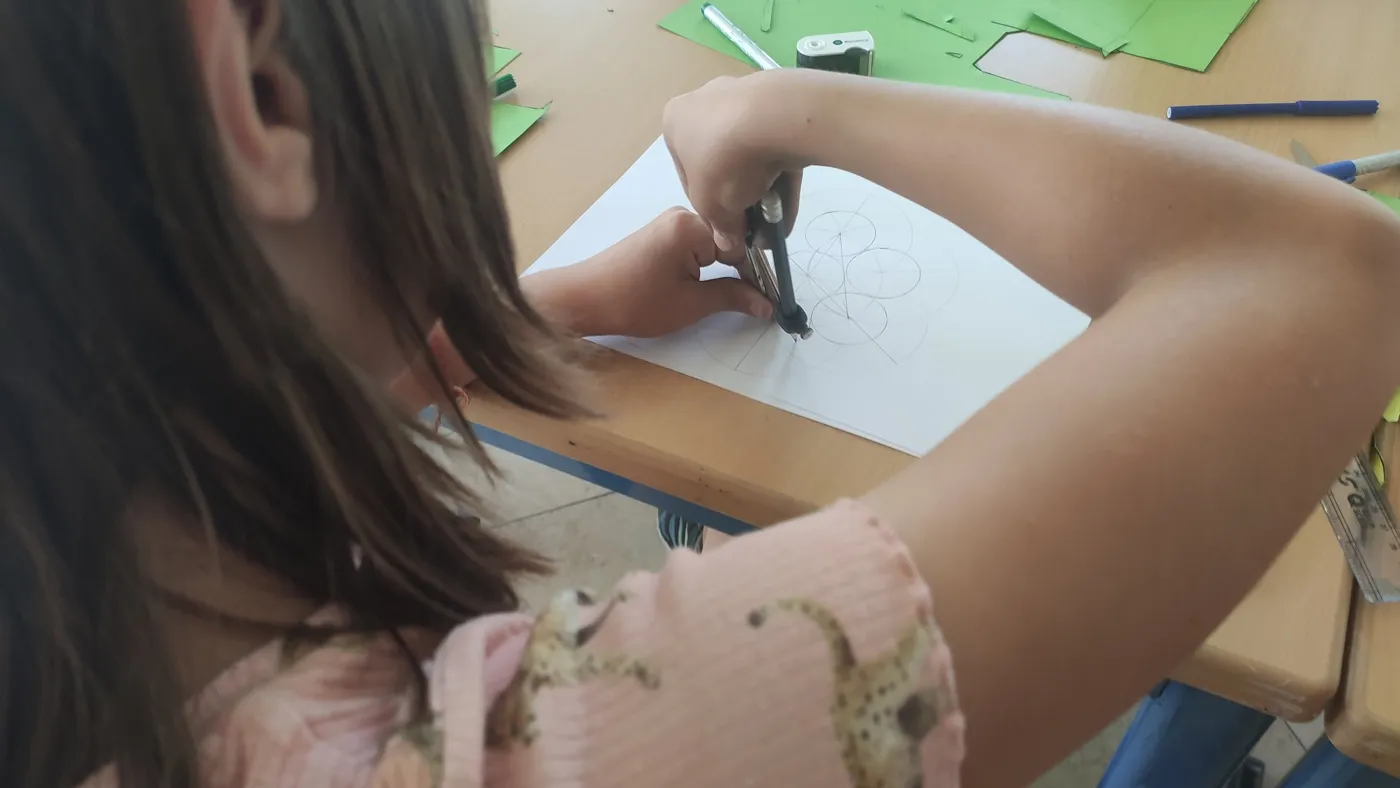
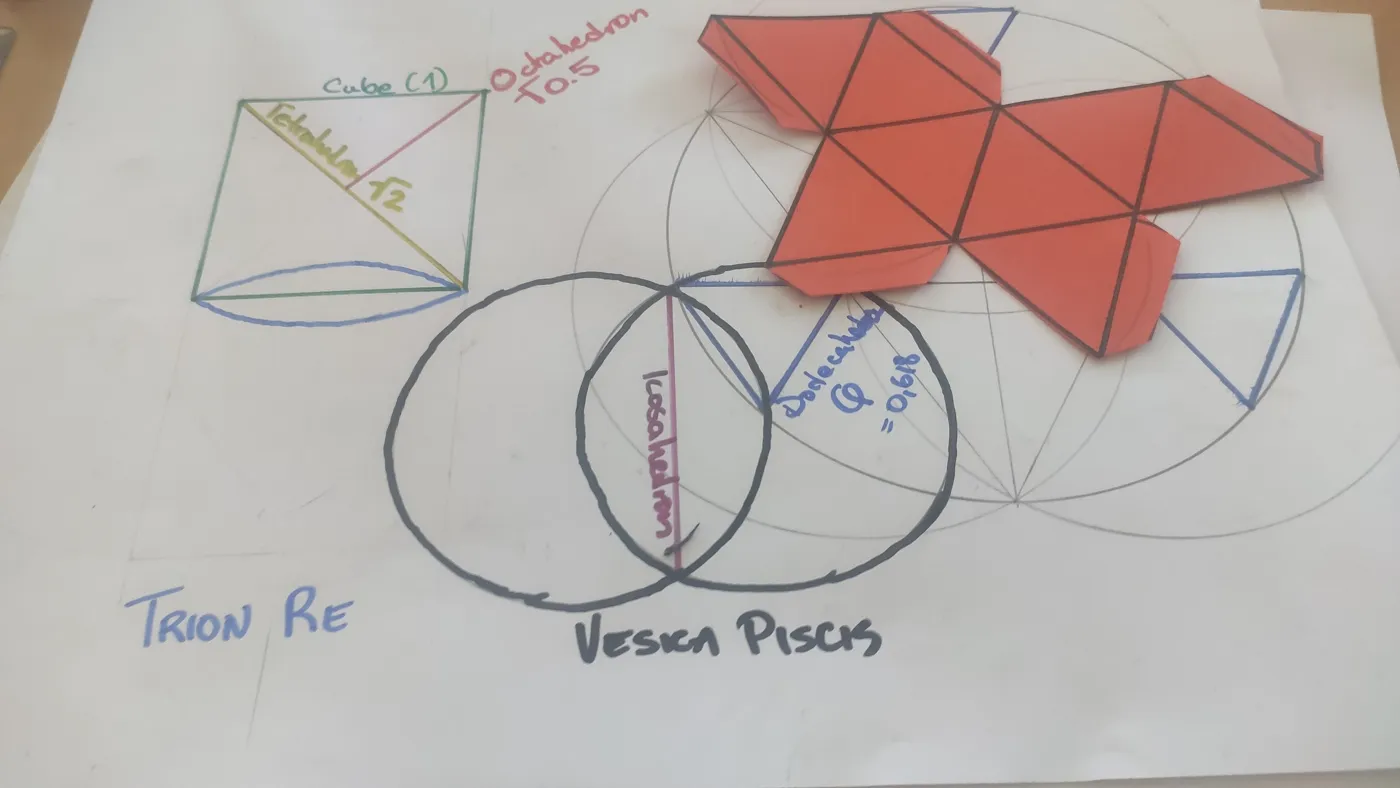
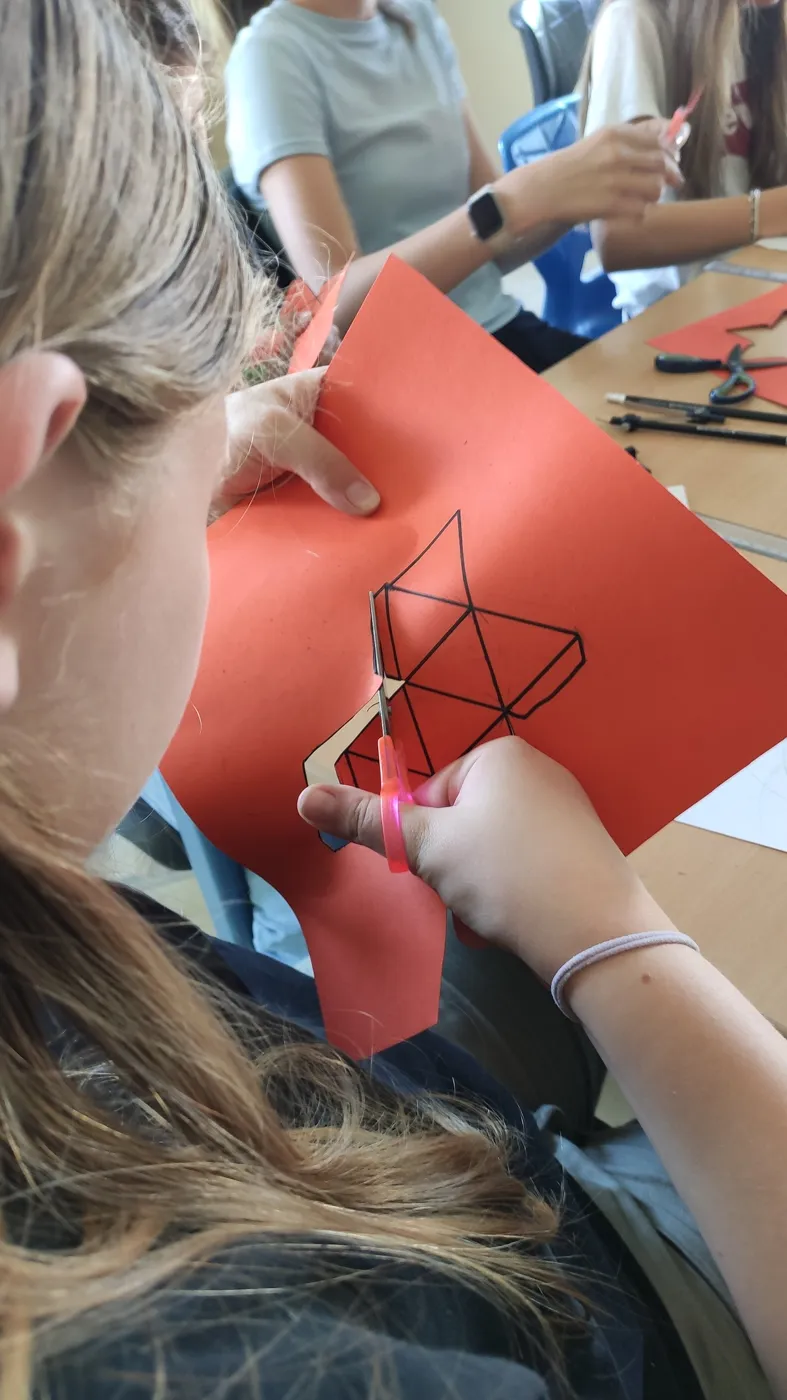
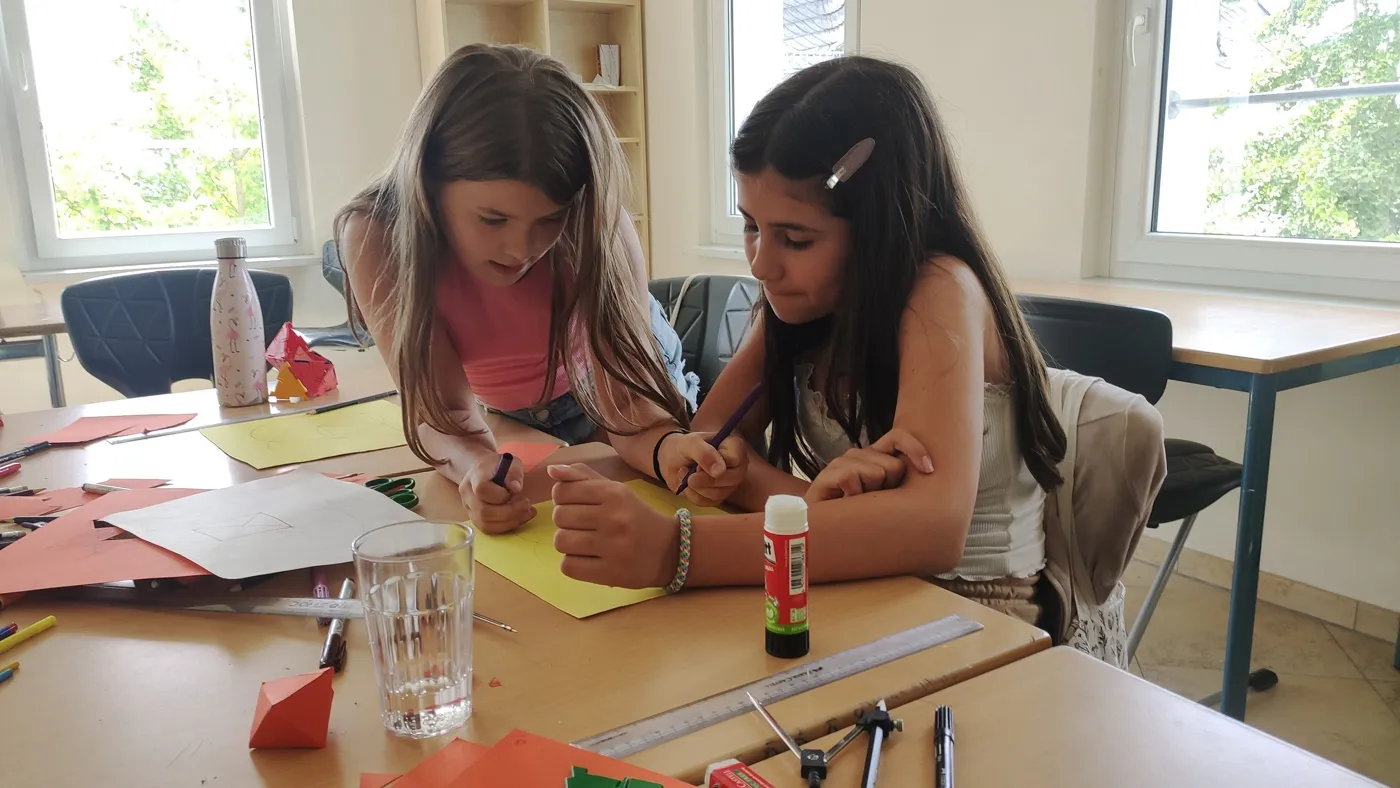
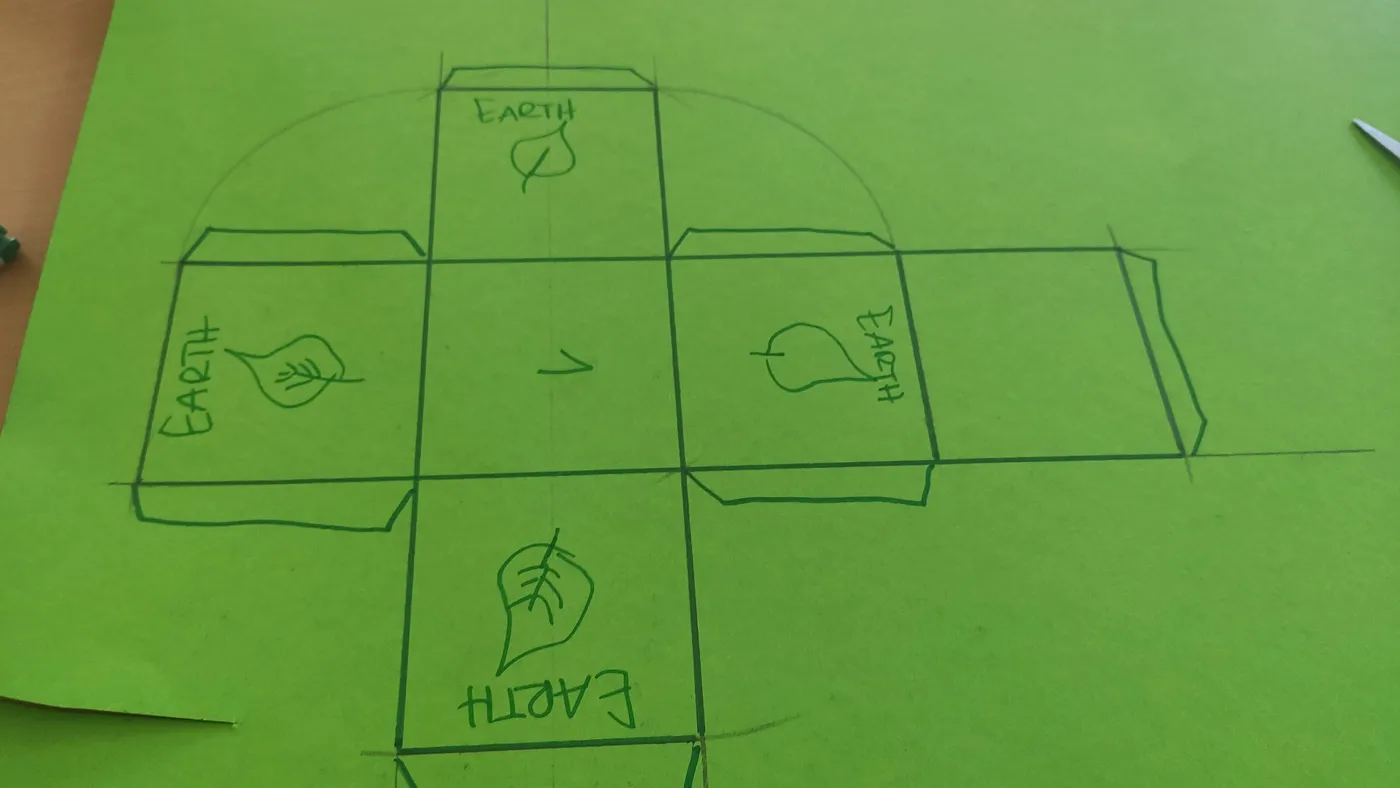
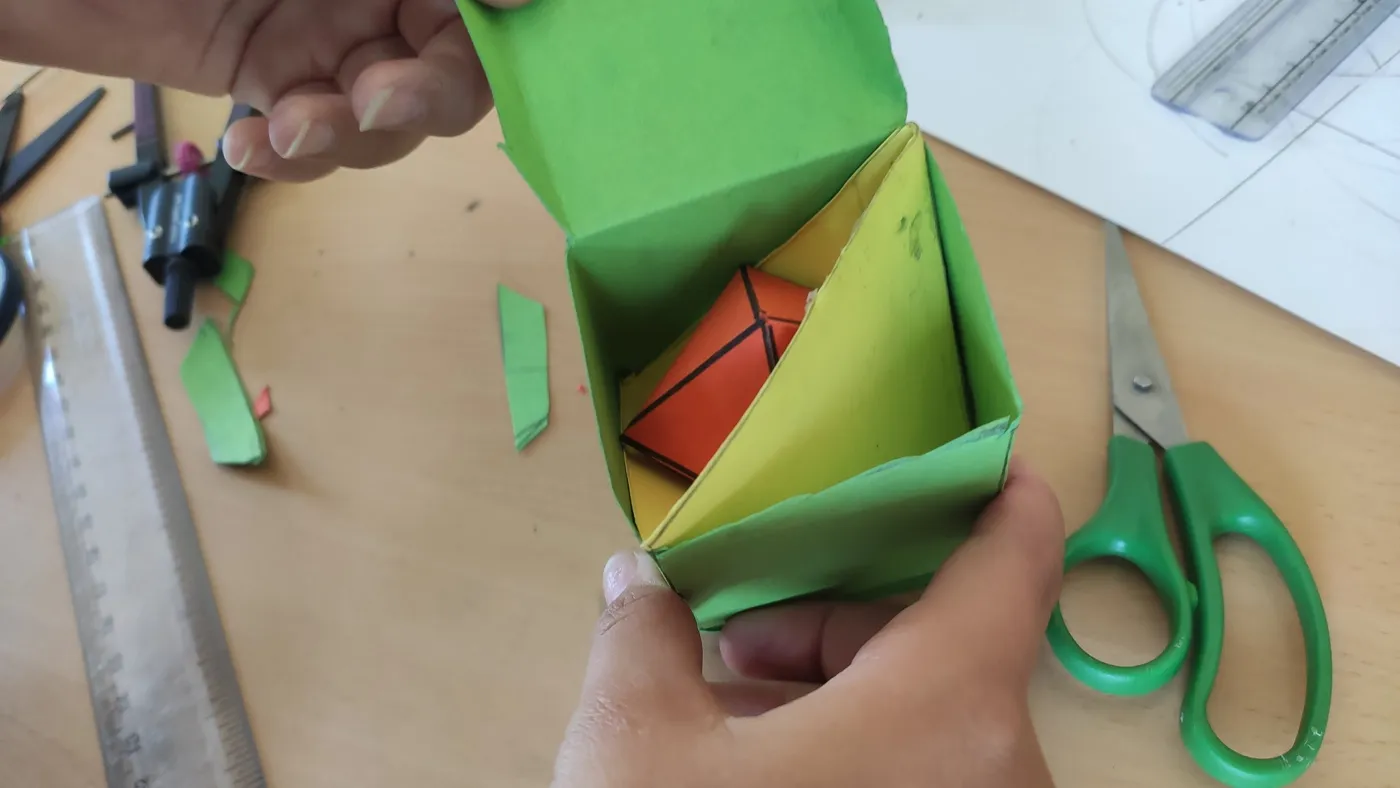
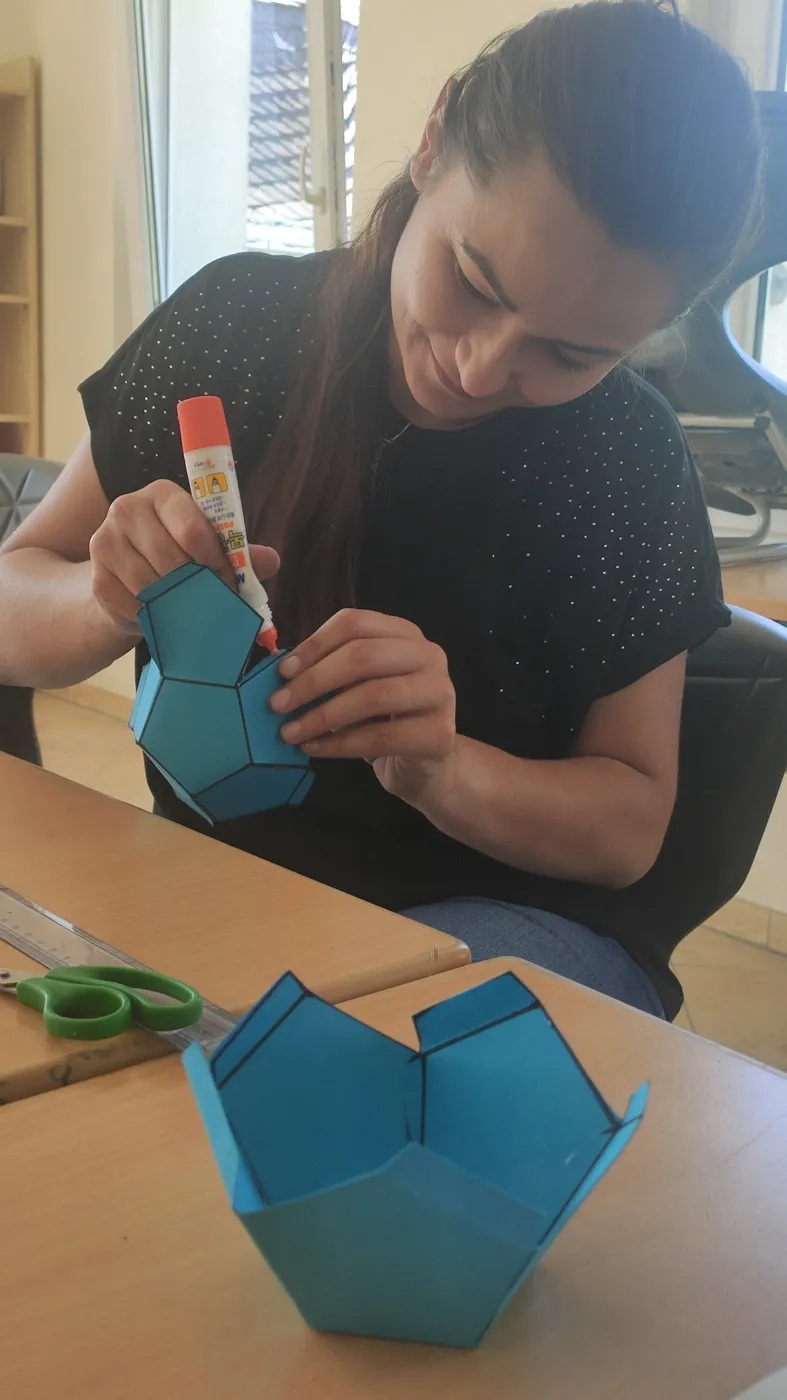
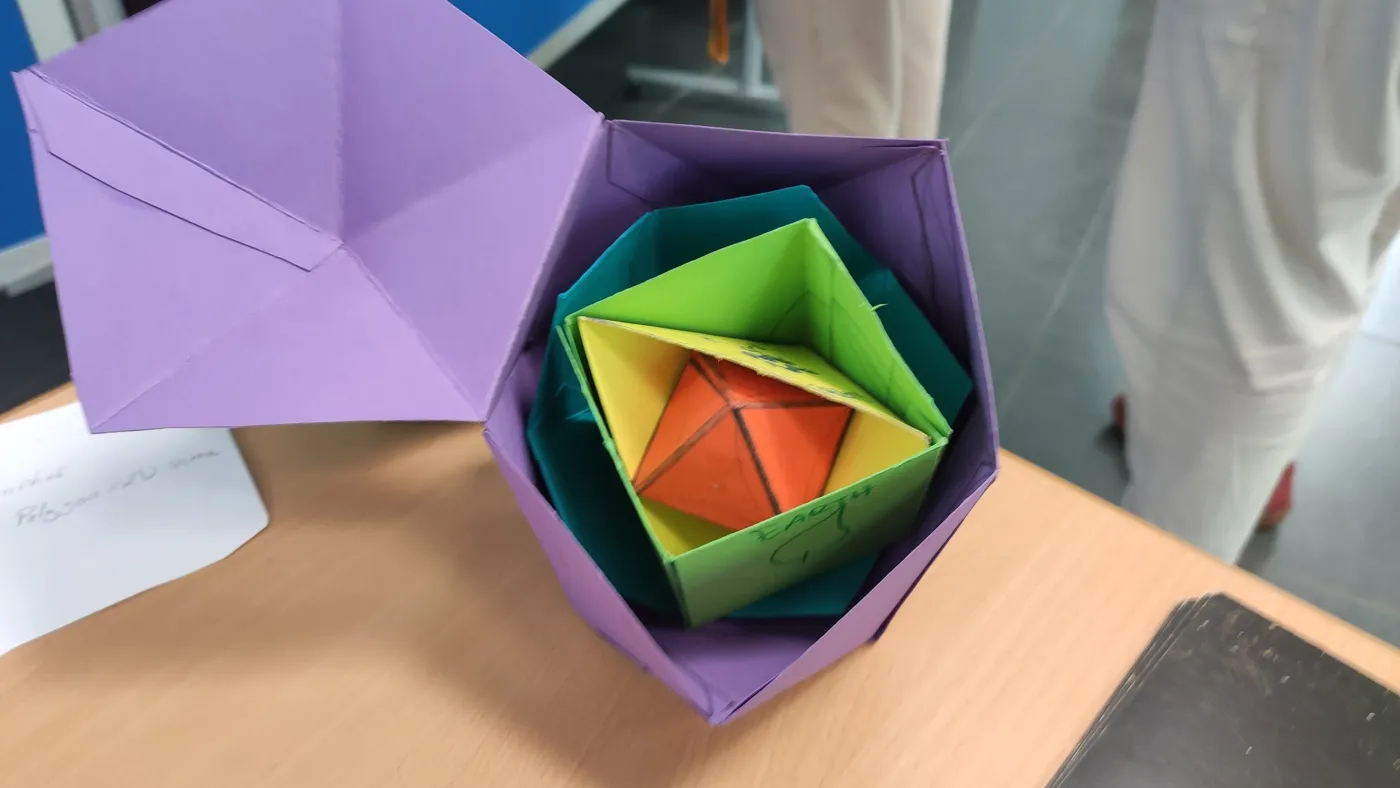
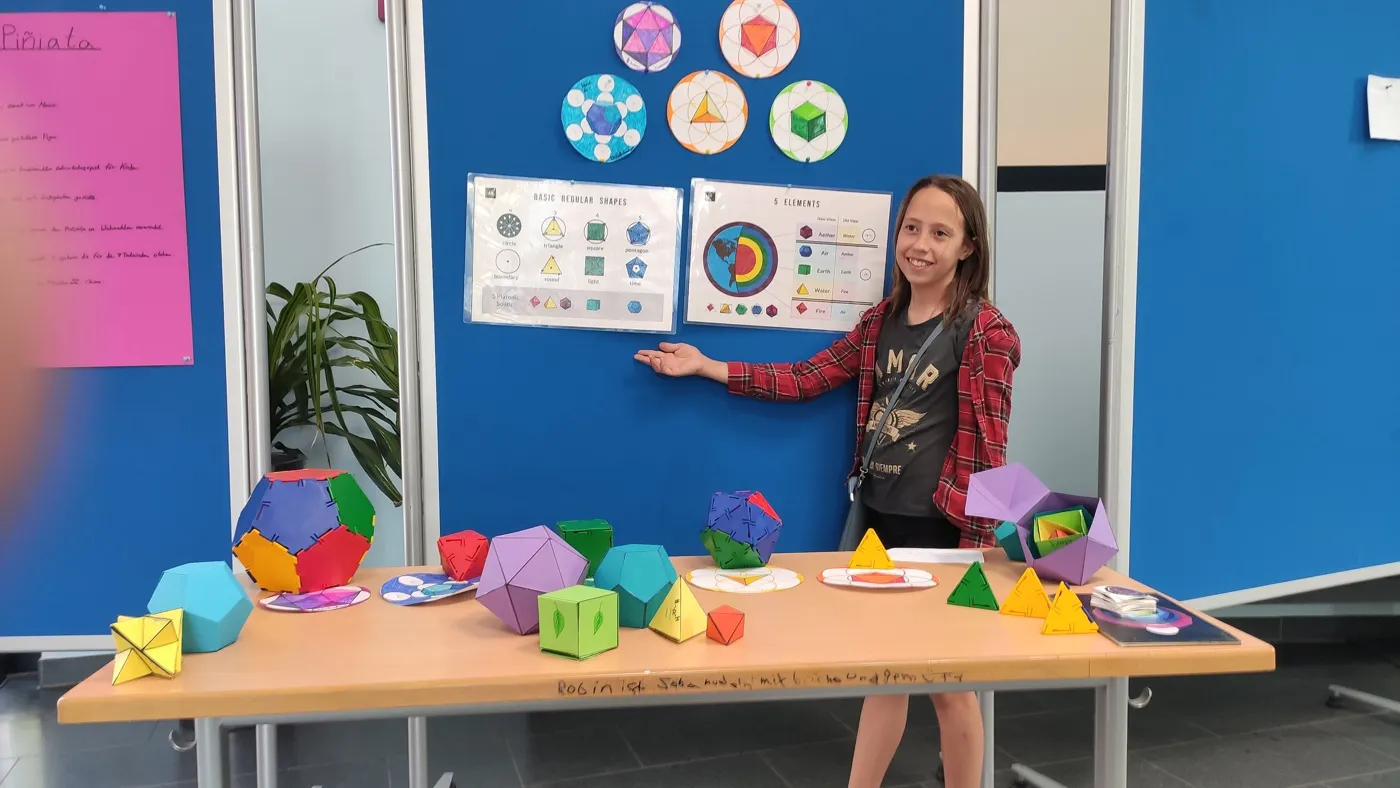
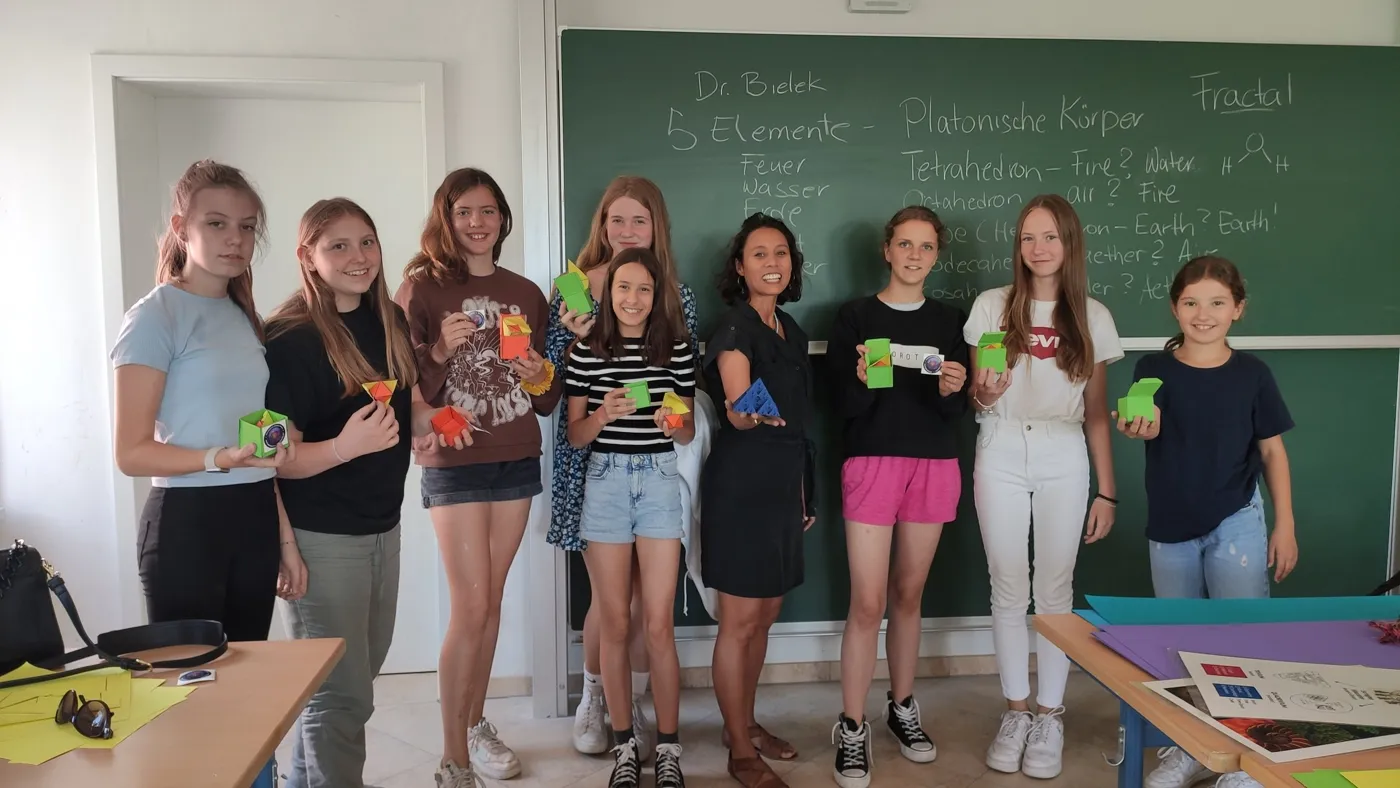
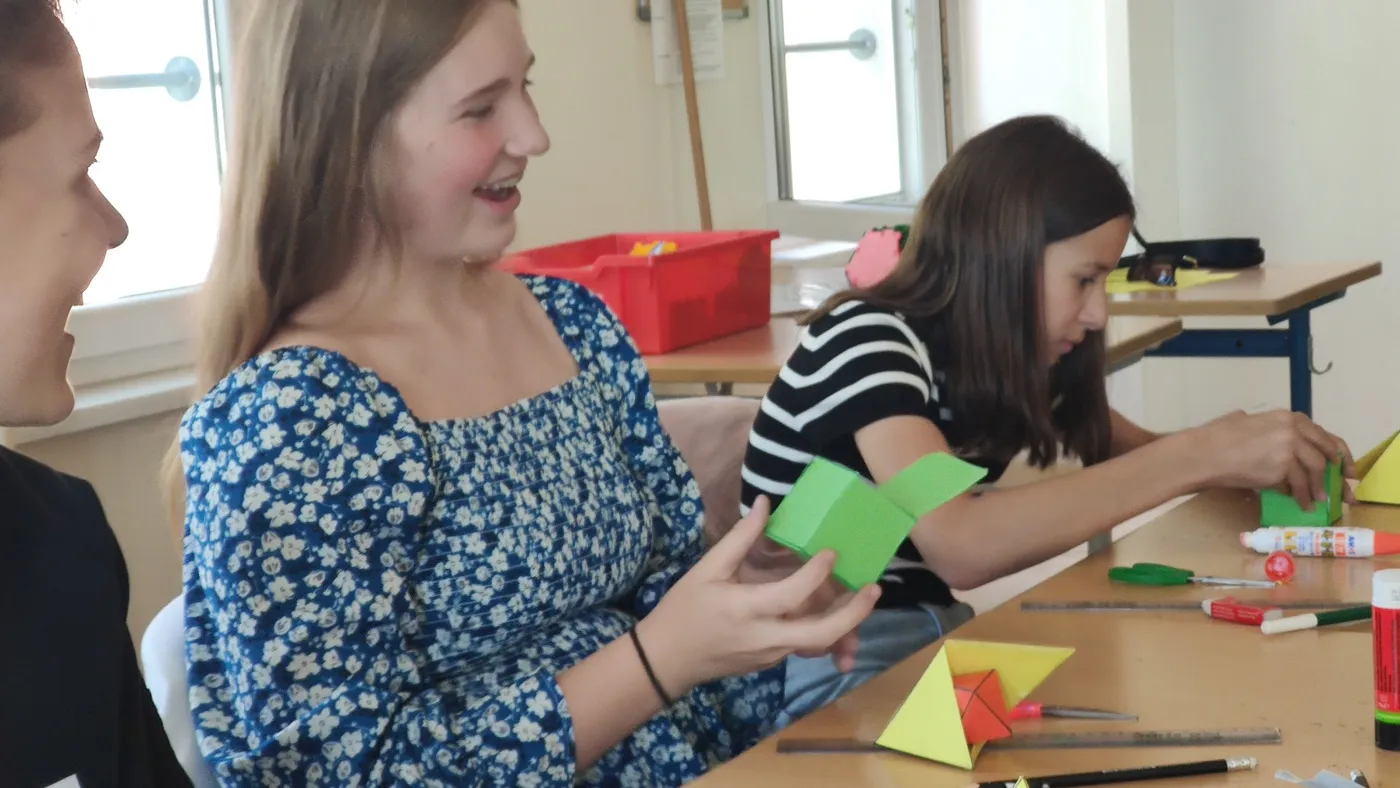
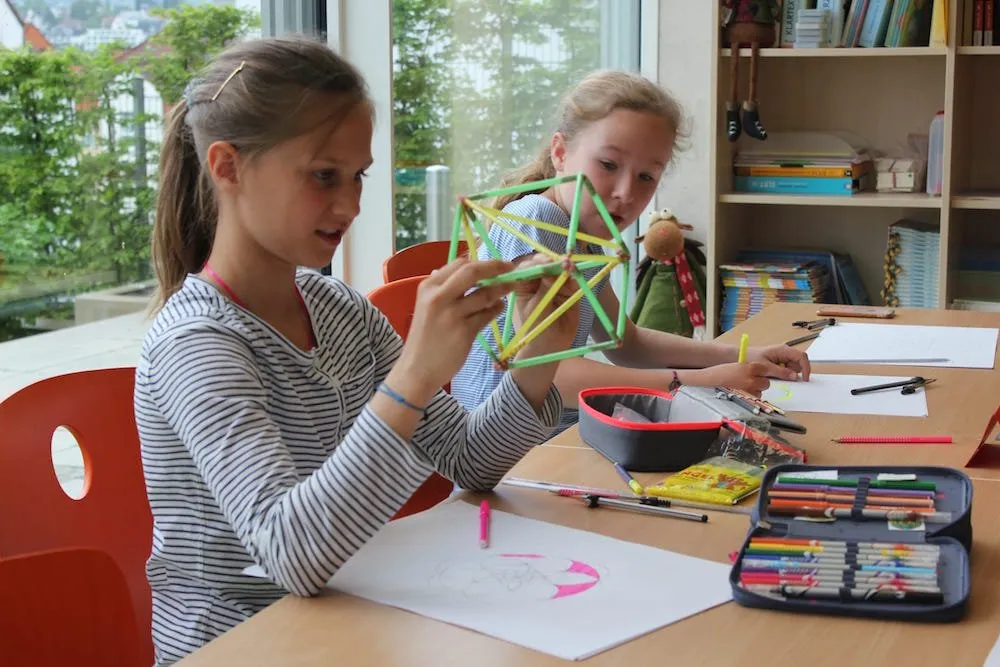
Then the real craft began. With nothing more than a compass, a ruler, scissors, glue and coloured paper, the children built all five Platonic solids in 3D: the tetrahedron, the cube, the octahedron, the dodecahedron and the icosahedron. Almost perfect shapes, and many of them looked familiar, like the dice the children knew from their games. That is no coincidence: every face of a Platonic solid is the same, so a die in one of these shapes can be fair.
Why are there exactly five? Euclid proved it more than two thousand years ago, in the last book of his Elements. At every corner of such a solid, at least three identical faces must meet, and their angles must add up to less than a full turn of 360 degrees, or the corner would lie flat. Only triangles, squares and pentagons pass that test, and they fit together in just five ways.
The children saw how the solids nest inside one another, and they played with perception: how a shape drawn flat in 2D becomes a solid in 3D, and how the drawing and the solid match.
Five shapes, five elements
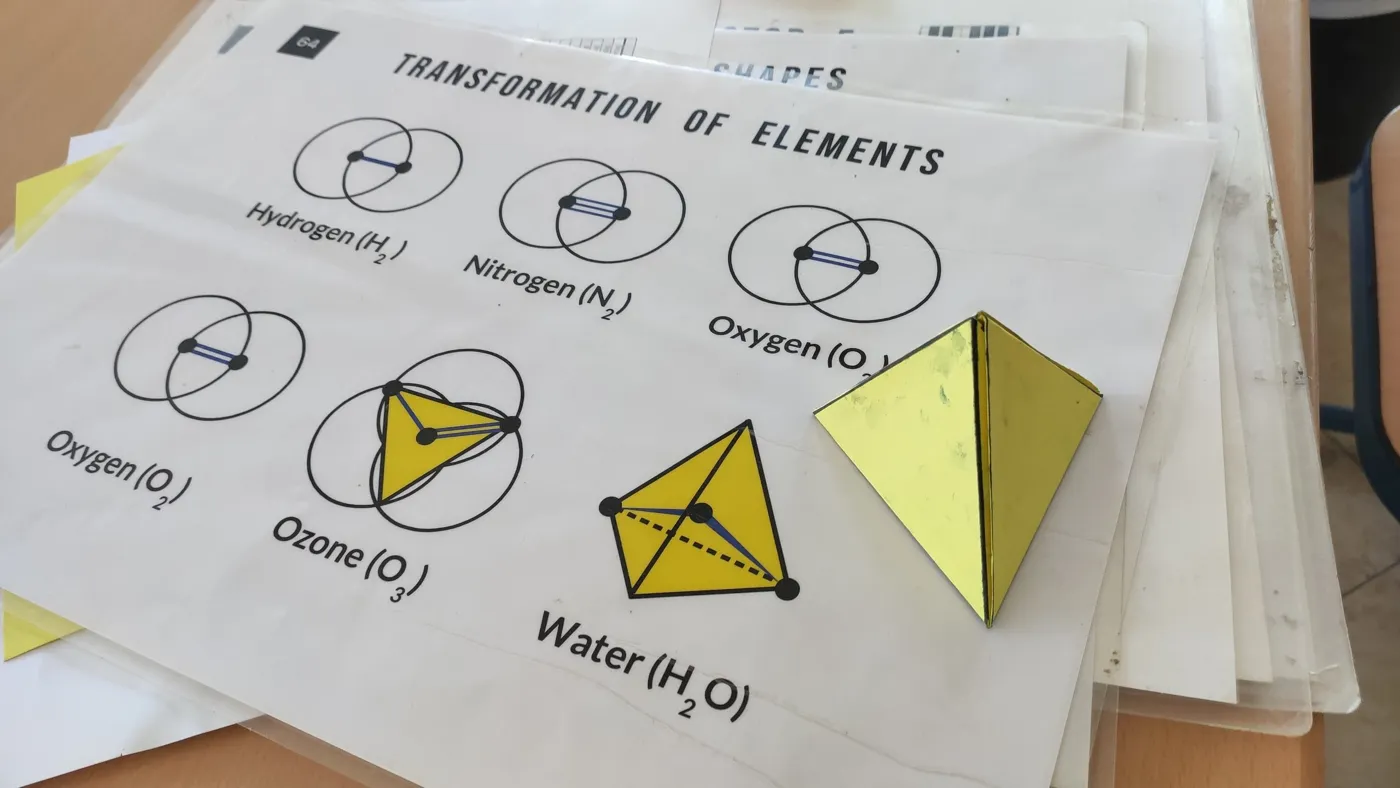
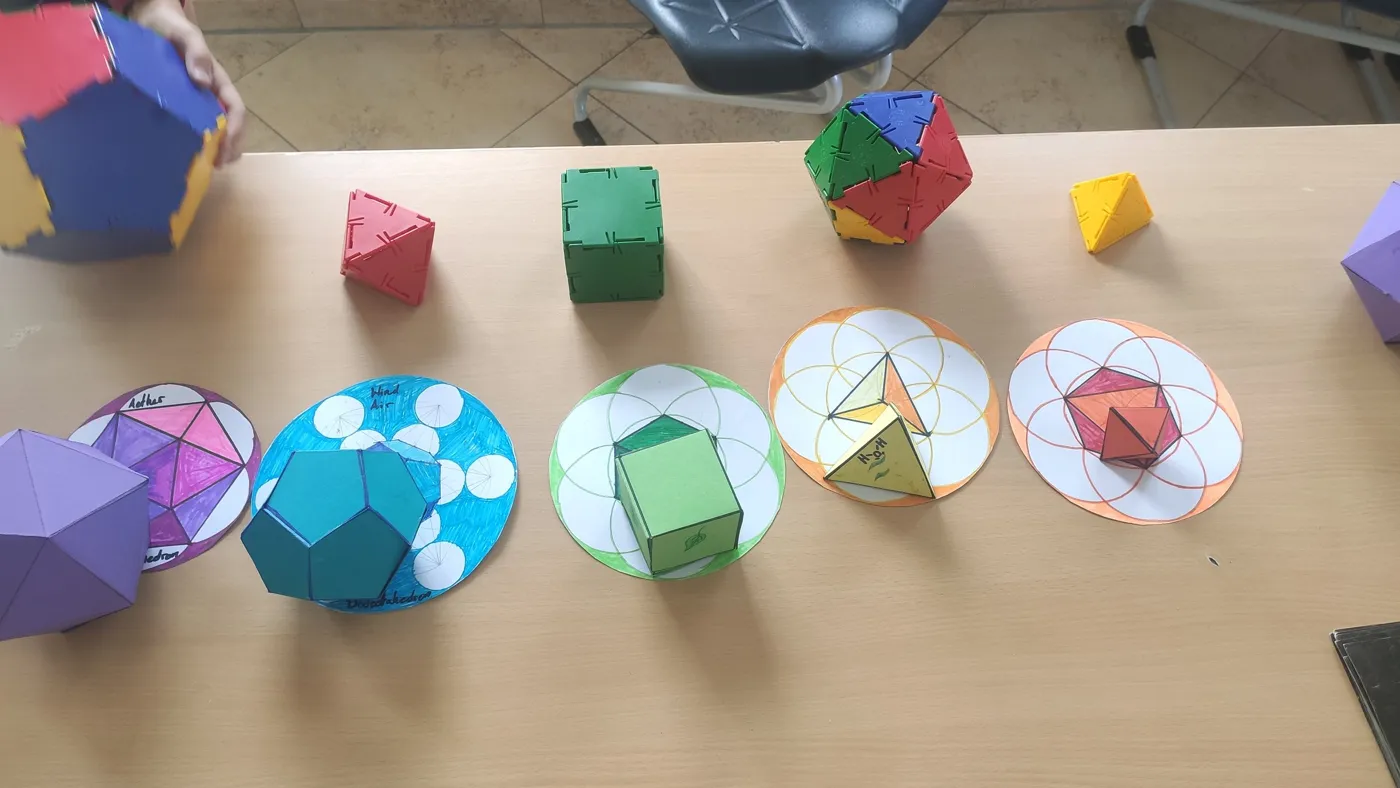
Next we asked what the shapes might mean. The Greek philosopher Plato, after whom the solids are named, linked four of them to the elements in his dialogue Timaeus: the tetrahedron to fire, the cube to earth, the octahedron to air and the icosahedron to water. The fifth, the dodecahedron, he connected with the heavens, and later it was often linked to ether, the fifth element.
So we explored the five elements of fire, water, earth, air and ether, and a little of the mythology behind them. The children found that art is not only design: it can carry meaning. Even some of the other teachers were so intrigued that they joined the class and helped out.
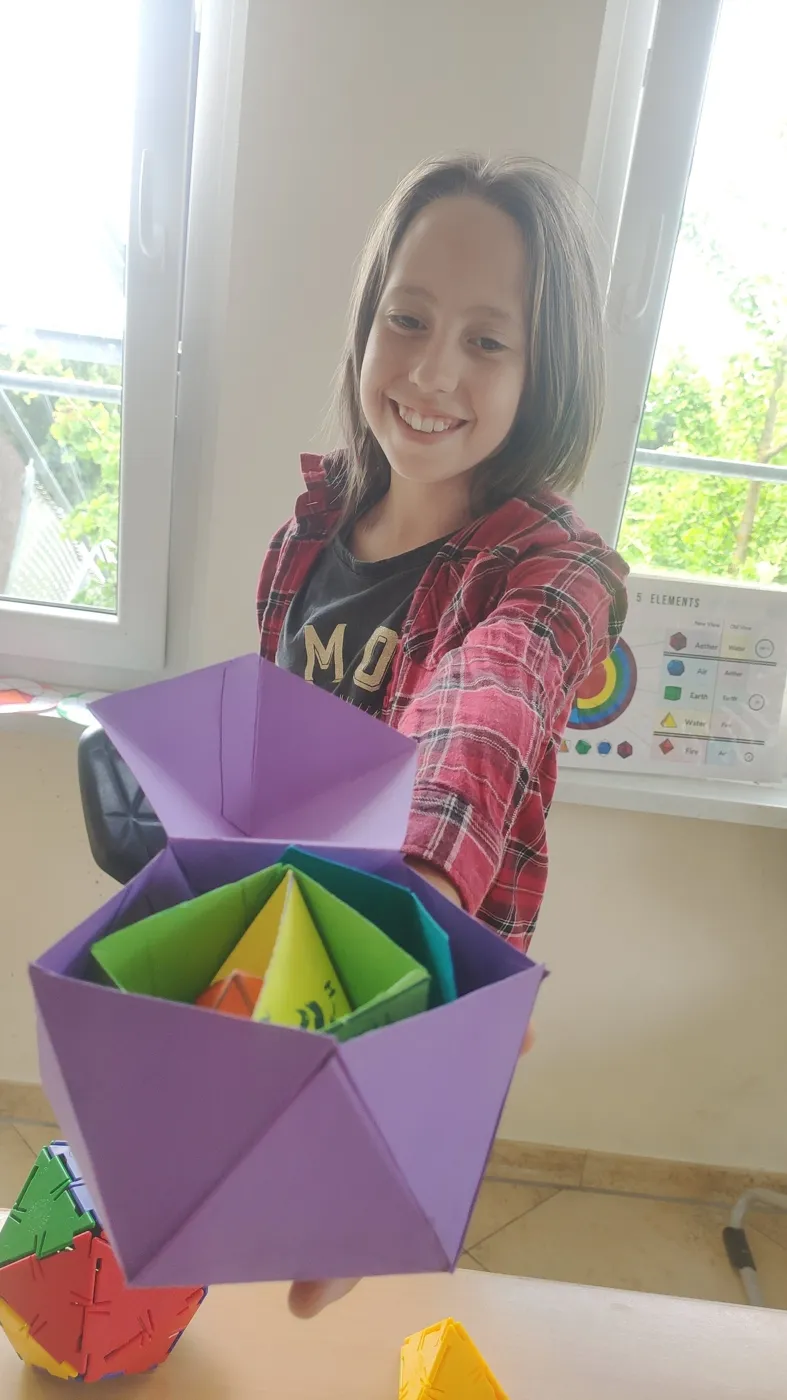
Two dimensions, three dimensions, one presentation
At the end of the week came the project week presentation. One girl presented the geometry herself, showing the shapes in 2D and in 3D, and how the two belong together.
Where it began: the Otfried-Preußler-Schule
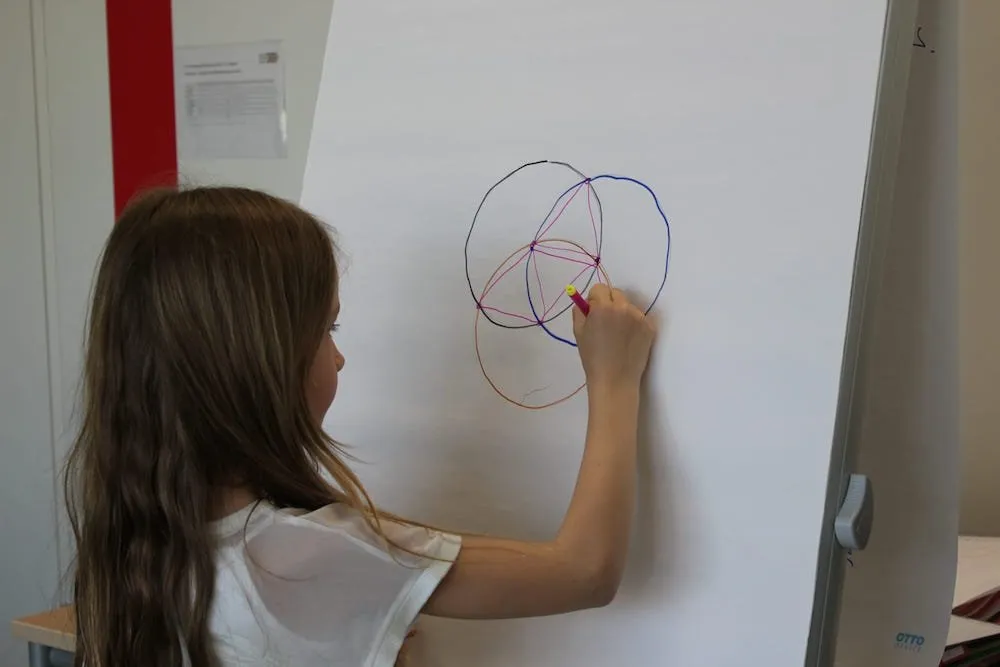
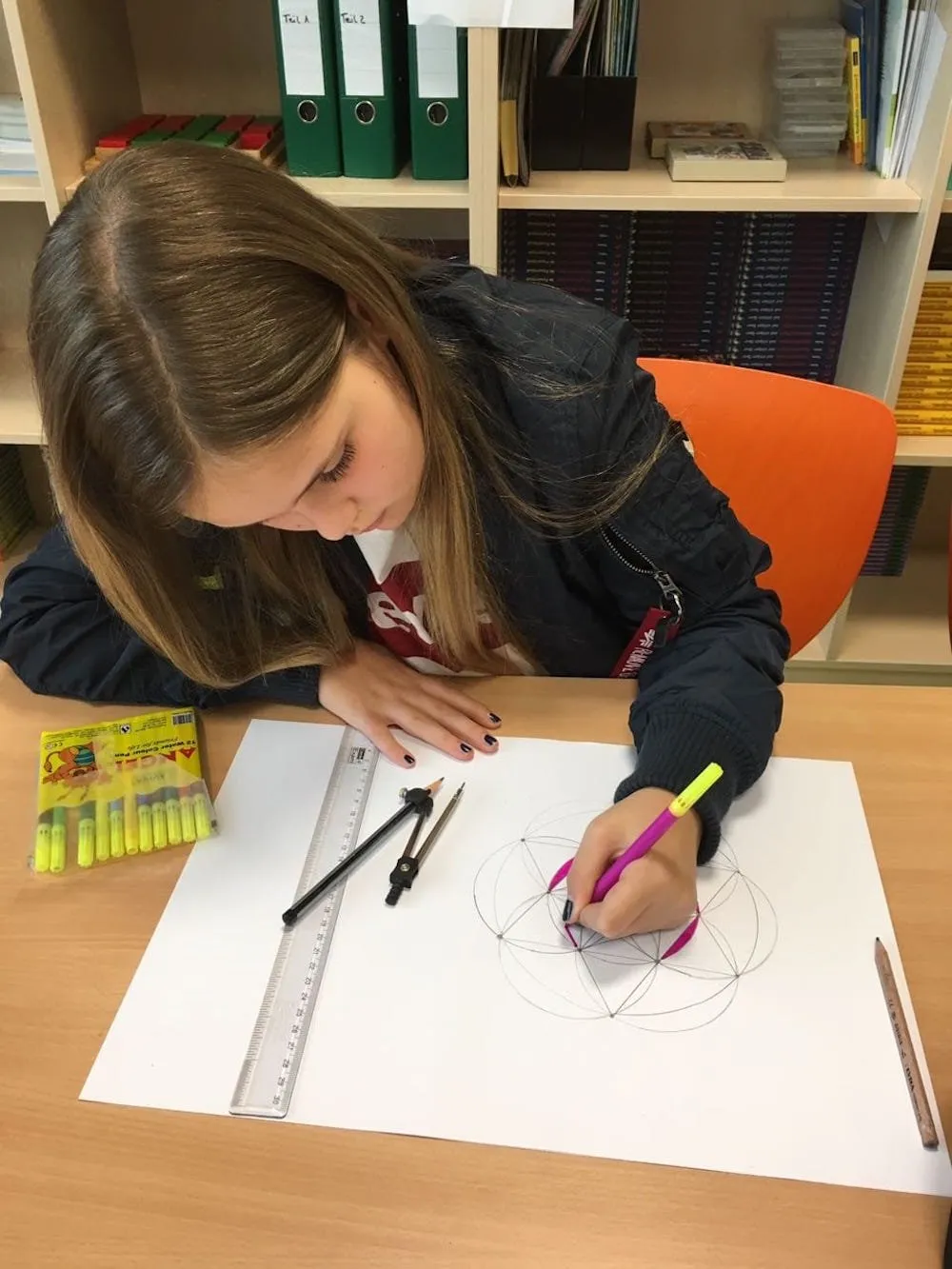
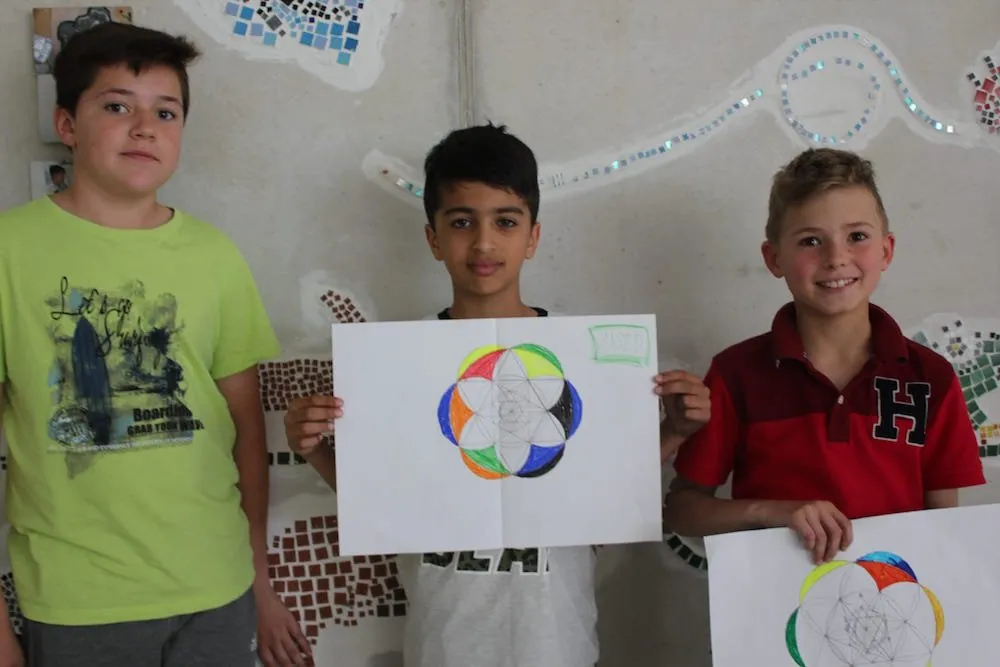
Our very first school workshop in Germany took place years earlier, in May 2017, at the Otfried-Preußler-Schule. For one day the classroom turned into a geometry studio: the children stepped up to the flipchart to draw overlapping circles, followed the Seed of Life as it grew into the Flower of Life, and coloured their own mandalas. At the end, the whole class proudly held up what they had made.
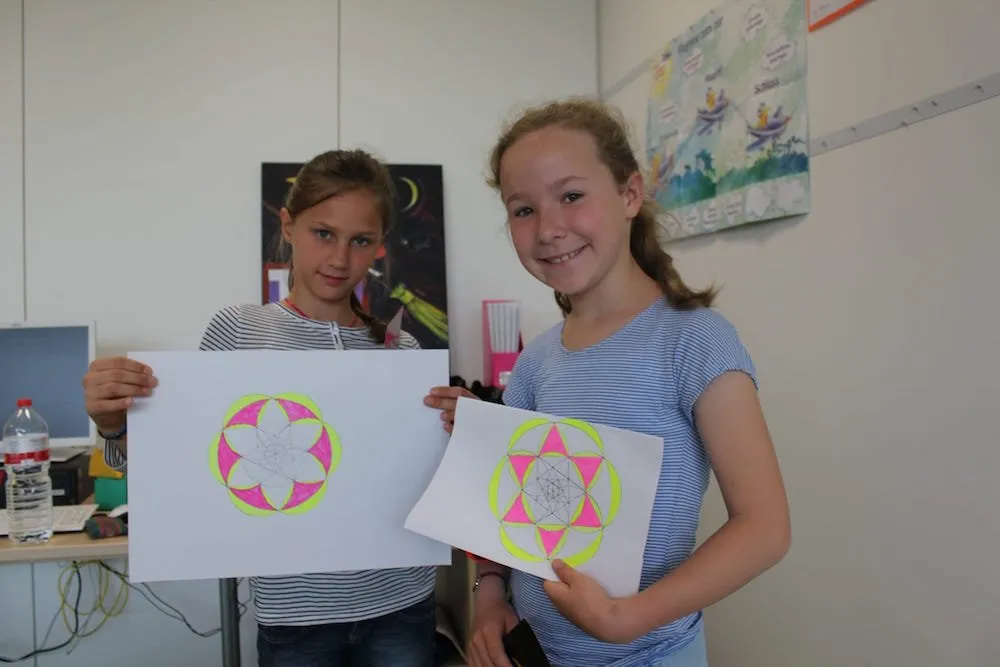
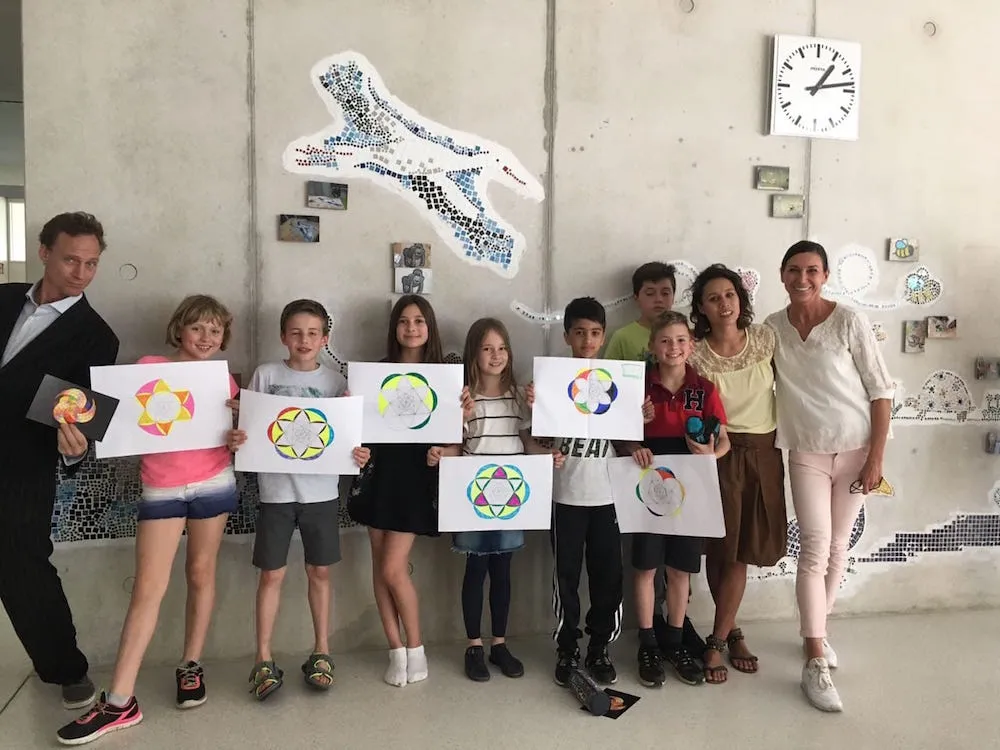
All in all, the children loved the geometry workshop. It gave them something they had never really experienced in a normal art class or maths class. Would you like a workshop like this at your school? Write to us → More about our work with children: Sacred Geometry for Kids.
Come curious. Come as you are. All perspectives welcome.