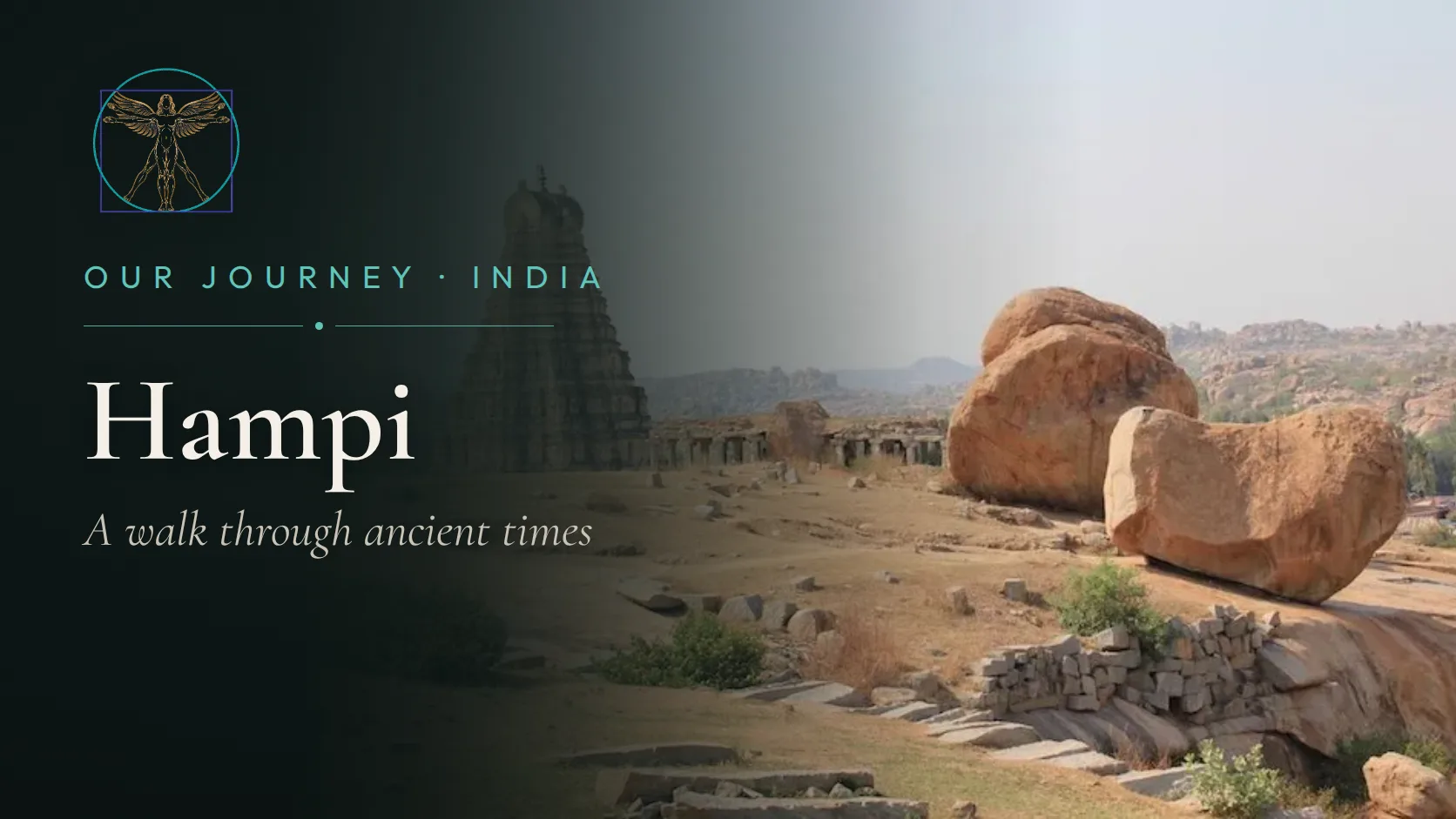
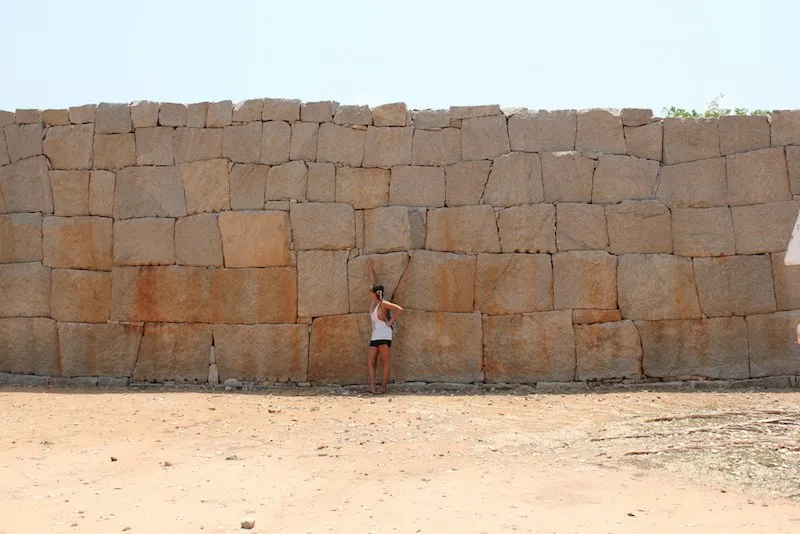
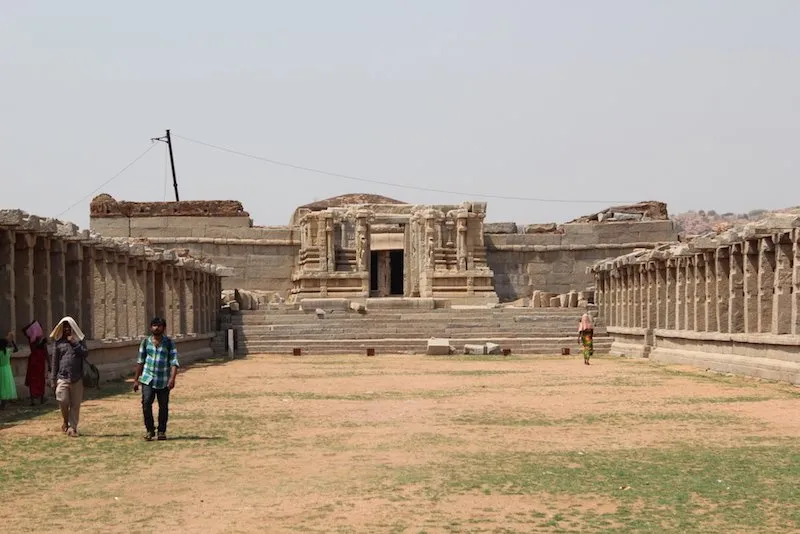
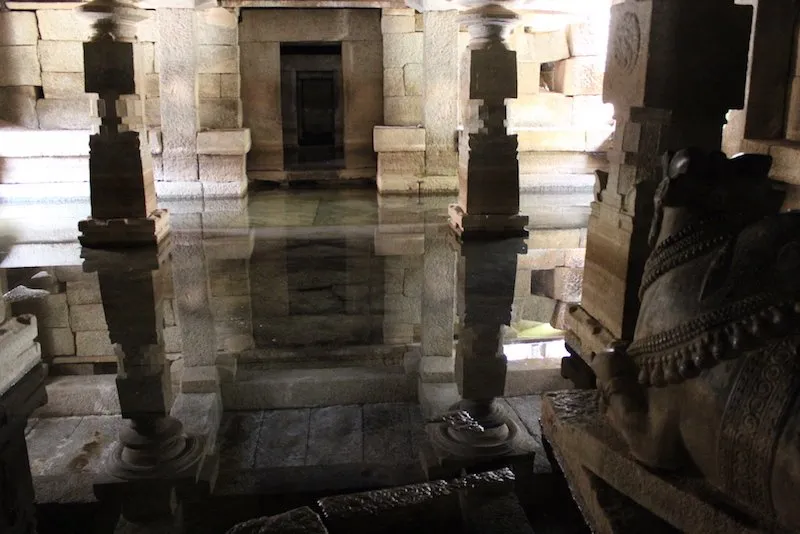
During our season in Goa in 2017 we made a little trip inland to Hampi, in the state of Karnataka. Walking through its ruins felt like walking through ancient times.
A city of kings
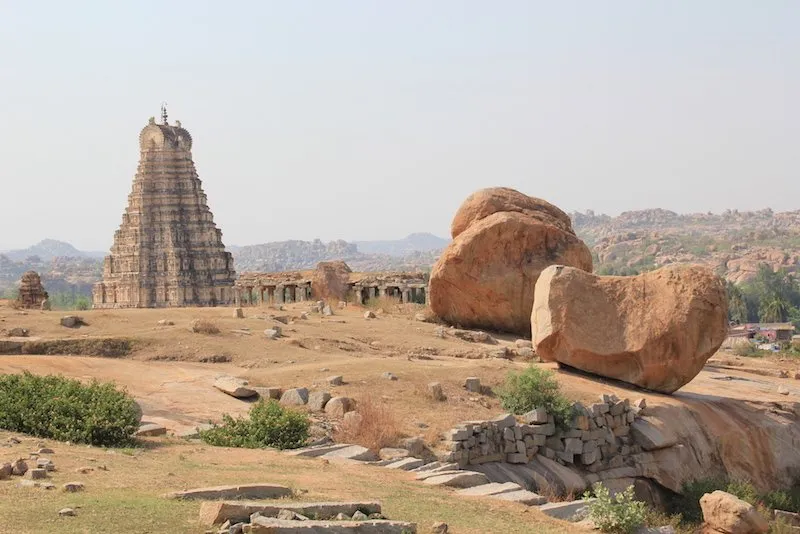
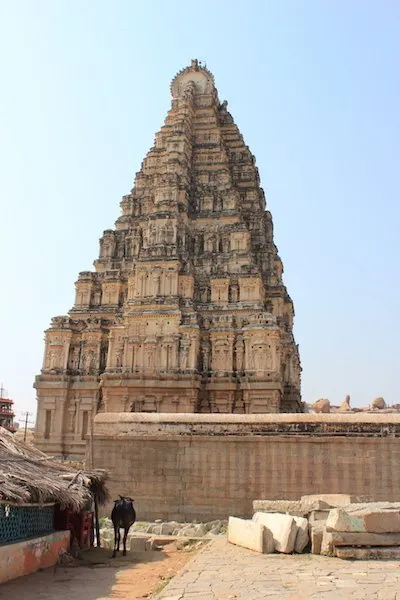
Hampi was once the heart of the Vijayanagara Empire, founded in 1336, and for two centuries one of the largest and richest cities of its time. Travellers from Persia and Portugal wrote about its markets, palaces and temples. In 1565, after a lost battle, the city was plundered and abandoned, and nature slowly took it back. Today its ruins spread over many square kilometres, and Hampi is a UNESCO World Heritage Site. Some temples, like the Virupaksha temple, are still places of daily worship.
A battlefield of giants
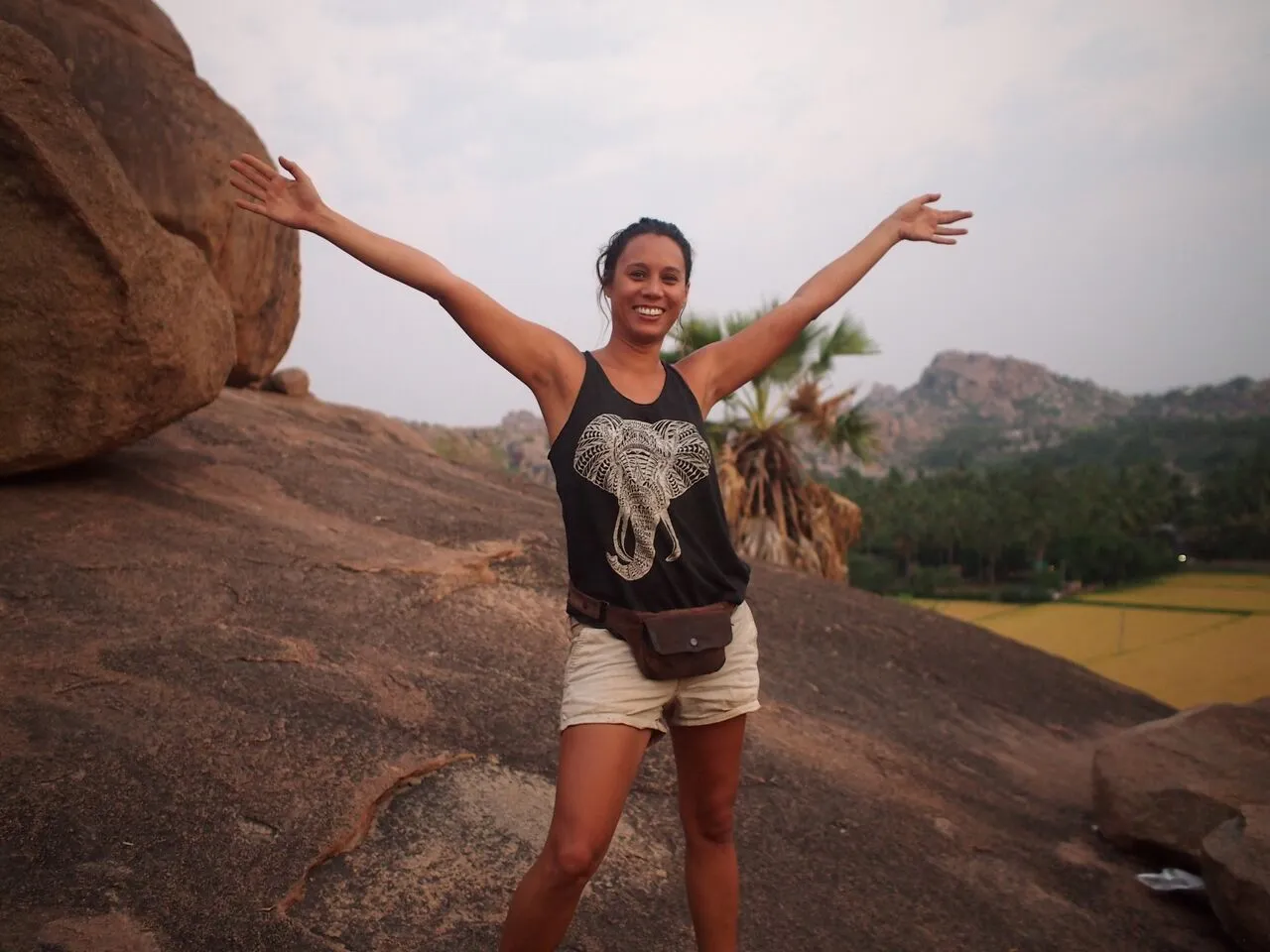
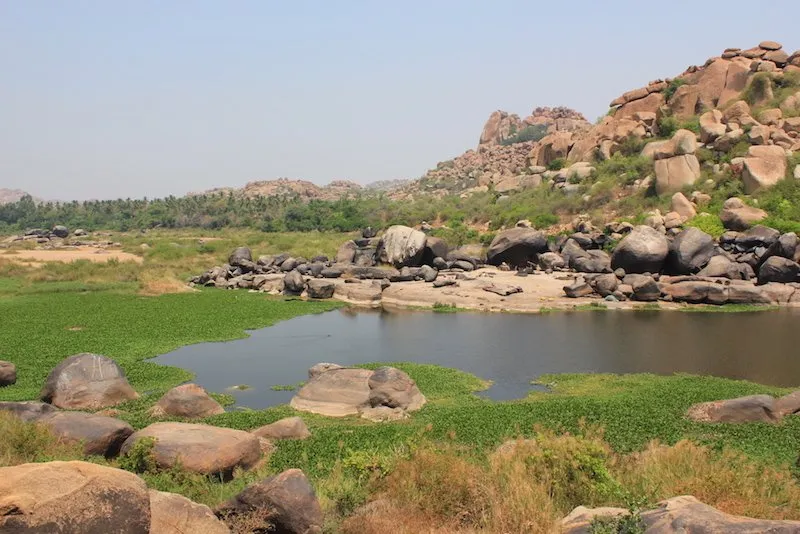
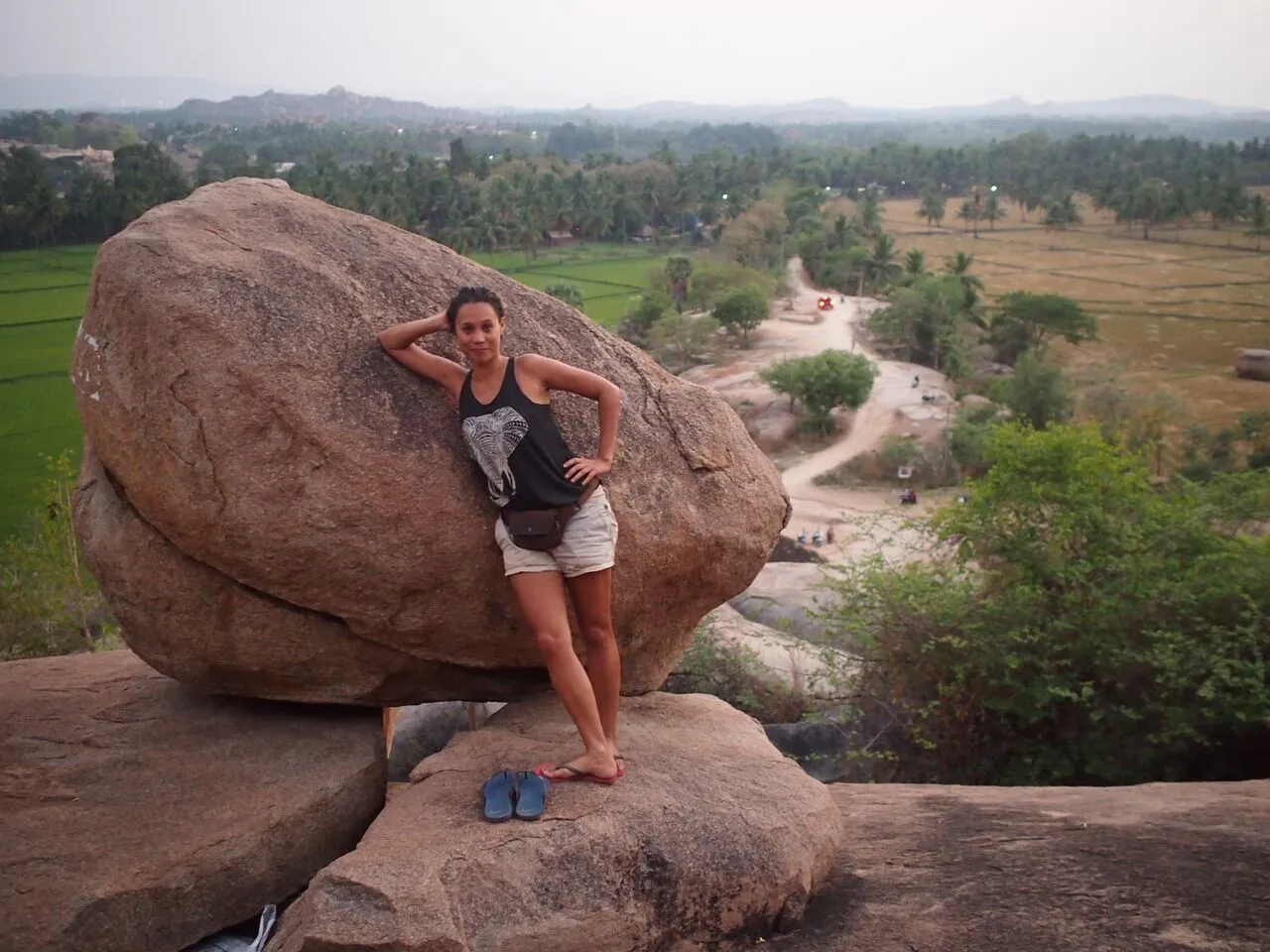
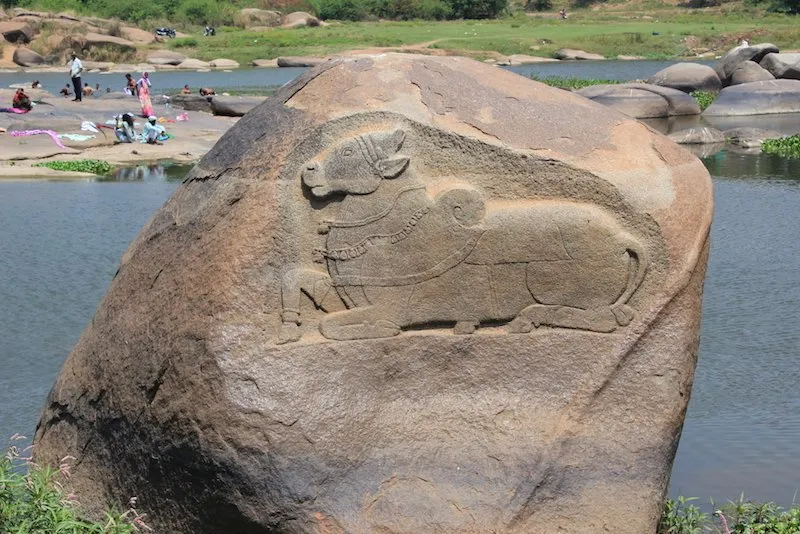
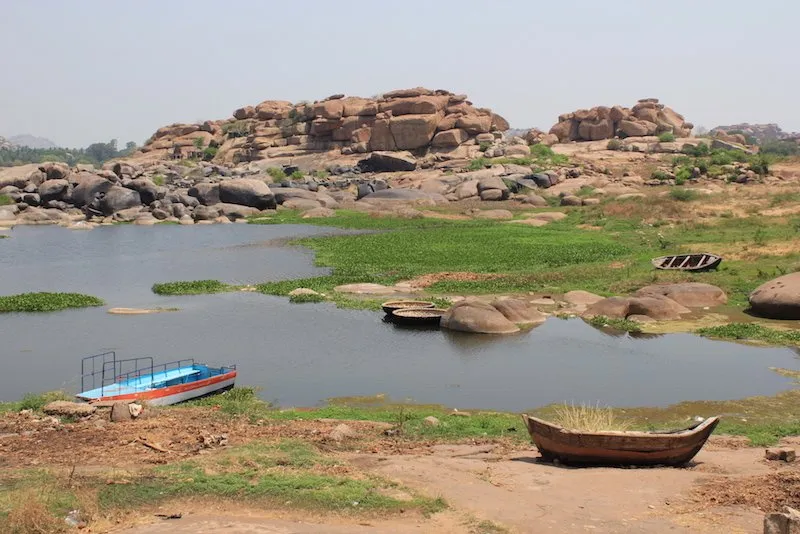
The first thing that strikes you is the landscape. Everywhere there are huge granite boulders, piled up and balanced on top of each other, as if they were what remains of a gigantic fight. Local stories tell the same: this is said to be Kishkindha, the kingdom of the monkey kings in the Ramayana epic, and the boulders are the rocks they hurled at each other in battle. A hill nearby is honoured as the birthplace of Hanuman, the monkey god.
Gods and goddesses in stone
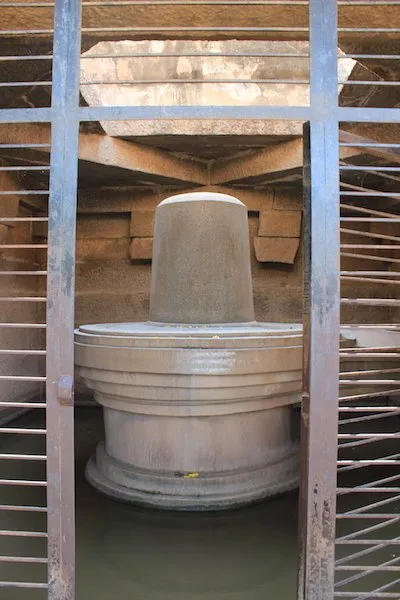
The name Hampi comes from Pampa, the old name of the Tungabhadra river and of a goddess who, in the stories, won the heart of Shiva through her devotion. In Hampi he is worshipped as Virupaksha, her husband.
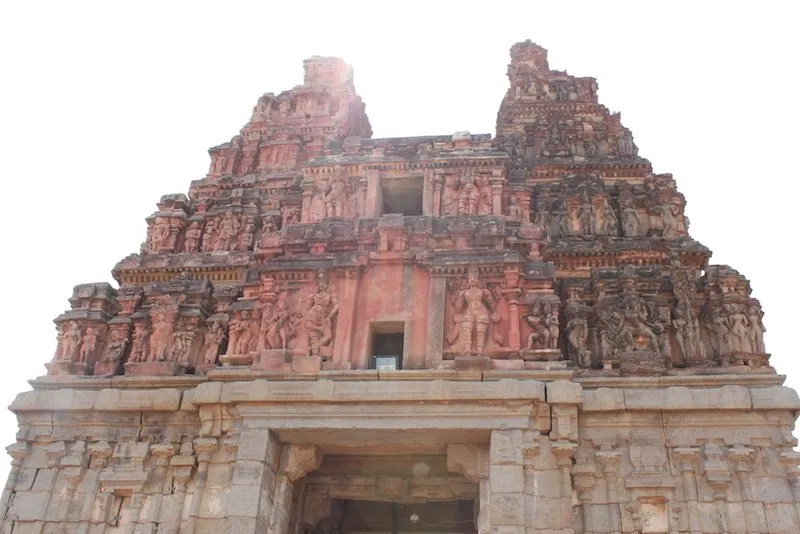
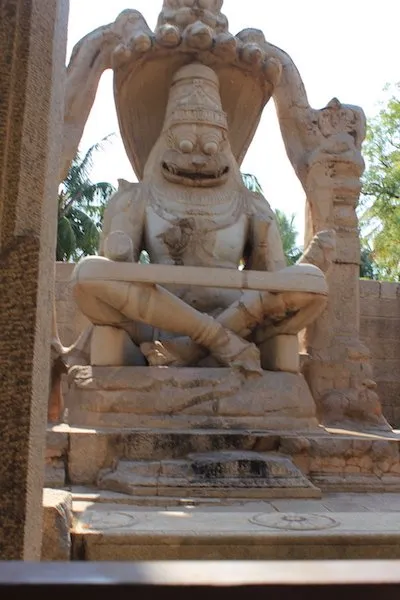
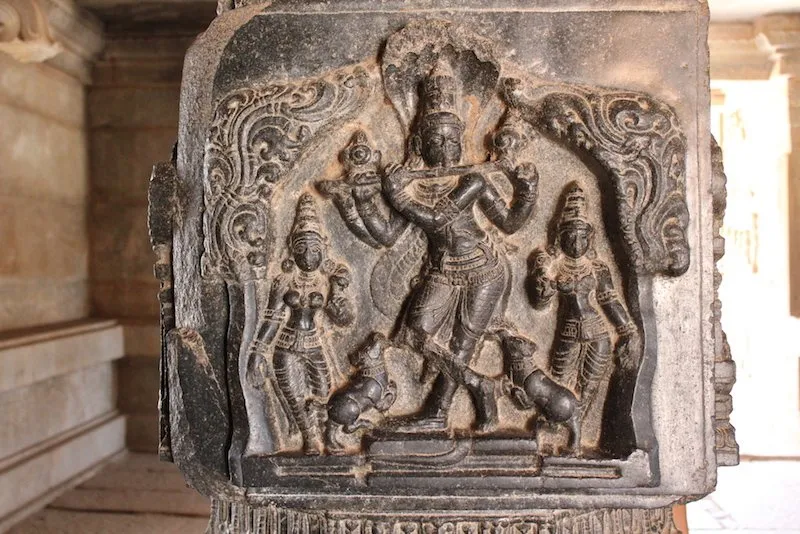
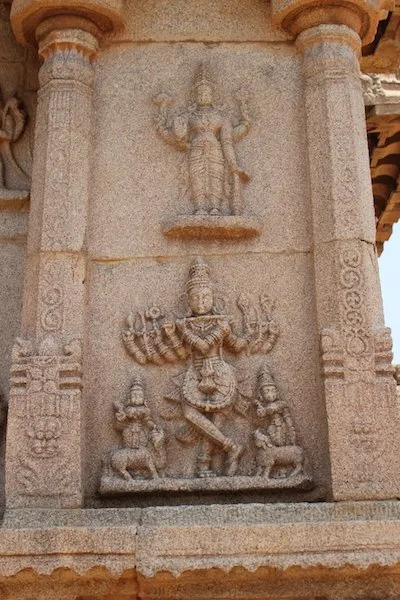
Hinduism has countless gods and goddesses, yet many Hindus see them as faces of one ultimate reality, Brahman. Three of these faces stand for the great cycle of existence: Brahma creates, Vishnu preserves, and Shiva dissolves, so that something new can arise. Next to them stands the Goddess, Shakti, the living energy within everything. Vishnu comes down to earth again and again in different forms, among them Rama, the hero of the Ramayana, and Narasimha, half man and half lion. In Hampi you meet them all, carved in stone.
People, elephants and giants
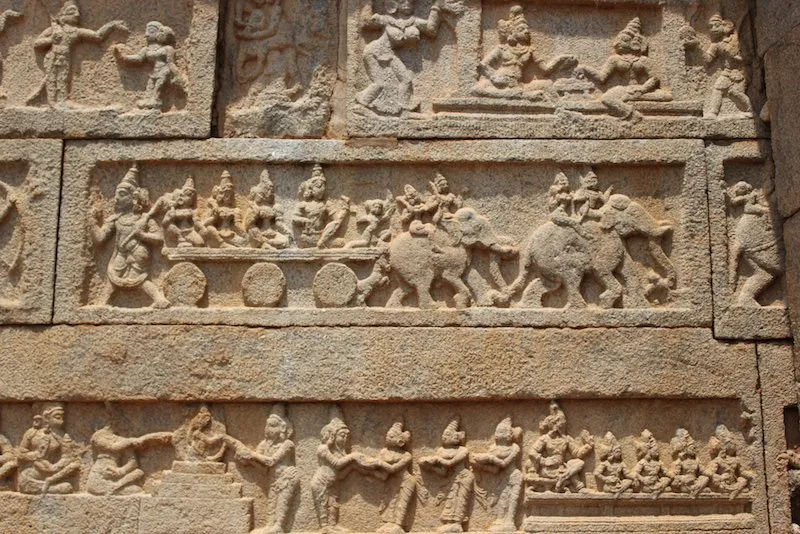
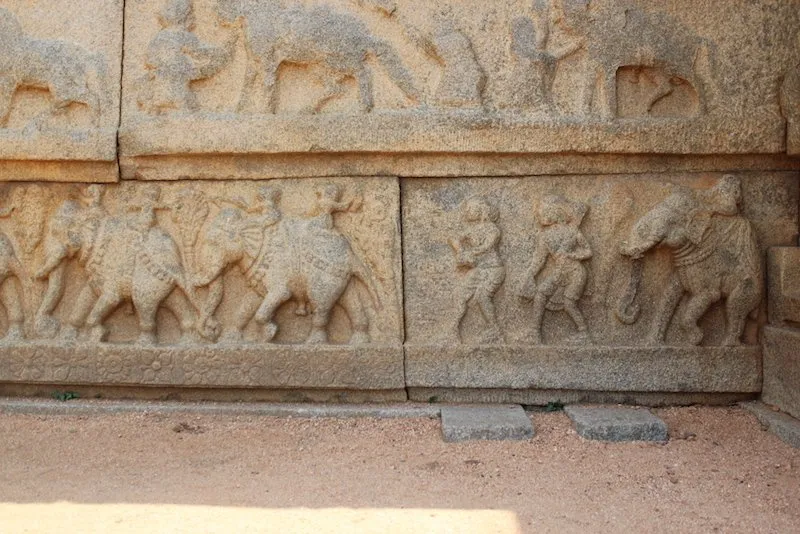
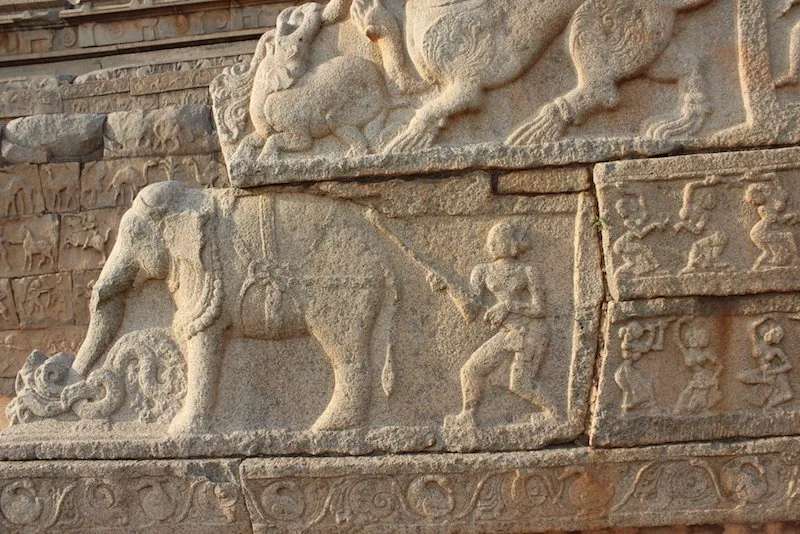
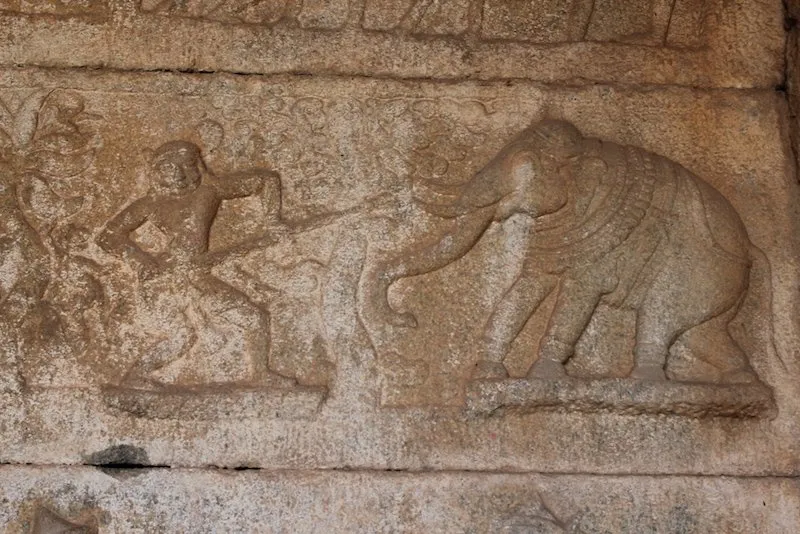
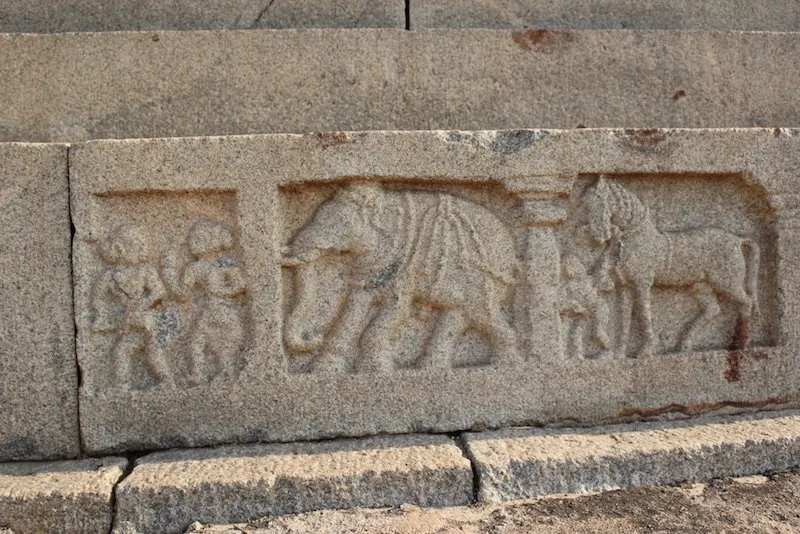
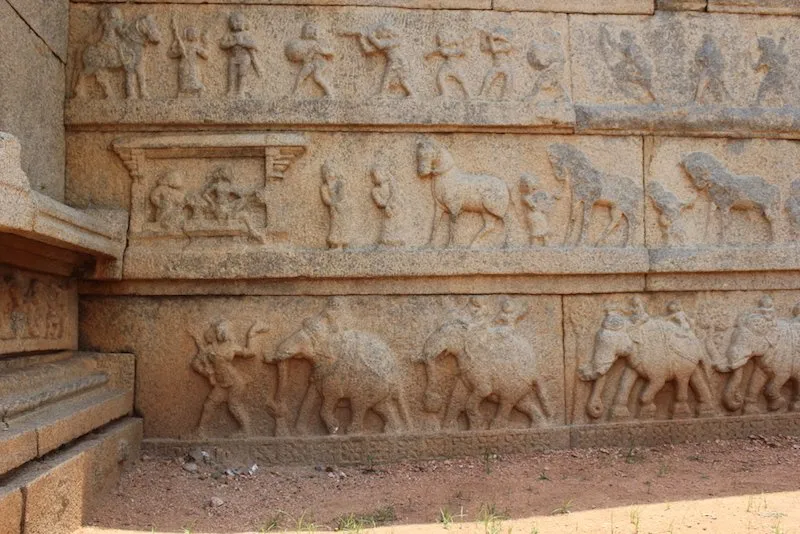
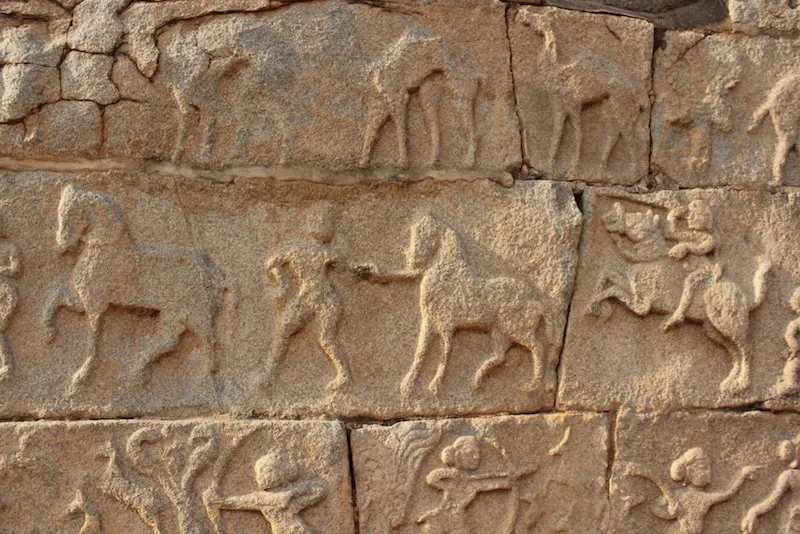
The walls tell stories, too. Long friezes show processions of horses and elephants, dancers and musicians, hunters and warriors. On some panels, humans seem to battle elephants, and some of the figures appear as giants. Walking past them, you start to wonder which stories they were telling, and how much we still understand of them.
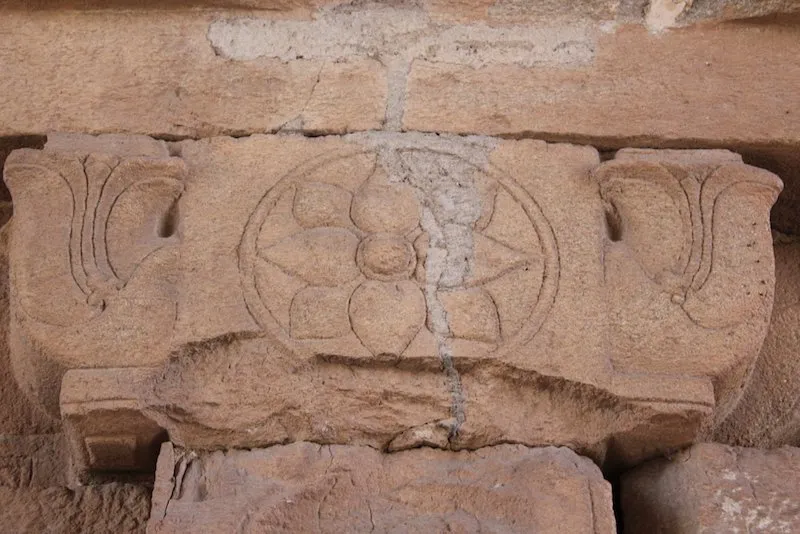
The Seed of Life on a column
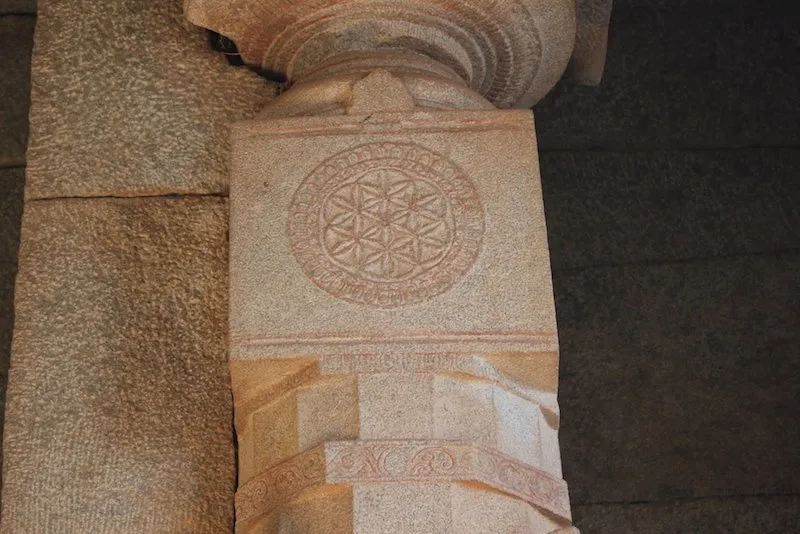
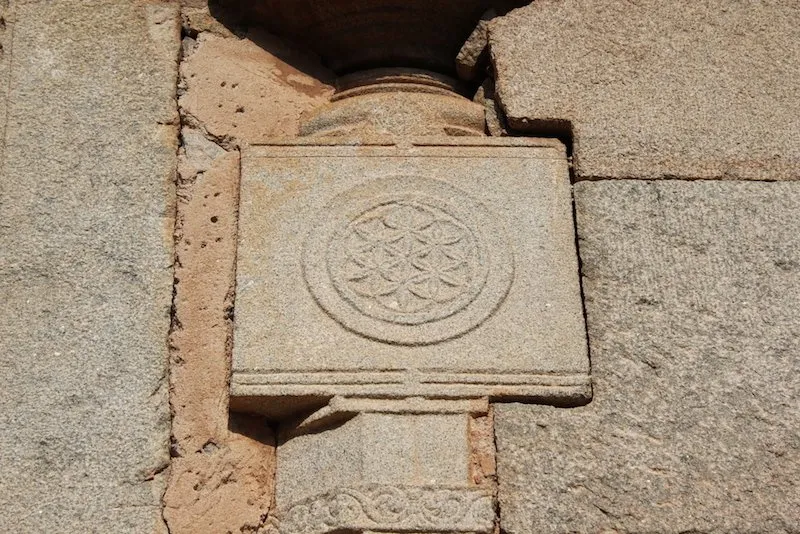
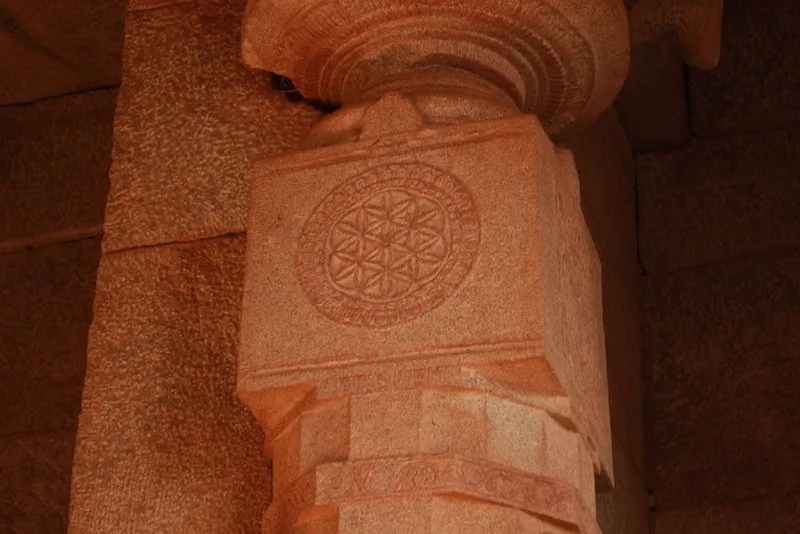
For us, the most remarkable discovery was on one of the columns: the Seed of Life, carved into the granite. Its seven circles are complete, but around them the carver added extra petals. They show that the form does not end there: it can grow outwards into the Flower of Life.
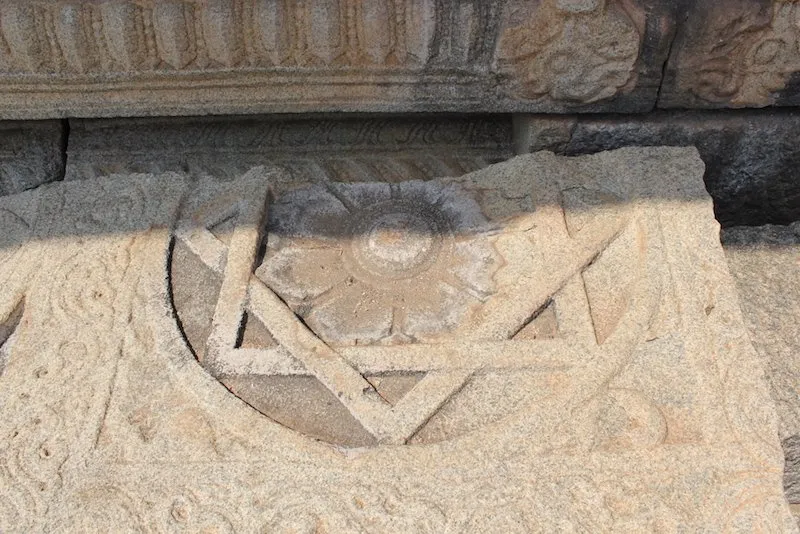
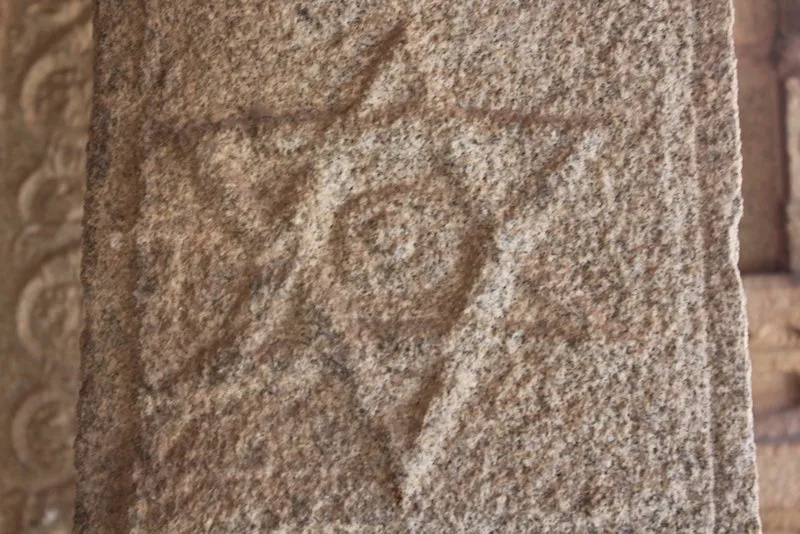
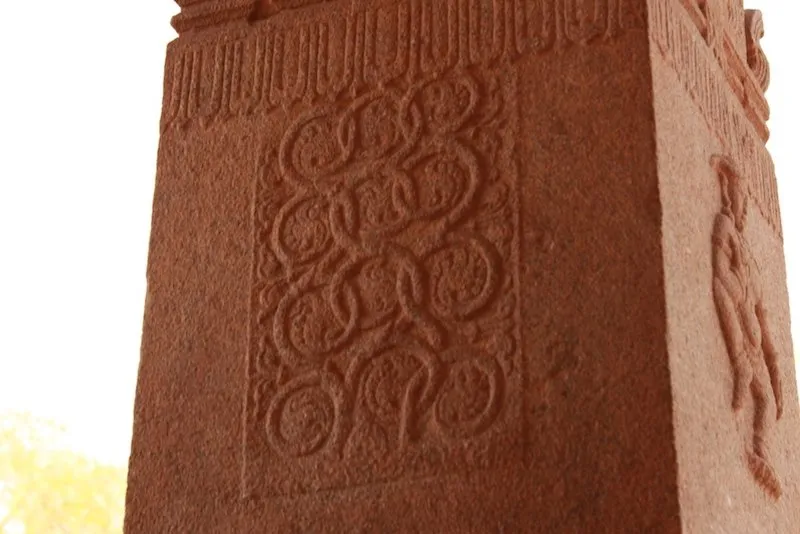
It reminded us of the famous Flower of Life in the Temple of Osiris at Abydos in Egypt. There, the 19 circles are drawn with extra petals at the edge as well, petals that could expand the pattern to a total of 61 circles. Two places, far apart, and the same idea: the pattern is a seed, and it wants to grow. We found other geometric figures too: six-pointed stars, rosettes and endless knots.
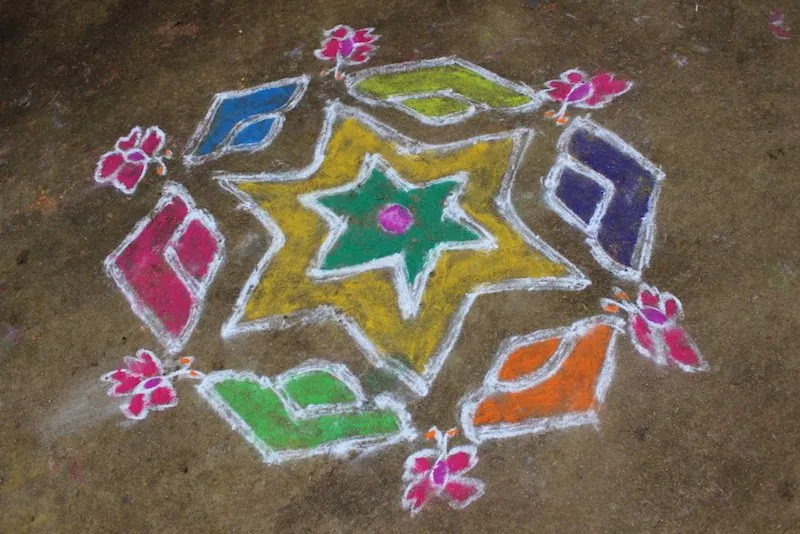
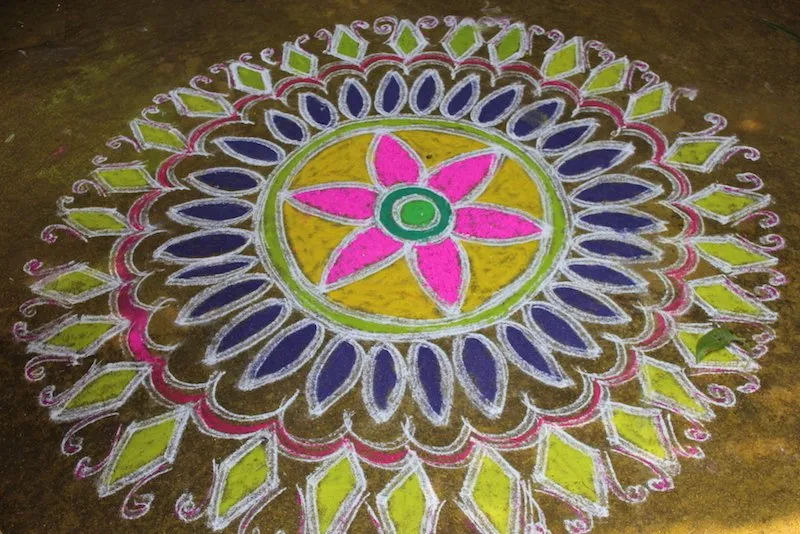
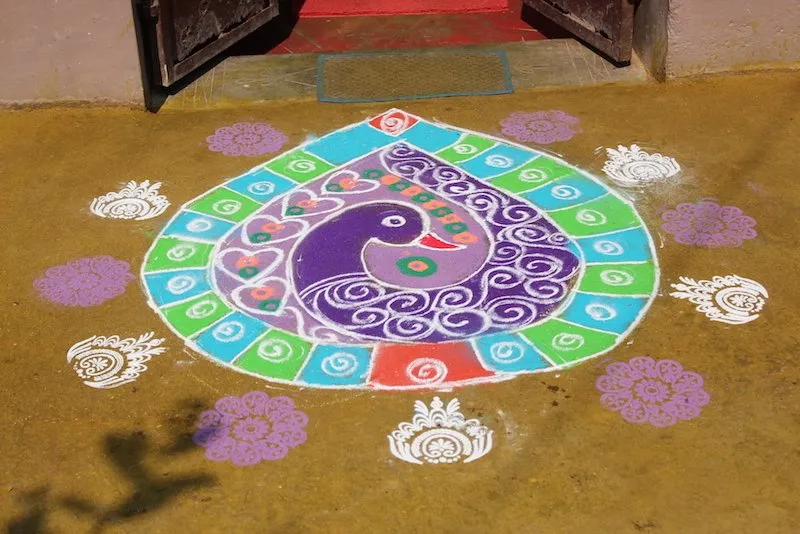
And the geometry is still alive in Hampi today. Every morning, colourful patterns of circles, stars and petals appear on the ground in front of the houses: rangoli, drawn by hand, a little offering for the new day.
Why India inspires our teaching
For several winters we lived and taught in Goa, and living in India changed the way we teach. Here, geometry is not just a subject in a schoolbook. It is part of everyday life and of the sacred: drawn on the doorstep every morning, carved into the temples, painted on the walls and used in meditation.
The word mandala comes from Sanskrit and means circle. A mandala is a picture of the whole: a centre, and everything that unfolds around it. Even the Hindu temple is built on one. Its ground plan follows a sacred grid of squares, the Vastu Purusha Mandala, so that the building itself becomes a map of the cosmos.
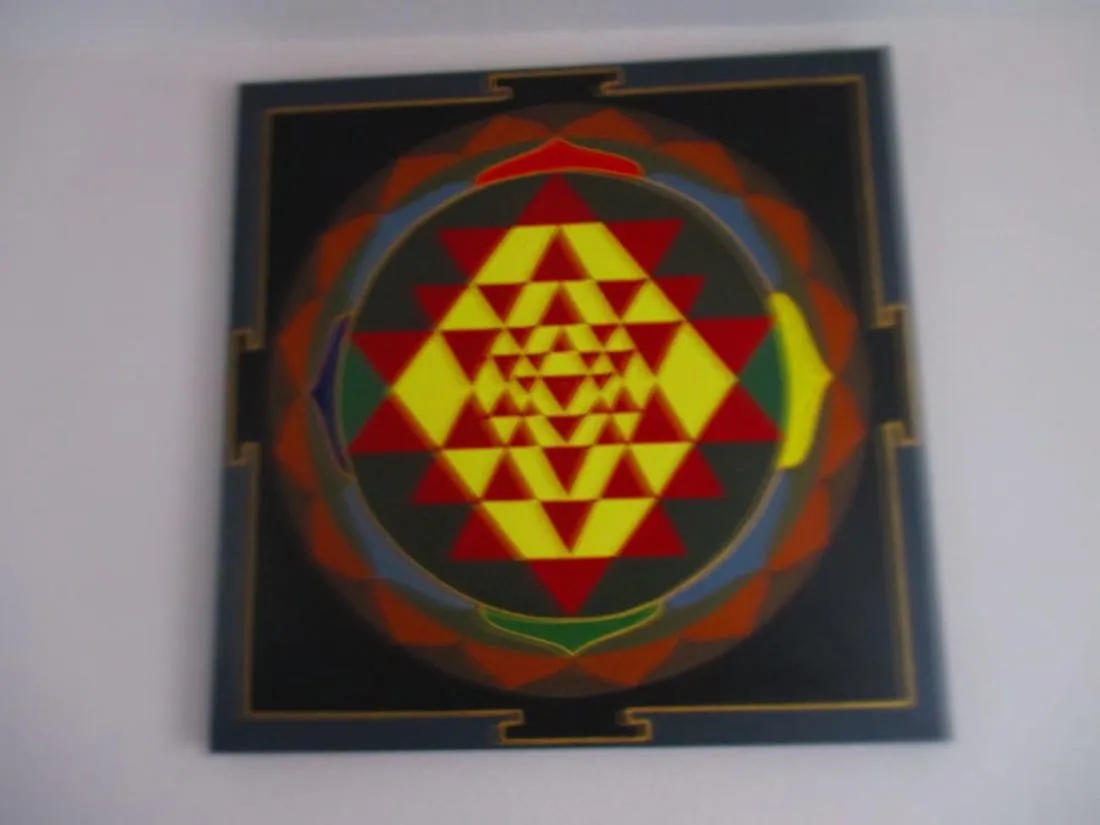
A yantra is a mandala made of pure geometry, used as a tool for meditation. The best known is the Sri Yantra: nine interlocking triangles around a single point, the bindu. Four triangles point upwards and stand for Shiva, five point downwards and stand for Shakti, and together they weave 43 smaller triangles: the whole universe unfolding from one point. The six-pointed star we found on the columns of Hampi, the shatkona, tells the same story in its simplest form: one triangle pointing up, one pointing down, the masculine and the feminine in balance.
The chakras, too, are pictured as lotus flowers, each with its own number of petals and its own shape at the centre: a square for the root, a downward triangle for the fire of the solar plexus, a six-pointed star for the heart.
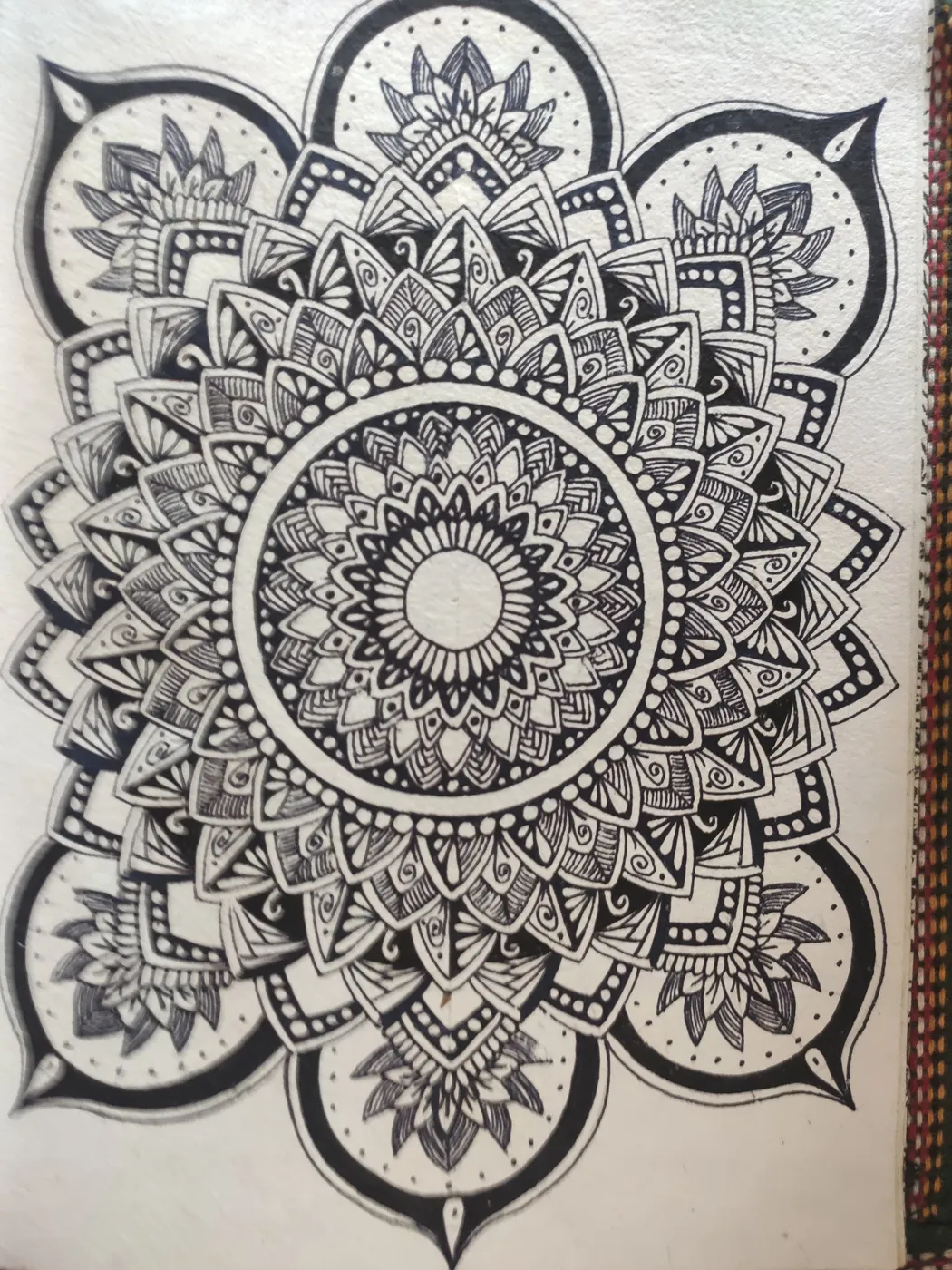
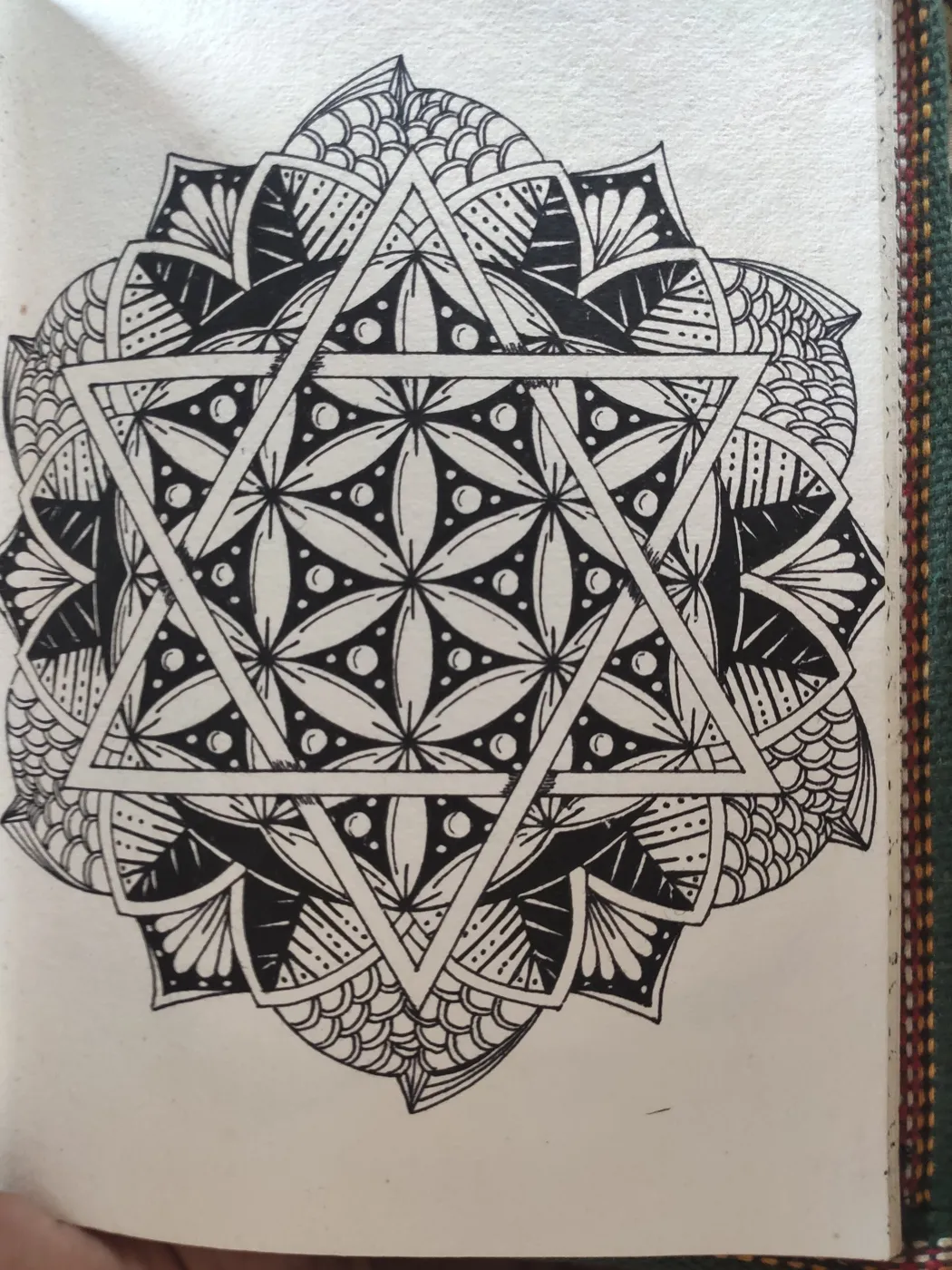
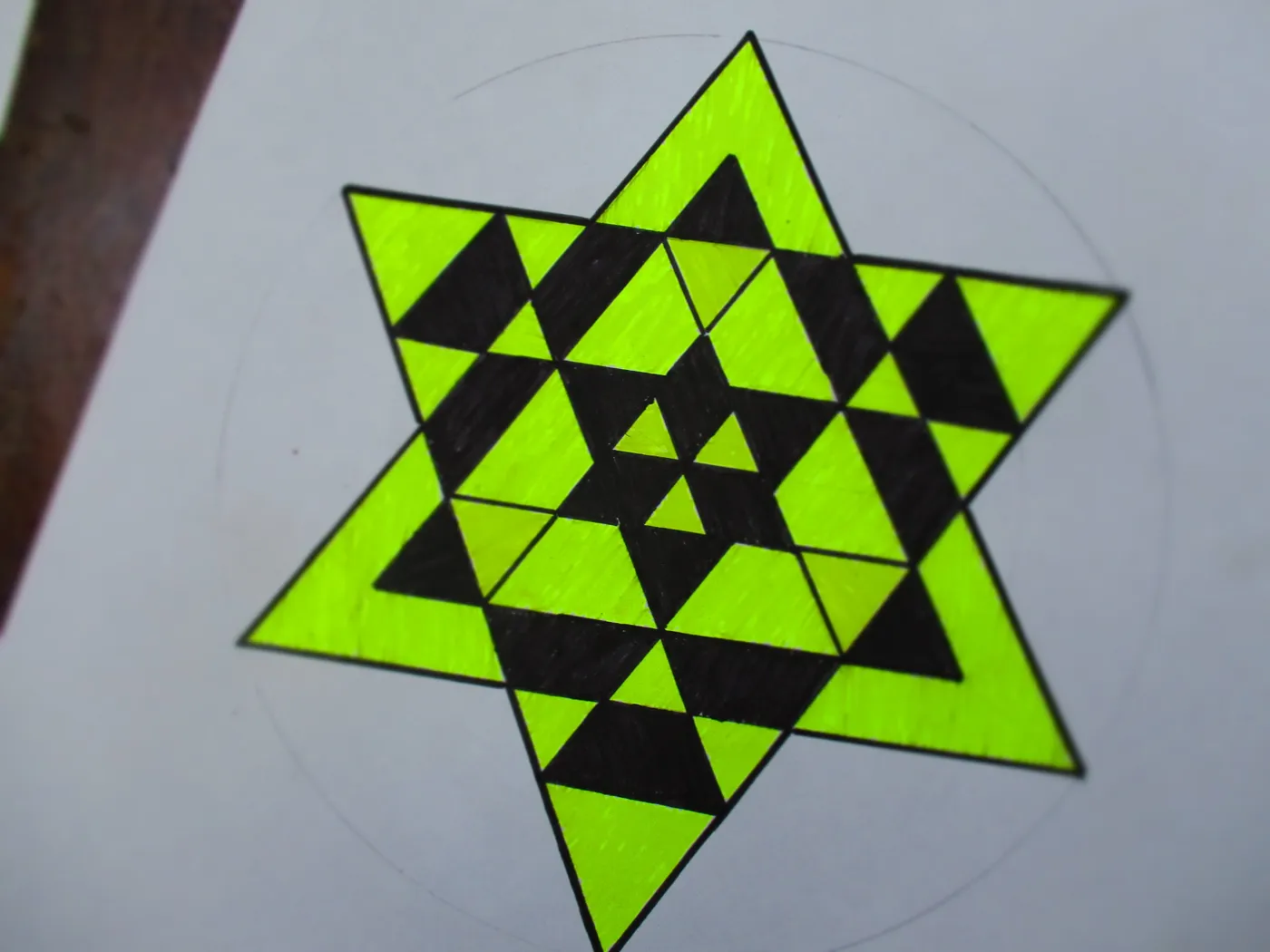
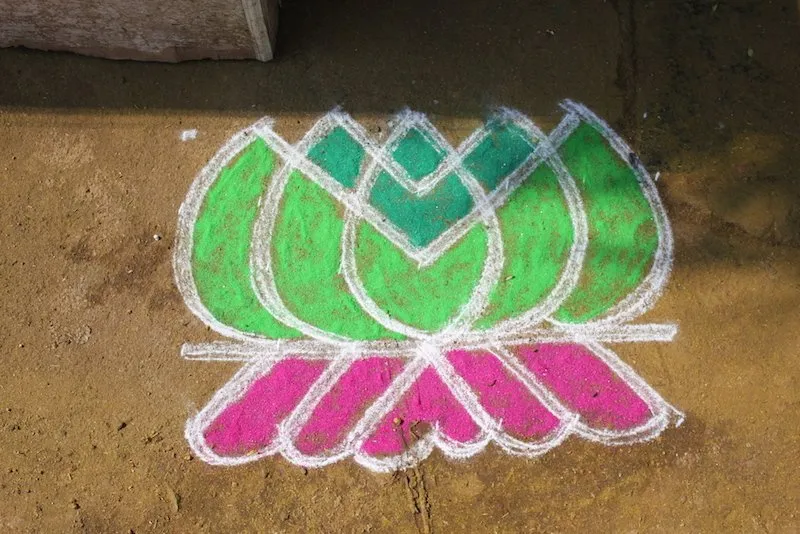
This was perhaps our deepest inspiration: in India, drawing a pattern can be a form of prayer, and geometry is a way of looking at the whole of life. That is the spirit we bring into every workshop: drawing with care, slowing down, and letting the form speak.
A walk through ancient times
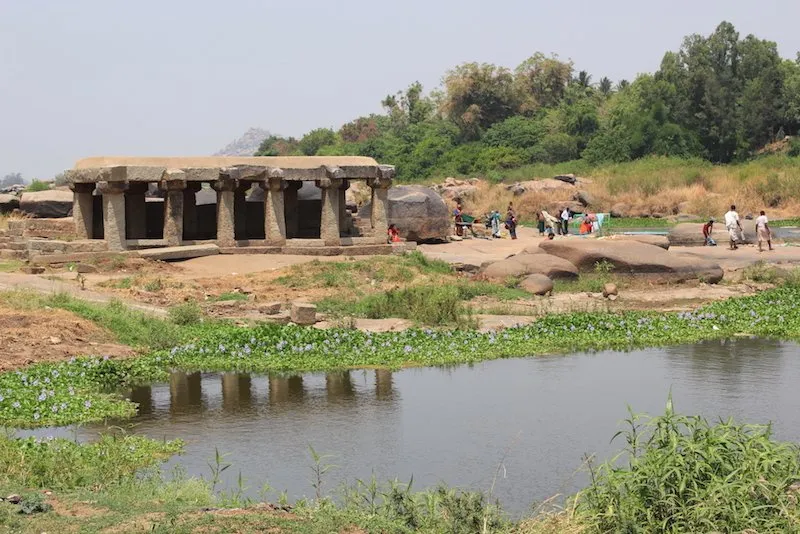
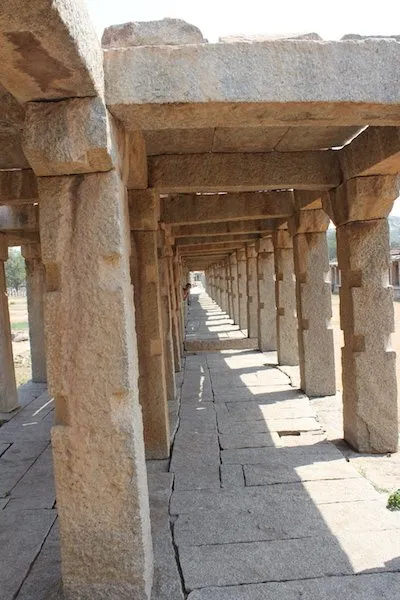
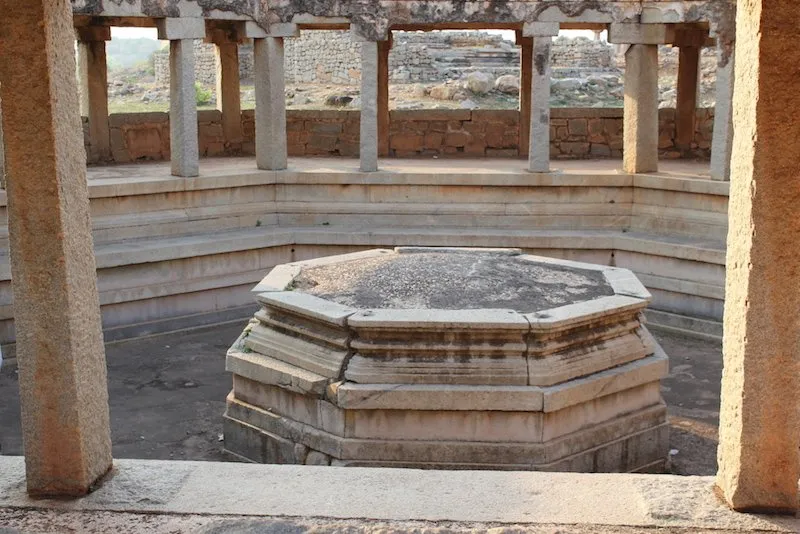
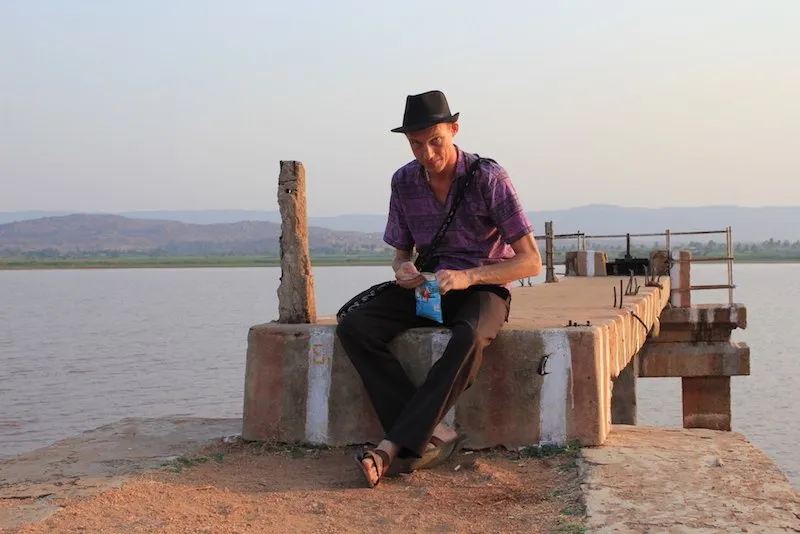
We wandered through long colonnades, sat in pavilions by the river and watched the sun go down over the water. Everywhere, the old builders had left their questions in stone. If you want to draw the Seed of Life and let it grow into the Flower of Life with your own hands, that is exactly where our course The Blueprint begins.
Come curious. Come as you are. All perspectives welcome.