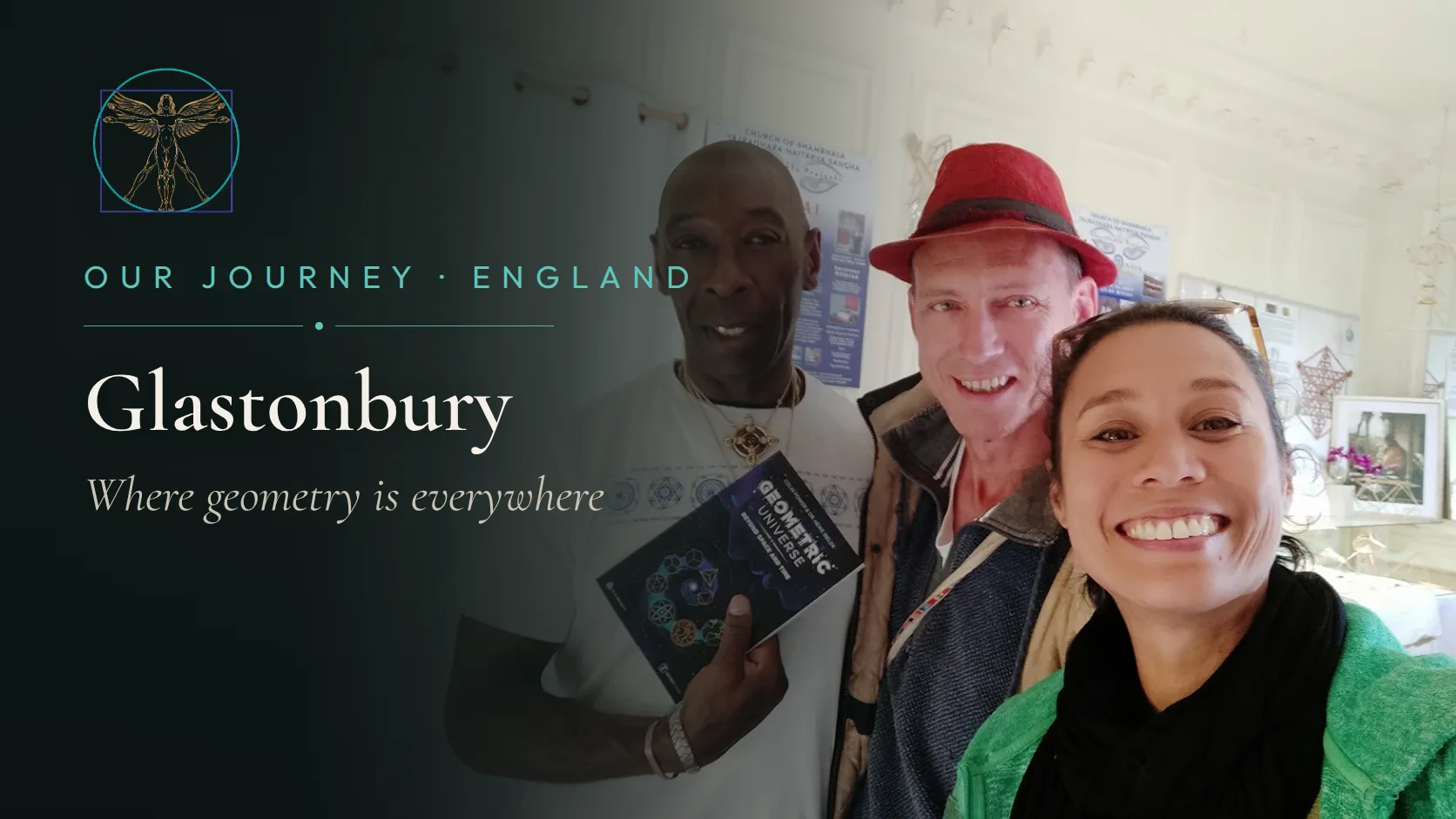
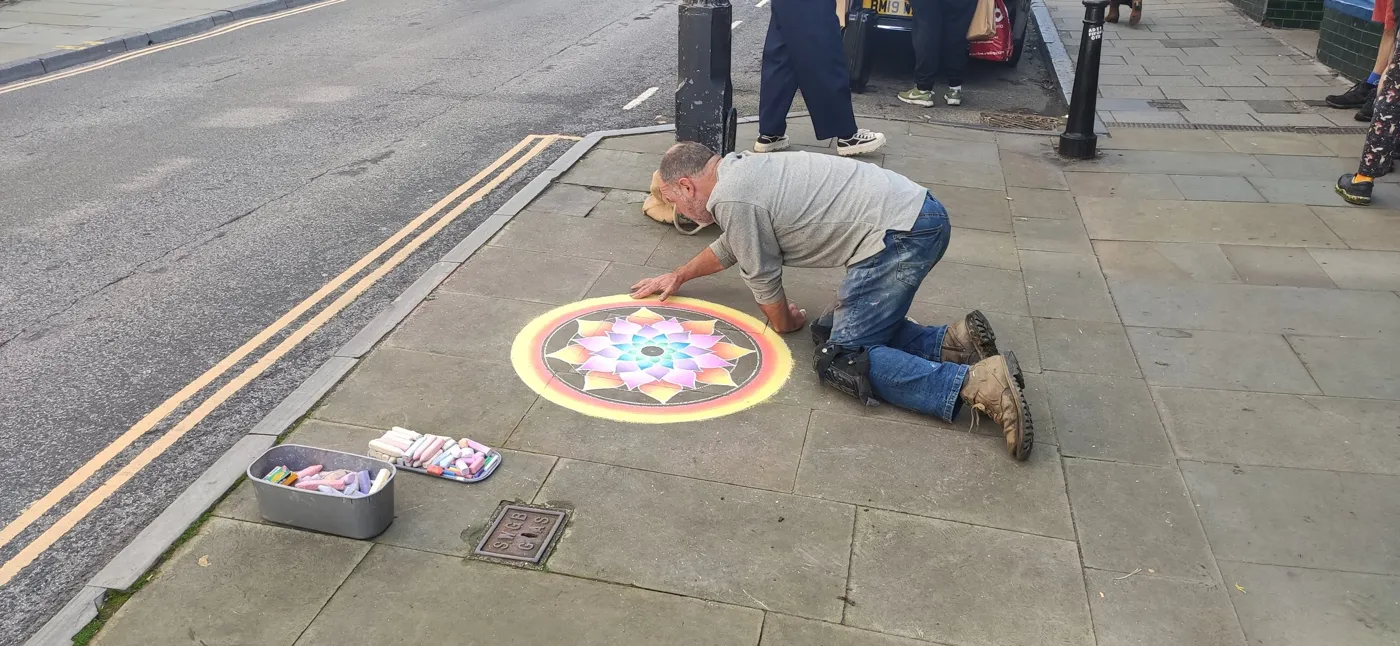
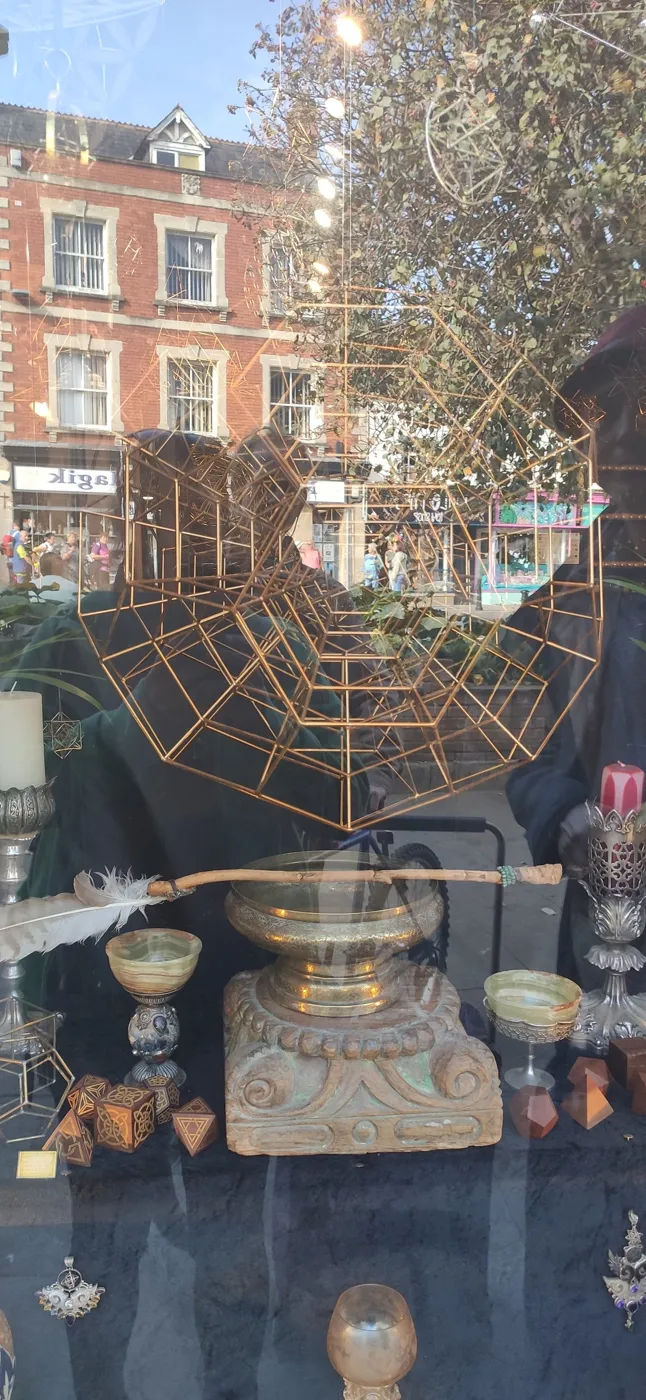
There are towns where you have to search for magic, and then there is Glastonbury. Walk up the High Street in this small town in Somerset, and the shop windows are full of crystals, wands, tarot cards and books on every spiritual path you can imagine. Wizards and witches, healers and seekers live here side by side. It is one of the most esoteric places in England, and a place where sacred geometry feels completely at home.
The Isle of Avalon
Above the town rises the Tor, a steep green hill crowned by St Michael’s Tower, the ruin of a fourteenth-century church. Legend connects Glastonbury with the Isle of Avalon of the Arthurian tales. Many people also believe that two great energy lines cross the English landscape here, named the Michael and Mary lines by the dowsers Hamish Miller and Paul Broadhurst in their book The Sun and the Serpent. Some even call Glastonbury the heart chakra of the Earth. Whatever you make of these ideas, you can feel why so many people are drawn here.
Geometry you can sit under
On the High Street you find Buddha Maitreya, a shop and centre where sacred geometry is used for healing. Here you can see pyramids you can sit or meditate under, and devices made of copper and crystals that you can hold in your hands, built by the monks of the community. Buddha Maitreya himself is described by his followers as an incarnation of the coming Buddha and of Christ consciousness. Whether or not you share that belief, sitting quietly under a pyramid is an experience that changes you: the shape seems to gather your attention and hold it still.
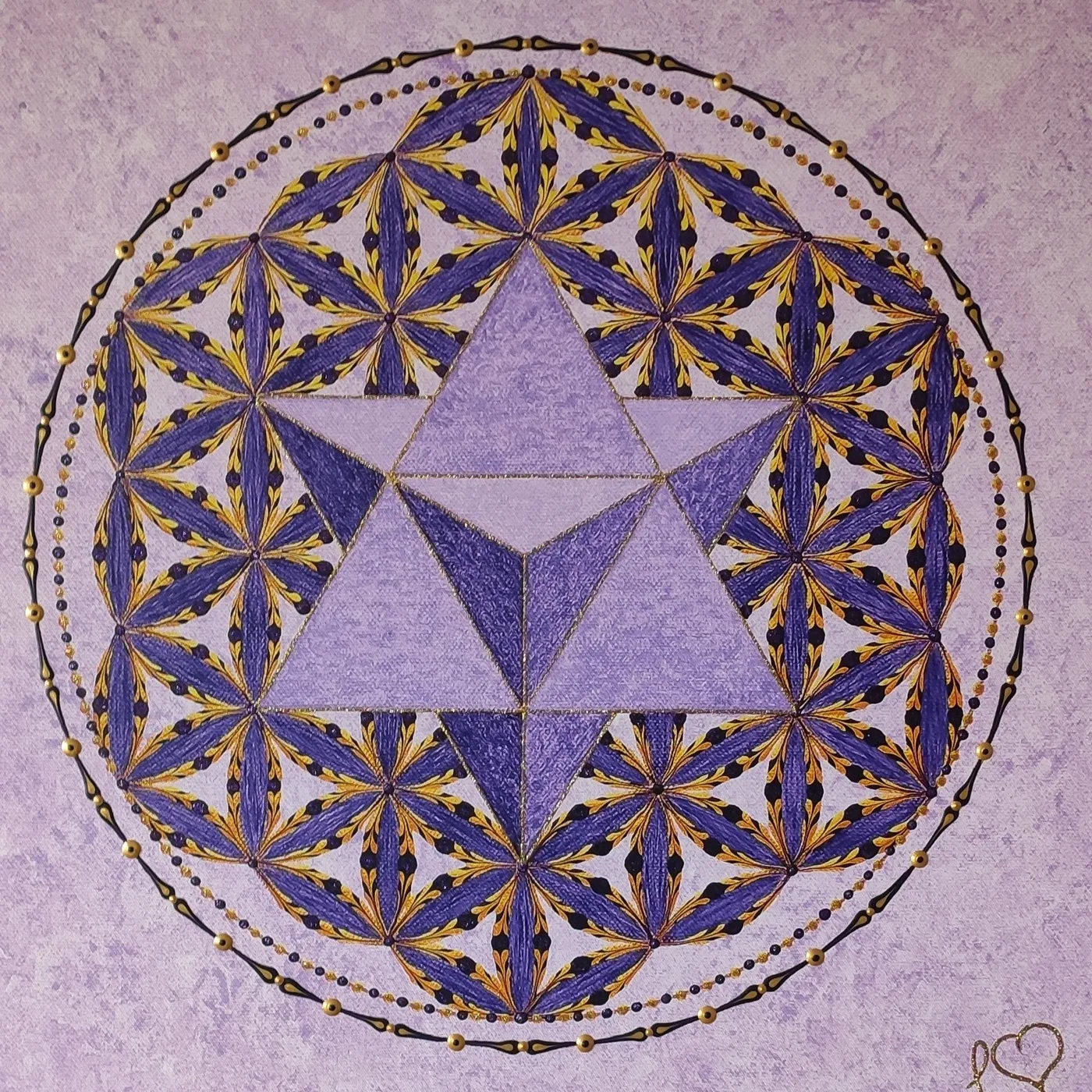
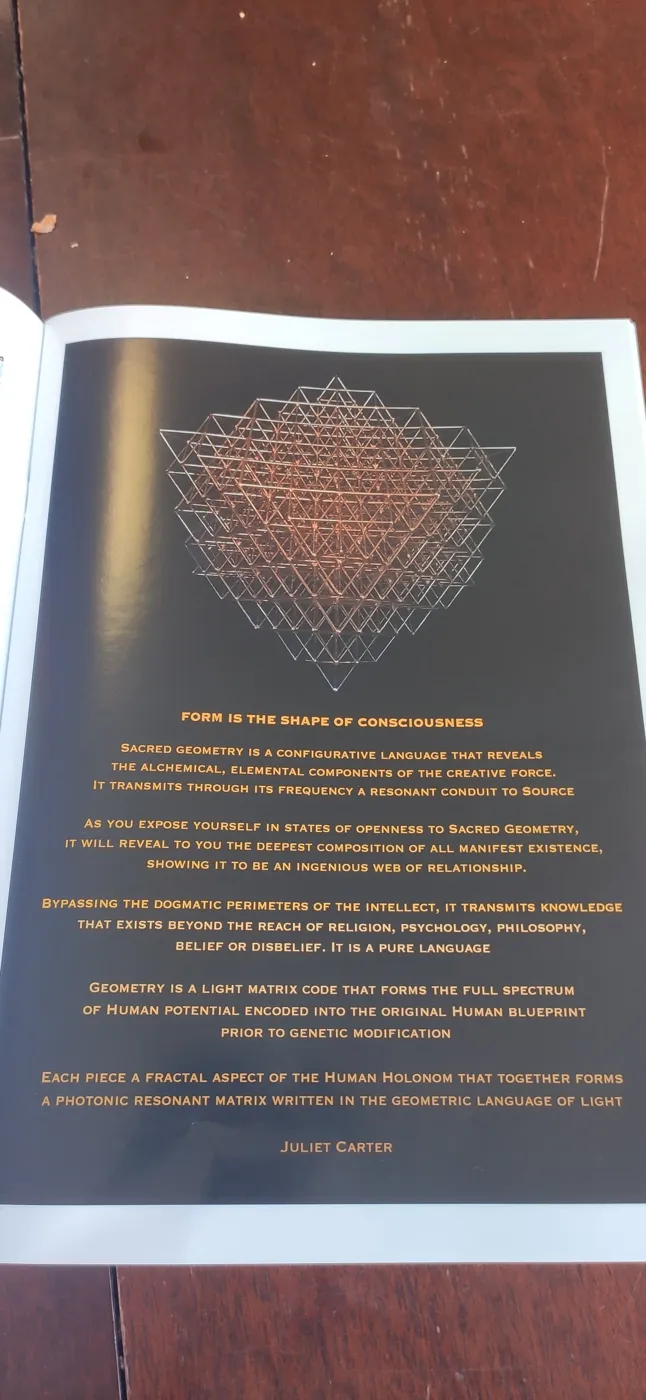
A few doors away, shops like The Portal display the solids we draw in our courses, the five Platonic solids and the thirteen Archimedean solids, as glowing three-dimensional objects. They are beautiful decorations, but for many people here they are more than that: shapes believed to carry healing qualities of their own.
The atom and the aether
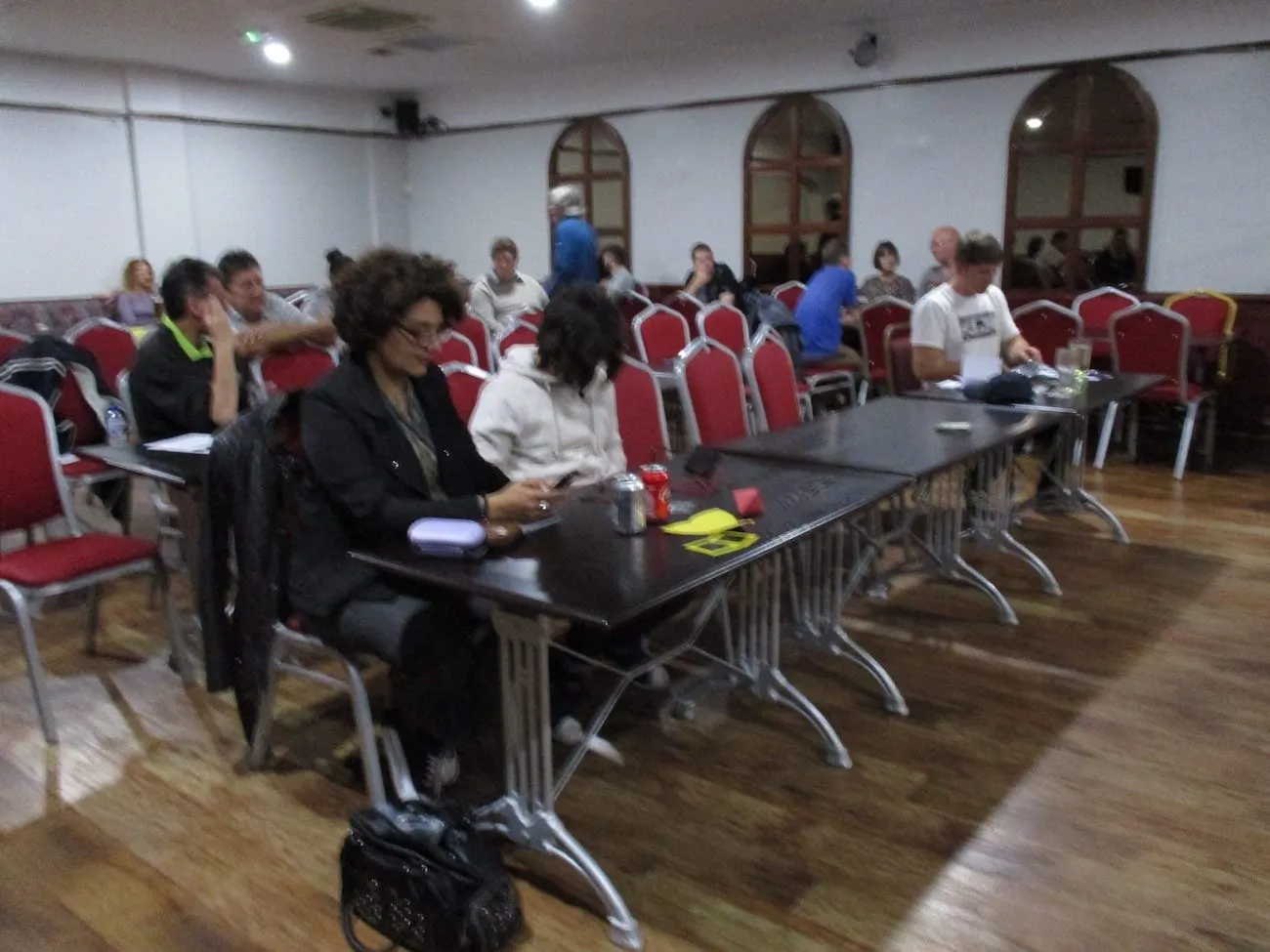
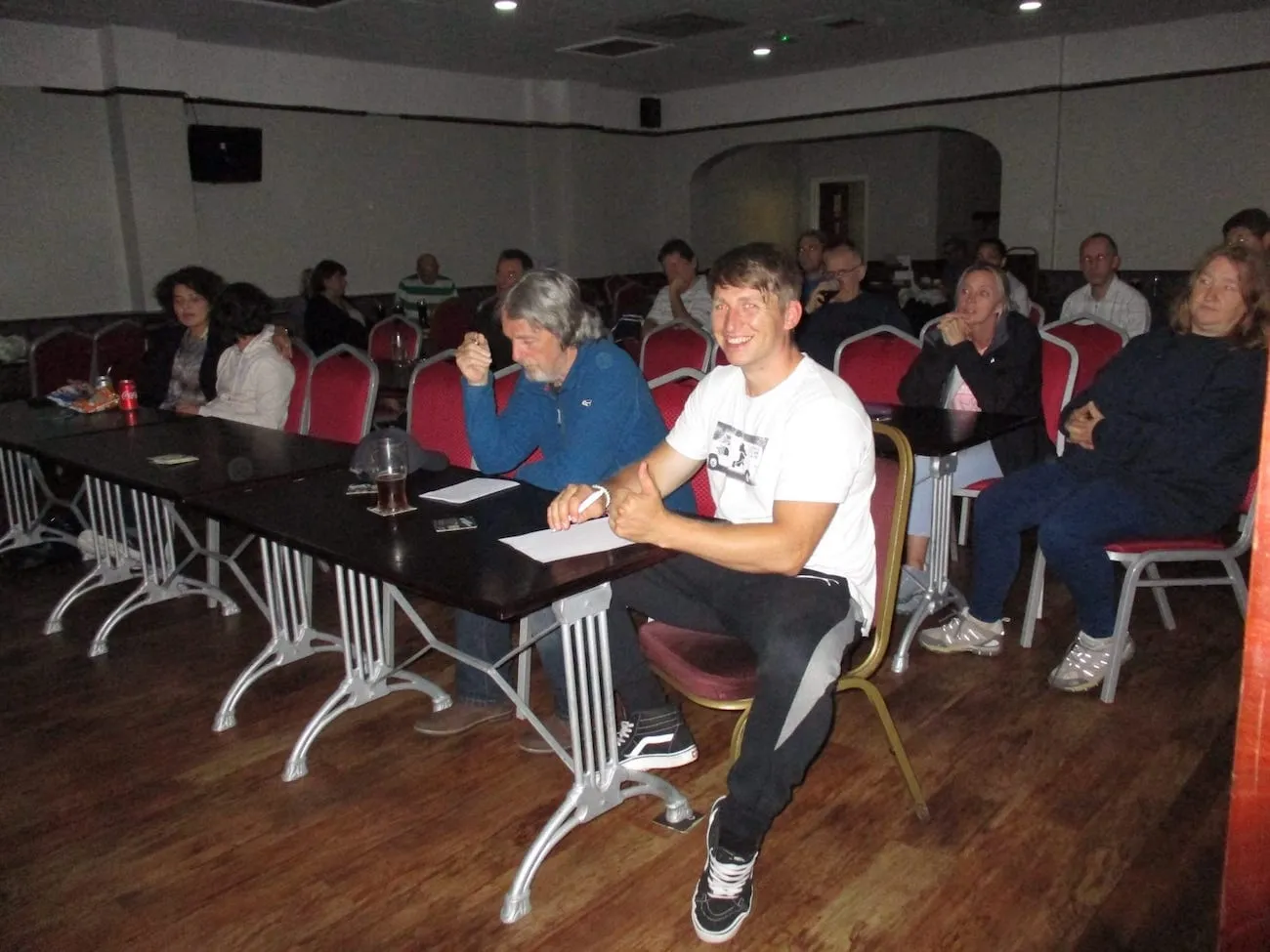
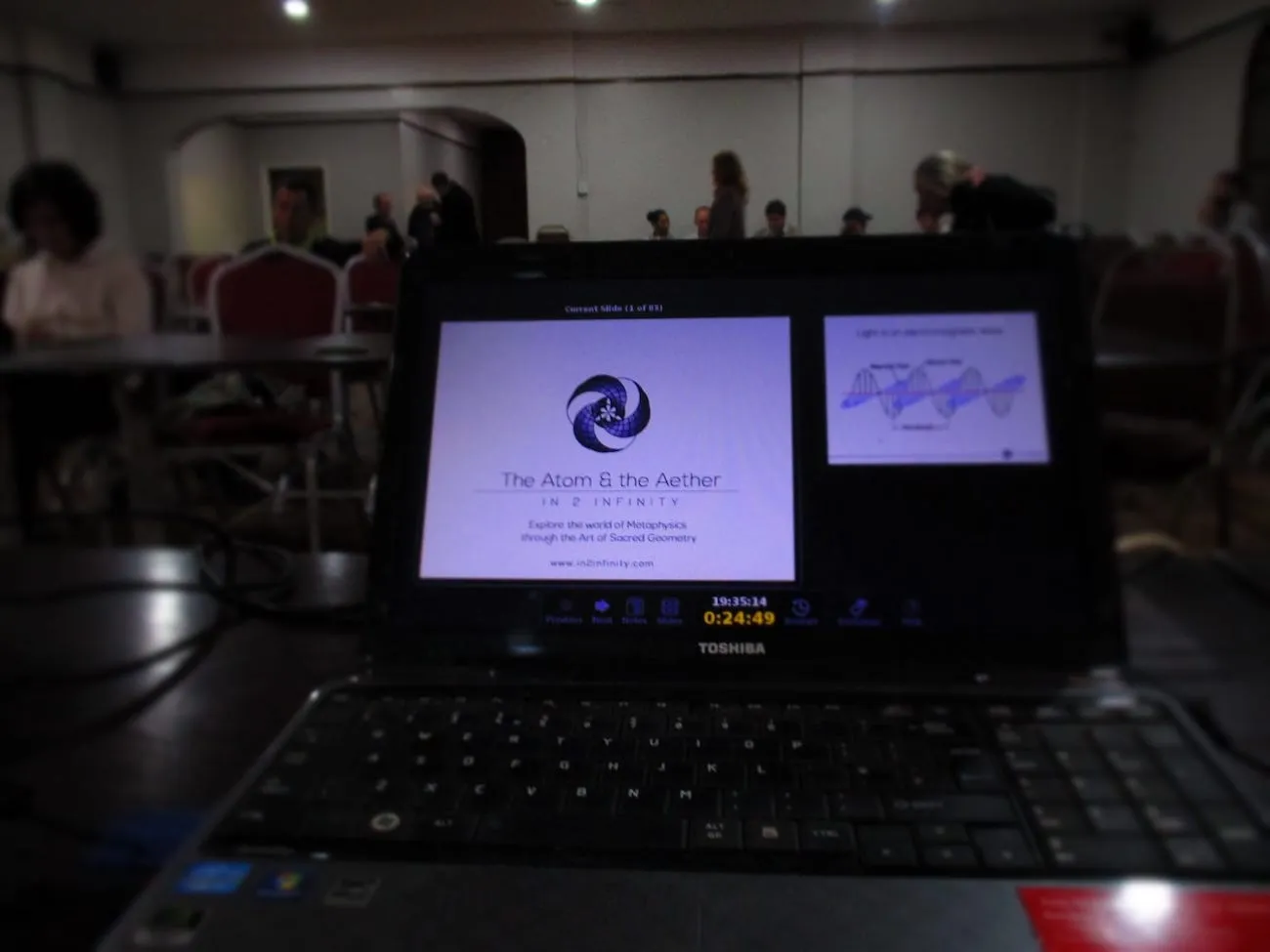
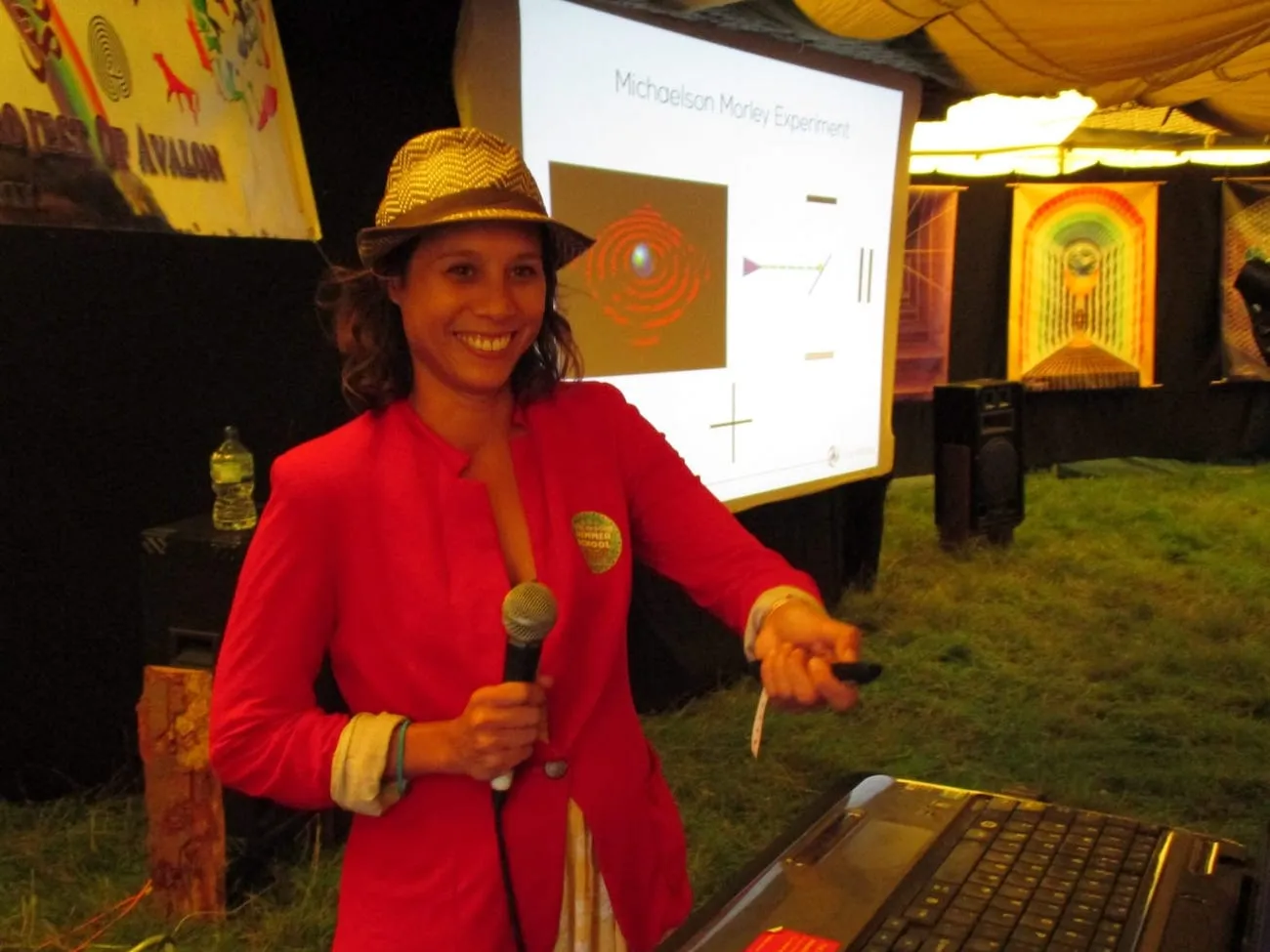
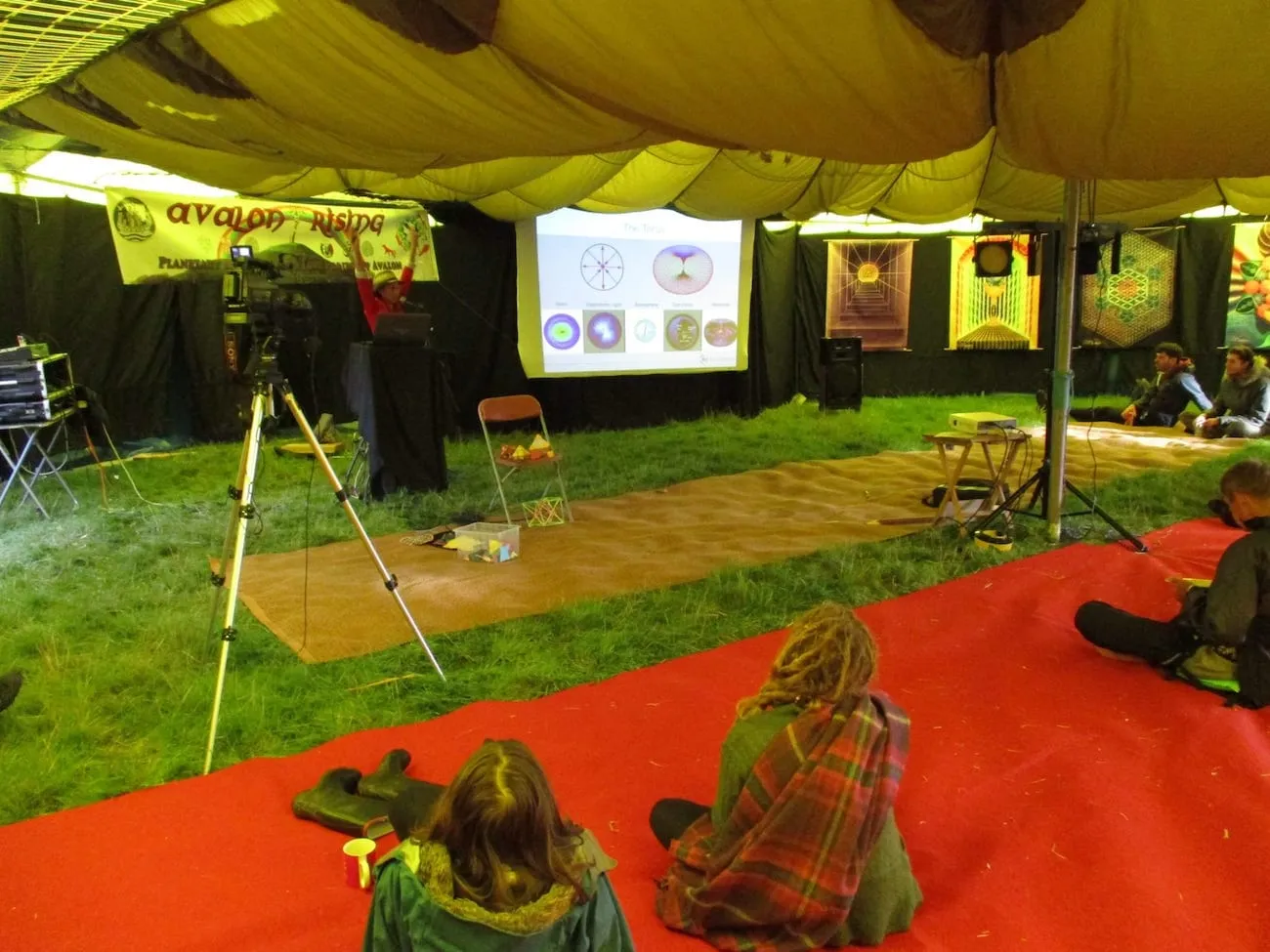
In the summer of 2017 we gave a talk in Glastonbury, in a big hall filled with a curious crowd, and shared some of our new findings in geometry. Its title was The Atom and the Aether, and it asked one of the oldest open questions in physics: what is light, and what does it travel through?
Light behaves like a wave, and it also behaves like a stream of particles, depending on how you look at it. For a long time, physicists assumed that a wave needs something to travel in, and they called that invisible medium the luminiferous aether. In 1887 Albert Michelson and Edward Morley set out to detect the Earth’s motion through it and found nothing, and in 1905 Einstein’s theory of relativity showed that light needs no aether at all. Today light is described as both wave and particle at once.
In our talk we explored a different possibility: what if the aether does exist, not as a substance, but as a geometric structure, a pattern of space itself through which light travels? It is an idea, not established science, and it is exactly the kind of question Glastonbury loves. Few audiences are so open: the questions came quickly, and the conversations went on long after the talk had ended.
That summer we also brought the same questions to the festivals, from the big tents of the Green Gathering to smaller stages around the country.
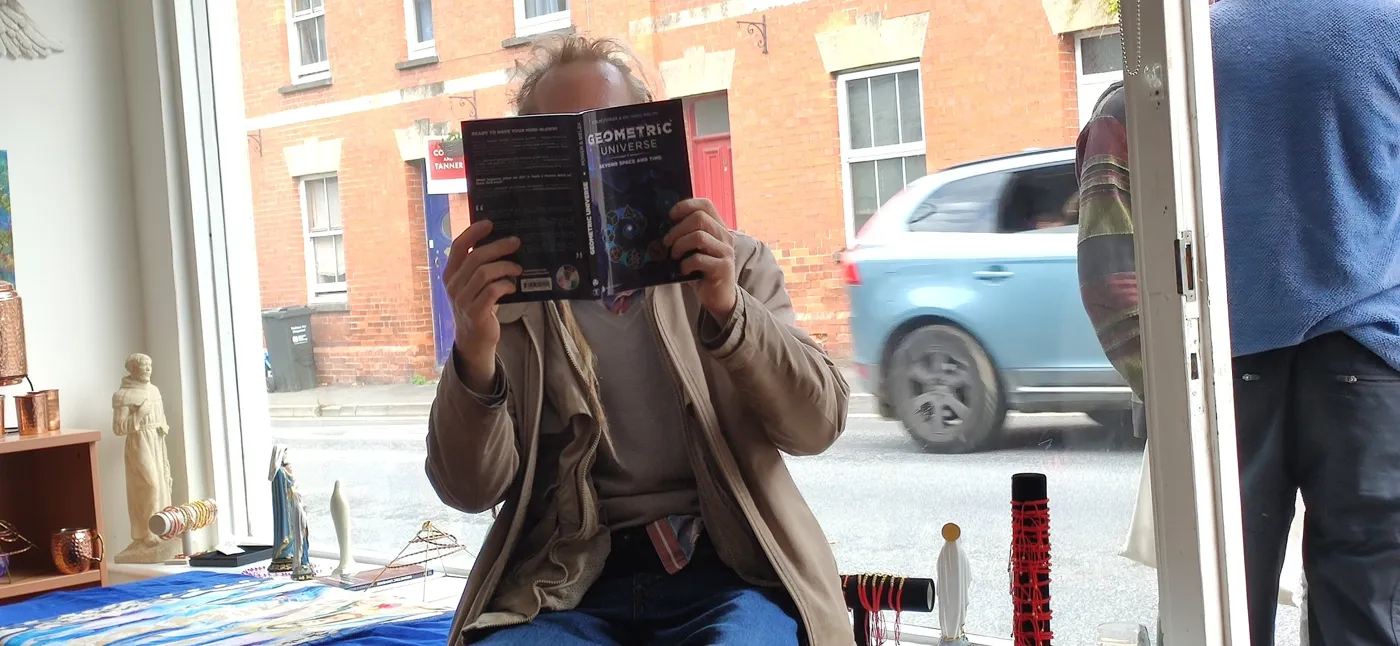
Our book in Glastonbury
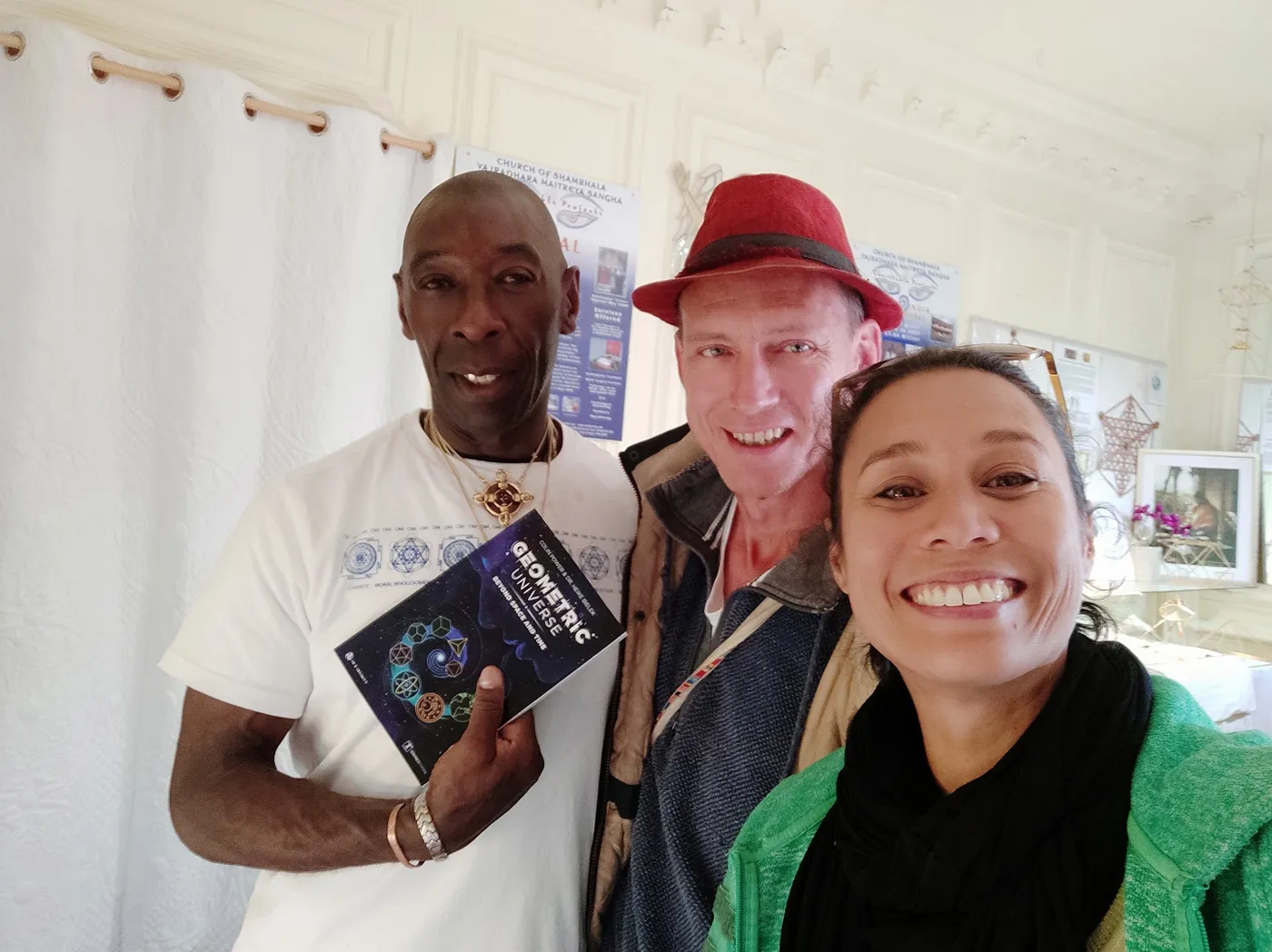
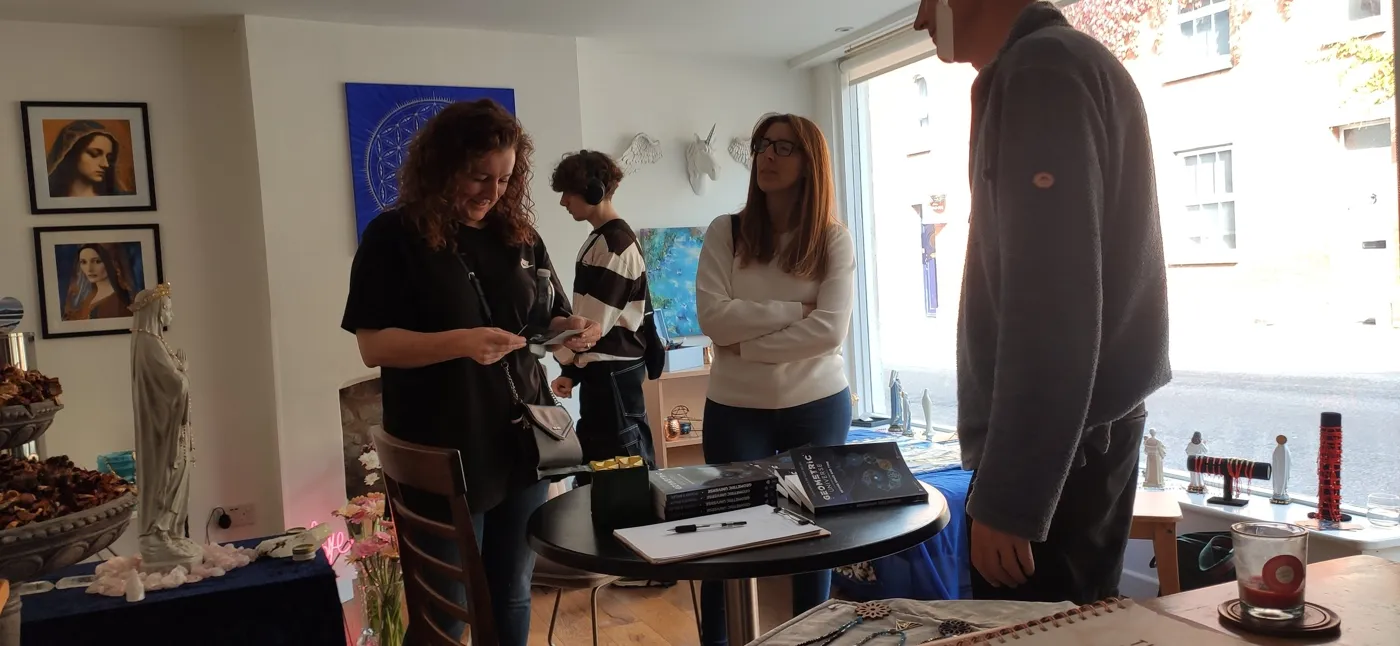
And now our book has found a home there too: you can find The Geometric Universe in the Mary Magdalene shop in Glastonbury. If you visit the town, look out for it.
Would you like to explore the geometry behind it all? See our books →
Come curious. Come as you are. All perspectives welcome.