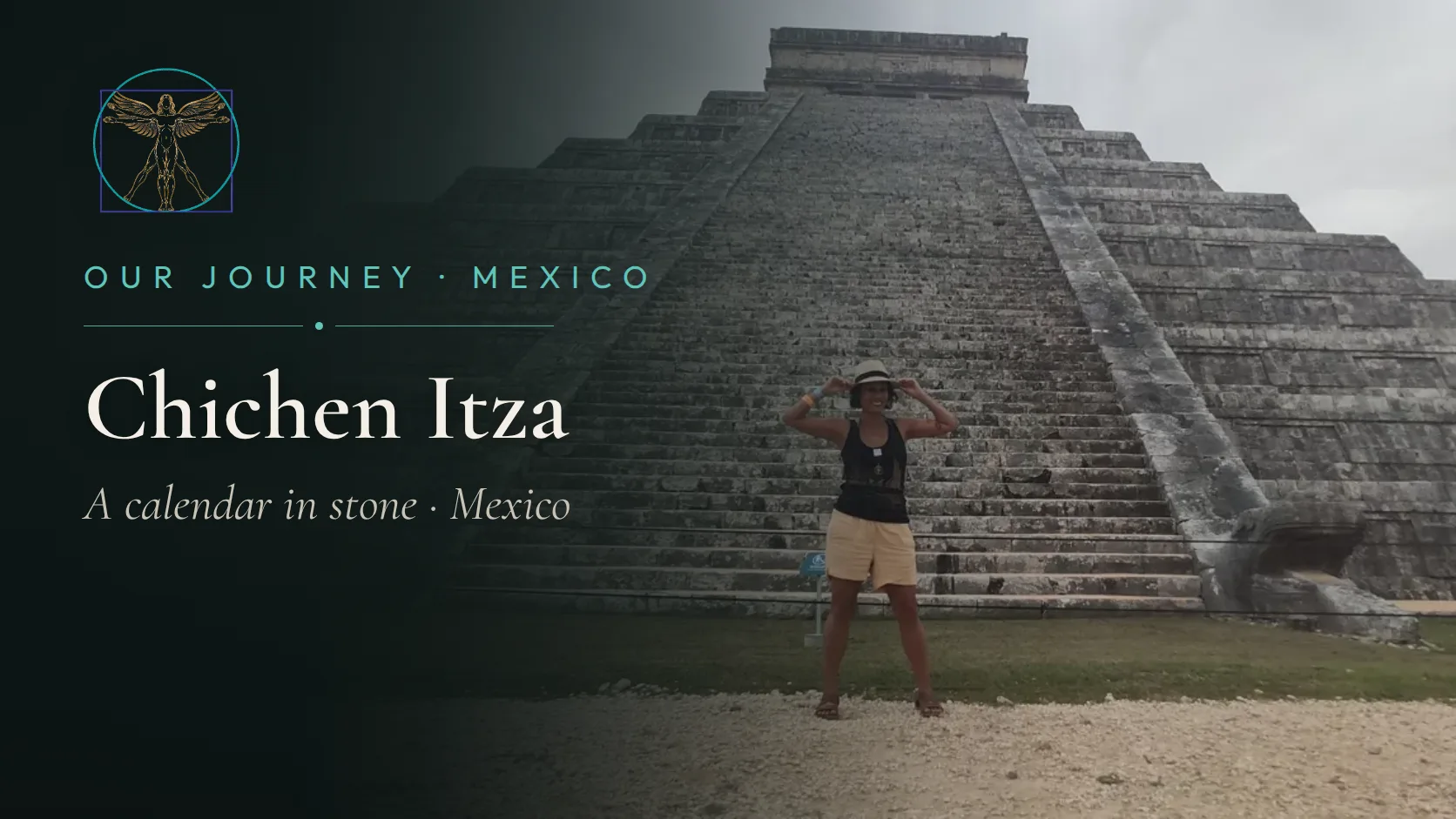
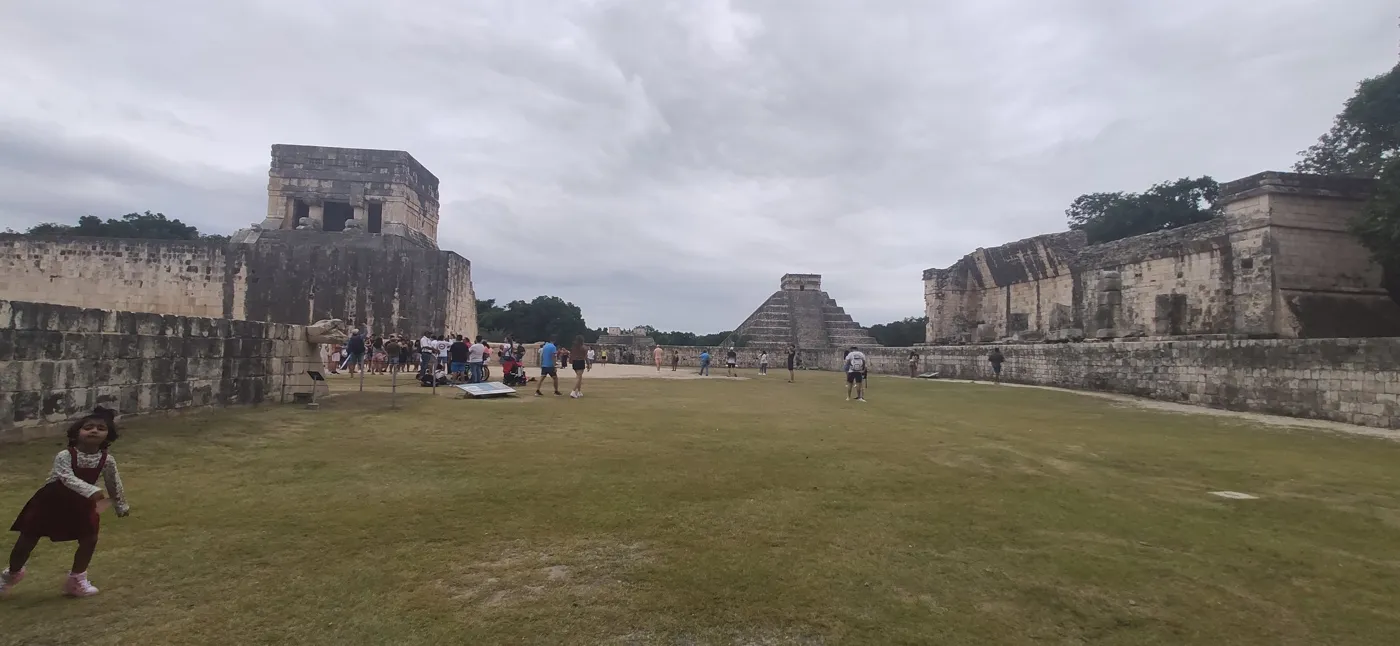
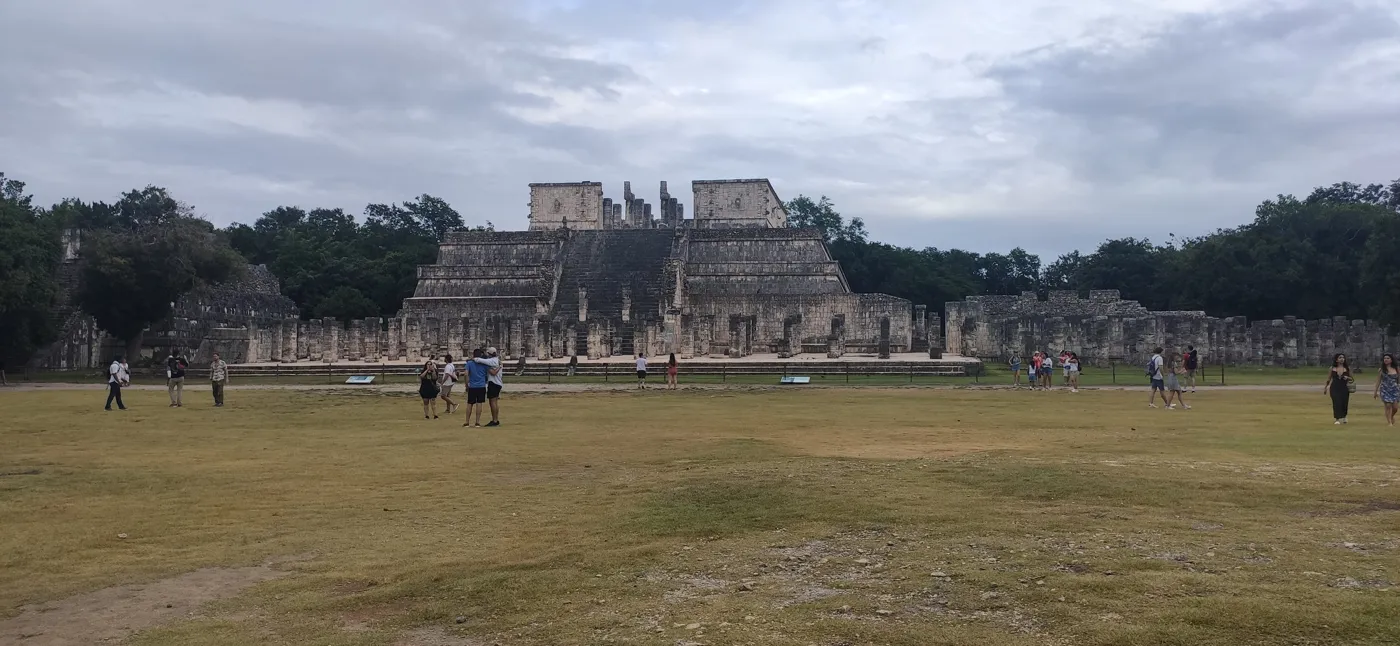
Some places you can read about for years, and still they surprise you the moment you arrive. Chichén Itzá, in the heart of Mexico’s Yucatán peninsula, is one of them. Walking out of the forest and onto the wide, open plaza, the great pyramid rises in front of you, and you understand straight away that this was never just a building. It is geometry, made to speak.
The pyramid of the feathered serpent
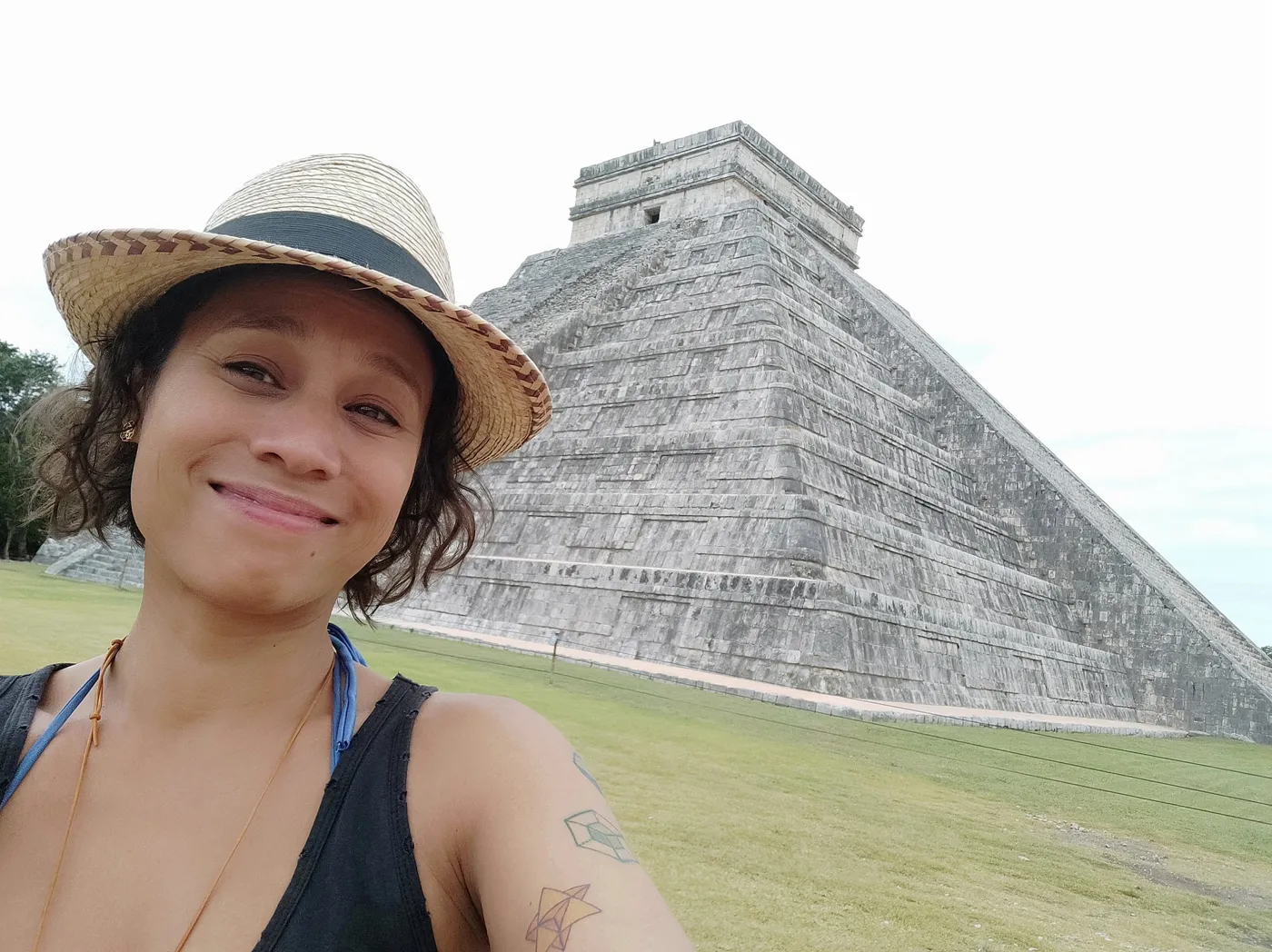
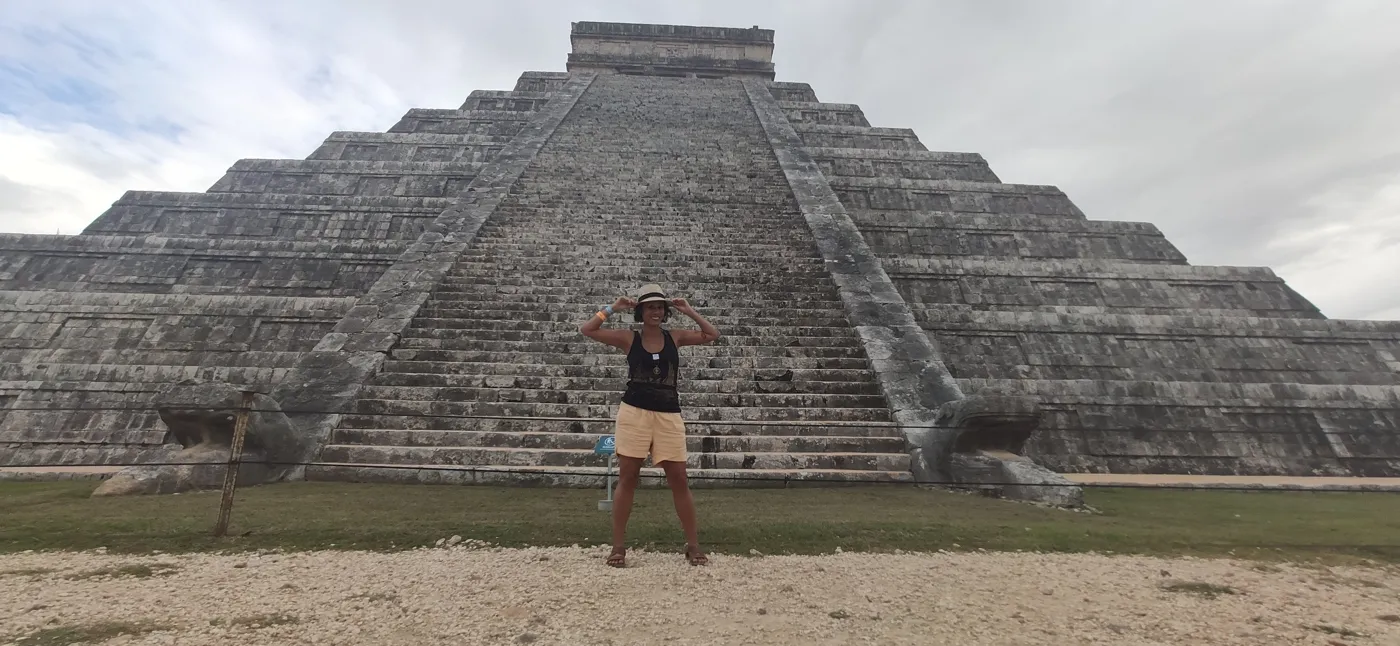
The great pyramid is known as El Castillo, “the castle”, but its older name is the Temple of Kukulcán. Kukulcán is the feathered serpent, one of the most important deities of Mesoamerica: a being of both earth and sky, the snake that wears the feathers of a bird. Carved serpent heads guard the foot of the northern staircase.
A calendar built in stone
The more closely you look, the more numbers appear. The pyramid has four staircases, one on each side, each with 91 steps. Four times 91 makes 364, and with the platform of the temple on top you arrive at 365, the days of the solar year. Its nine stepped terraces are split in two by the stairways, giving eighteen sections, the same as the eighteen months of the Maya solar calendar. The building itself is a calendar you can climb.
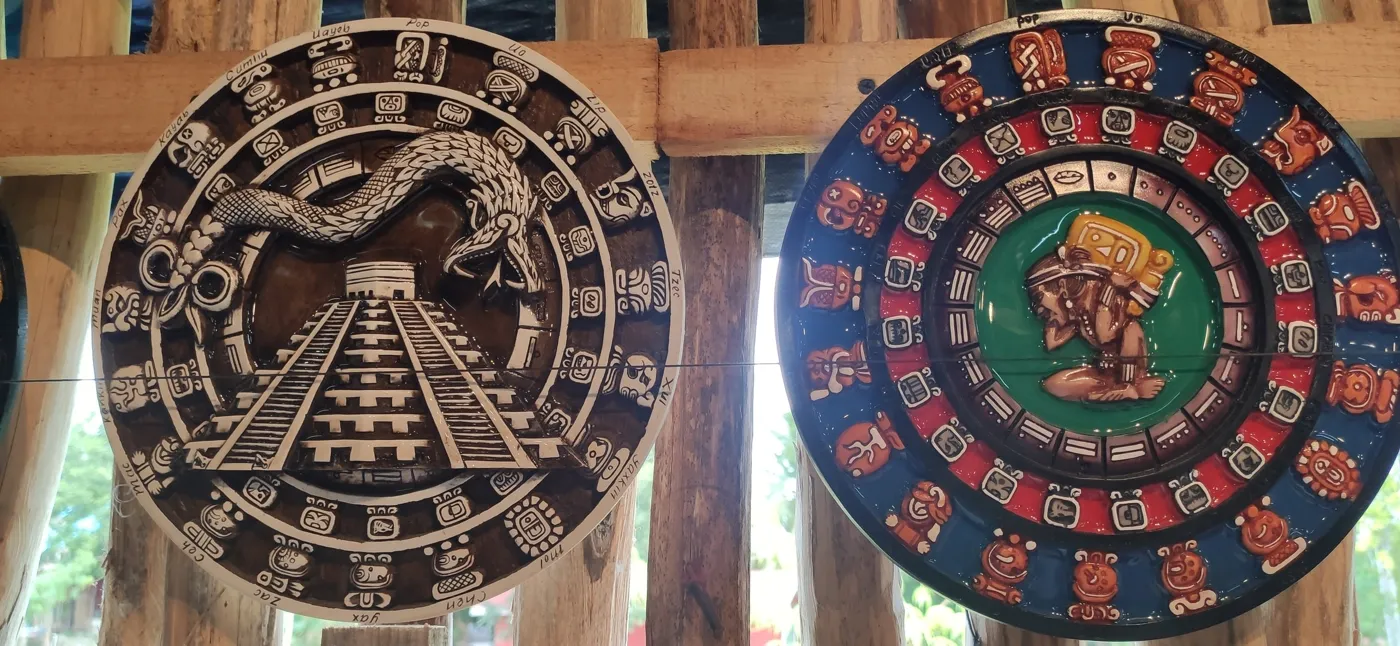
The Maya were masters of time. They counted a solar year of 365 days, the Haab’, made of eighteen months of twenty days plus five extra days, and alongside it a sacred count of 260 days, the Tzolk’in. The two cycles turn like interlocking gear wheels and only meet again at the same point after 52 years, a great cycle known as the Calendar Round. It is time understood not as a straight line, but as circles within circles.
Seven and thirteen
Two numbers keep returning in Maya time. The sacred count of 260 days is made of thirteen numbers turning against twenty named days: thirteen times twenty. And at the equinox, the serpent of light on the pyramid is drawn by seven triangles of sunlight. In this short video, Dr. Be talks about the meaning of seven and thirteen in Maya culture.
The serpent of light
Twice a year, at the spring and autumn equinoxes, something remarkable happens. As the sun sets, the stepped corners of the pyramid cast a row of triangles of light and shadow onto the northern staircase. Together they look like the body of a great serpent, sliding down the steps to meet the stone serpent head at the bottom. Thousands of people gather to watch Kukulcán descend. We came back in March to see it for ourselves, and to stand in that crowd, in that light, is to feel how deeply these builders understood the movement of the sun.
A handclap that sings back
Then there is the echo. Stand in front of the northern staircase and clap your hands, and the pyramid answers, not with a clap, but with a falling, chirping sound, a little like the call of a bird. Acoustic researchers have studied the effect: the American engineer David Lubman first described it in 1998, and in 2004 a team led by Nico Declercq showed how the regular steps reflect the sound back in a way that turns a clap into a chirp. Some have linked the sound to the quetzal, the sacred bird whose feathers Kukulcán wears. Whether the builders intended it, nobody knows for certain, but standing there and hearing the stone sing back is unforgettable.
Being there
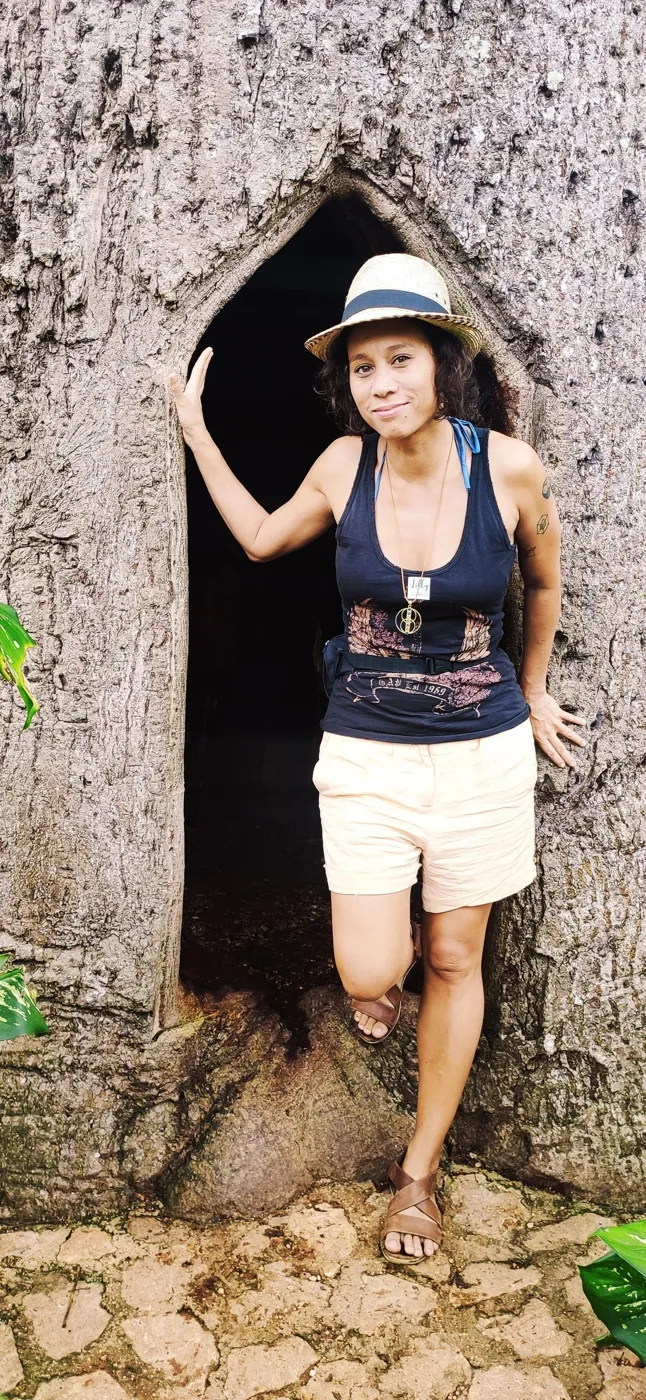
Reading about a place like this is one thing. Being there is something else. Once you walk among these temples, the geometry is no longer an idea on paper: you feel it in the proportions, in the shadows, in the way the space holds you. That is what we went for: to immerse ourselves in the energy of the culture and in the geometry of the place.
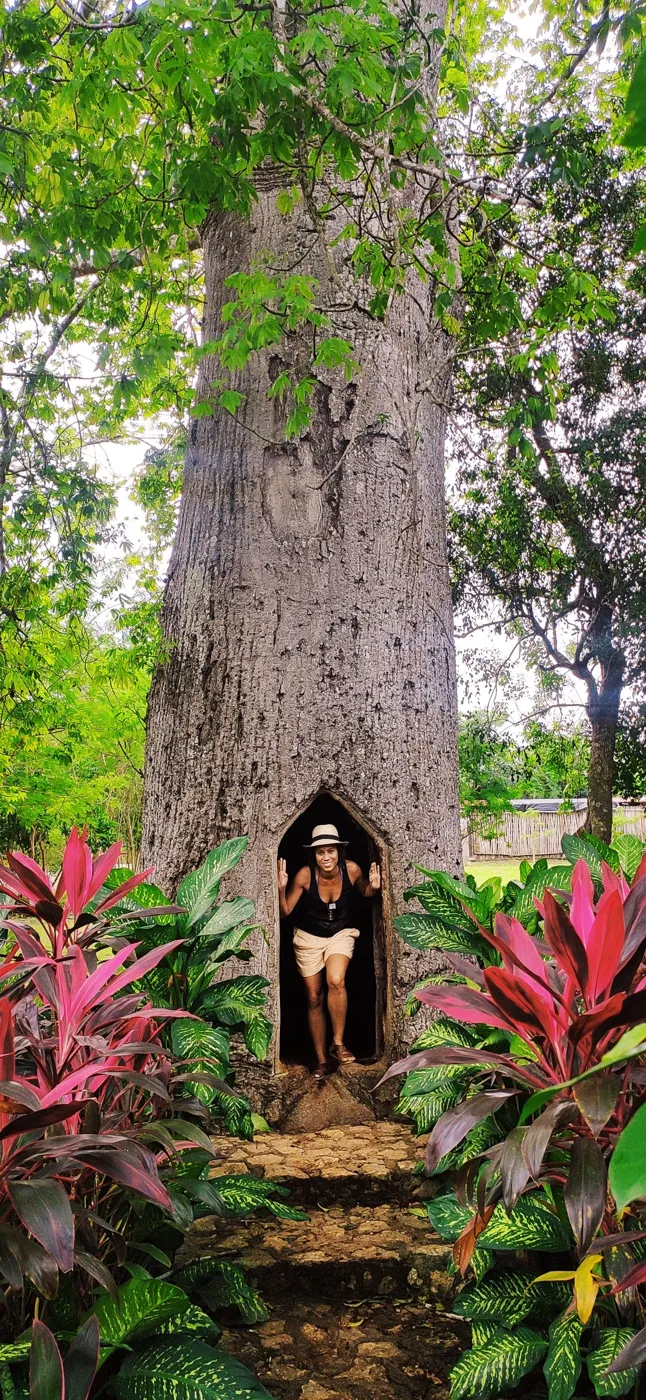
A grid around the Earth?
Chichén Itzá also raises a bigger question, one that has fascinated people for a century. Why were so many ancient sacred sites, pyramids and temples built exactly where they are? In 1921 the Englishman Alfred Watkins noticed that old sites in the British landscape seemed to line up, and called these alignments ley lines. Later researchers, among them Bill Becker and Bethe Hagens, went further and proposed that the Earth is covered by a geometric grid, based on shapes like the icosahedron and the dodecahedron, with many sacred sites sitting on its lines and nodes. Many believe that the ancient cultures knew where the Earth carries special energies, and placed their temples accordingly. Mainstream science has not confirmed these ideas, but standing at Chichén Itzá, it is easy to see why they inspire so many.

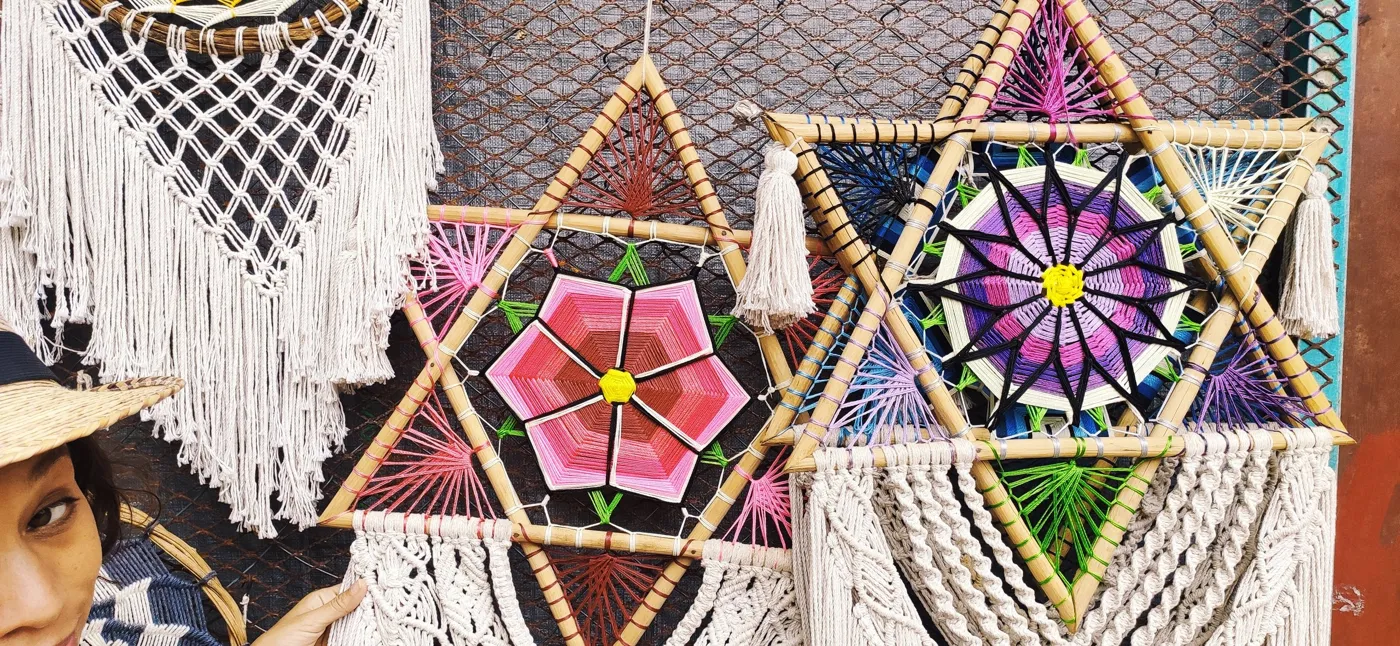
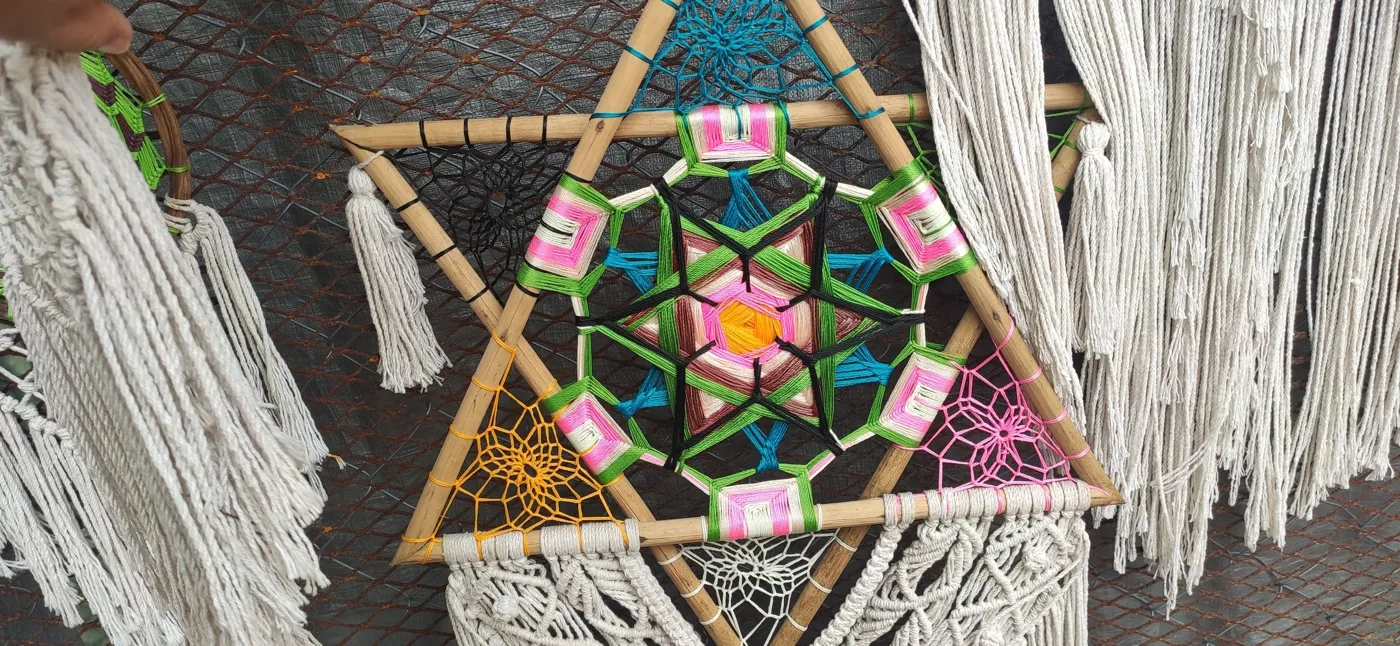
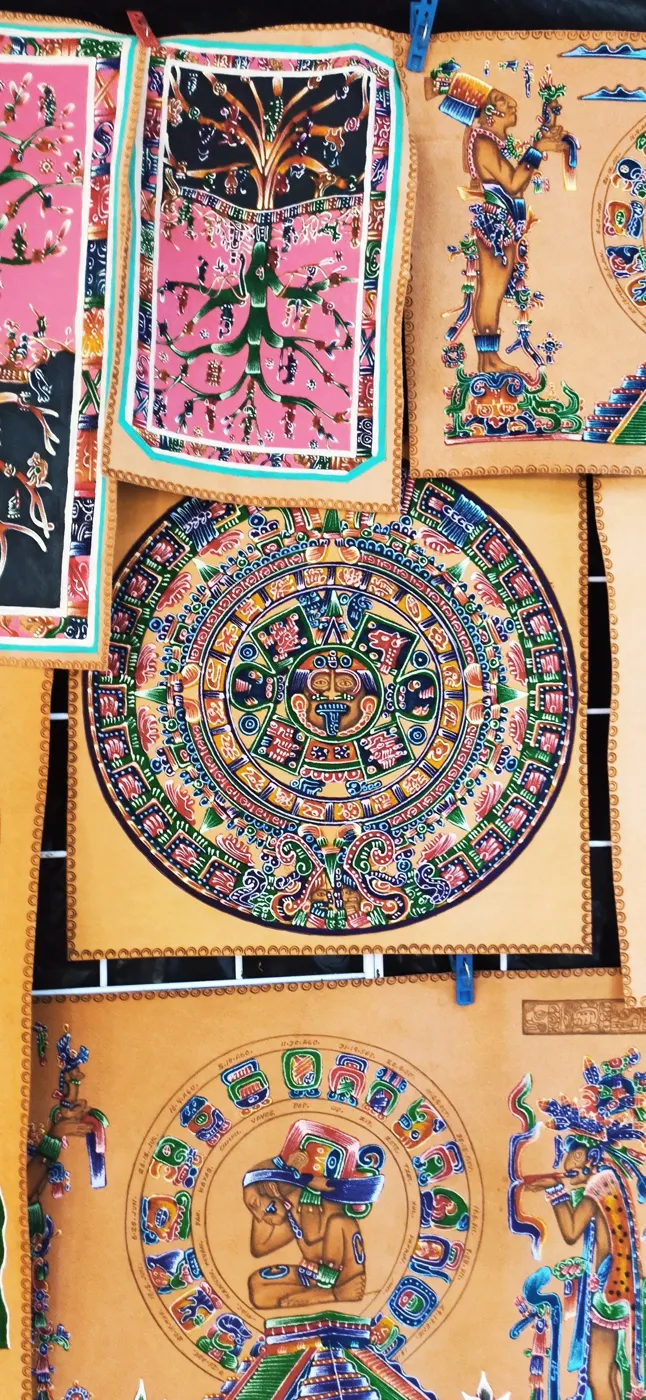
On the way out, the market stalls were full of woven stars and carved calendars: the same geometry, still alive in the hands of the people who live here today.
Would you like to explore the geometry of space and time yourself? Explore our courses →
Come curious. Come as you are. All perspectives welcome.